The Beginning of Sin and God's Grace through the Story of Adam
The Beginning of Sin and God's Grace through the Story of Adam
In the Bible, Adam is not just recognized as the first human being. His story marks the starting point for understanding what it means to be human, how sin entered the world, and how God responds to fallen mankind. Therefore, properly reading Adam's story is also connected to our understanding of ourselves.
Genesis 1:27 states that God created mankind in His image. Following that, Genesis 2:7 says that God shaped man from the dust of the ground and breathed into his nostrils the breath of life, and man became a living being. Adam's existence was not a chance event; it was rooted in God's will and hands. This truth offers great comfort even to Christians living today. We do not have to prove our worth through achievement; we are already meaningful within God's creation.
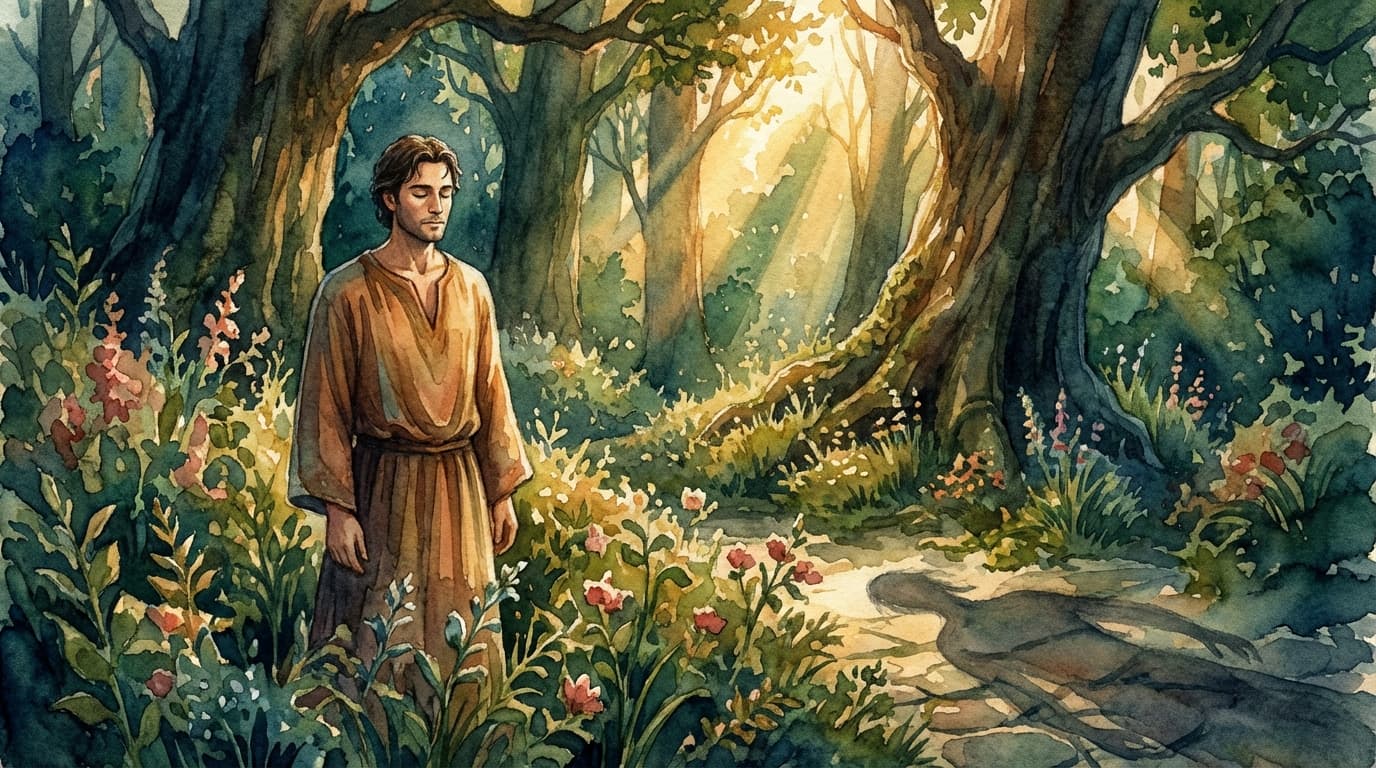
God placed Adam in the Garden of Eden, assigning him the task to work and keep it. He also allowed him to eat freely from every tree in the garden, except the tree of the knowledge of good and evil, which He commanded him not to eat from (Genesis 2:15-17). God's command was not an oppressive barrier but a boundary protecting life. Obedience was not about losing freedom but about experiencing true freedom within God.
However, in Genesis 3, the serpent corrupts God's word. The question, "Did God really say you must not eat from any tree in the garden?" was not mere curiosity but a temptation that shook trust in God's Word. Eve ate the fruit first, and then Adam joined her. As a result, sin entered the world, bringing shame, fear, and hiding. After Genesis 3:8, we see that sinners tend to hide from God rather than approaching Him more closely. This is a characteristic that has persisted through ages. Sin damages not only specific actions but also relationships—vertical with God, inward with oneself, and horizontal with others.
Adam's response also resembles our own. Rather than fully accepting responsibility, he shifts blame to the woman, saying, "The woman whom You put here with me—she gave me of the tree, and I ate" (Genesis 3:12). When people sin, they tend to make excuses, blame circumstances, or resent others. Meditating on Adam's story thus becomes more than recalling an ancient failure; it offers a mirror to examine our own habitual sins and heart orientations.
Yet, the Bible does not only speak of judgment here. In Genesis 3:15, a promise concerning the woman's offspring appears, signaling hope for redemption even at the moment sin enters. Additionally, God made garments of skin for Adam and Eve to cover their shame (Genesis 3:21). Humans tried to hide their shame with fig leaves, but God covered their nakedness more profoundly. Throughout Scripture, this points forward to the grace of salvation revealed in Christ.
바이블 해빗으로 성경 읽기 시작하기
맥체인 체크리스트, AI 성경 검색, 소그룹을 무료로 이용하세요.