

1 Chronicles at a Glance: From Genealogies to Worship Central
1 Chronicles reveals God's covenant and the focus of worship through its long genealogies, stories of David, and preparations for the temple. This overview summarizes the book’s flow, key messages, and contemporary applications.
1 Chronicles at a Glance: From Genealogies to Worship Central
At first glance, 1 Chronicles can feel unfamiliar due to its long list of names and genealogies that make us pause. However, this book is more than just a record of ancestors. It’s a call for the post-exilic people to ask again, “Who are you, and who is God still?” 1 Chronicles traces the lineage from Adam, highlighting Israel’s history with a particular focus on King David, worship, and temple preparations, lighting up anew God's covenant. While overlapping with the books of Samuel, 1 Chronicles emphasizes God’s faithfulness in sustaining His people and restoring worship, rather than dwelling on failures or details of downfall.
The overall flow is fairly clear. Chapters 1-9 present genealogies, prompting readers to ask, “Why are so many names necessary?” These genealogies stand as evidence that God's salvation history has not broken. Though people forget, His covenant remains intact. The prominent tribes of Judah and Levi embody the twin pillars of kingship and worship. God has actively led His people through history, restoring their identity even after periods of decline.
Chapter 10 marks a pivotal turning point with Saul’s death. 1 Chronicles 10:13 states, “So Saul died because he was unfaithful to the LORD,” interpreting the rise and fall of kings not merely through political or military strength, but through their fidelity before God. From chapter 11 onward, David takes center stage. David is presented not just as a mighty king but as God’s chosen ruler. 1 Chronicles 11:9 captures the essence: “The LORD was with David; and he became great.” True power, the book reminds us, does not come from people but from God’s presence.
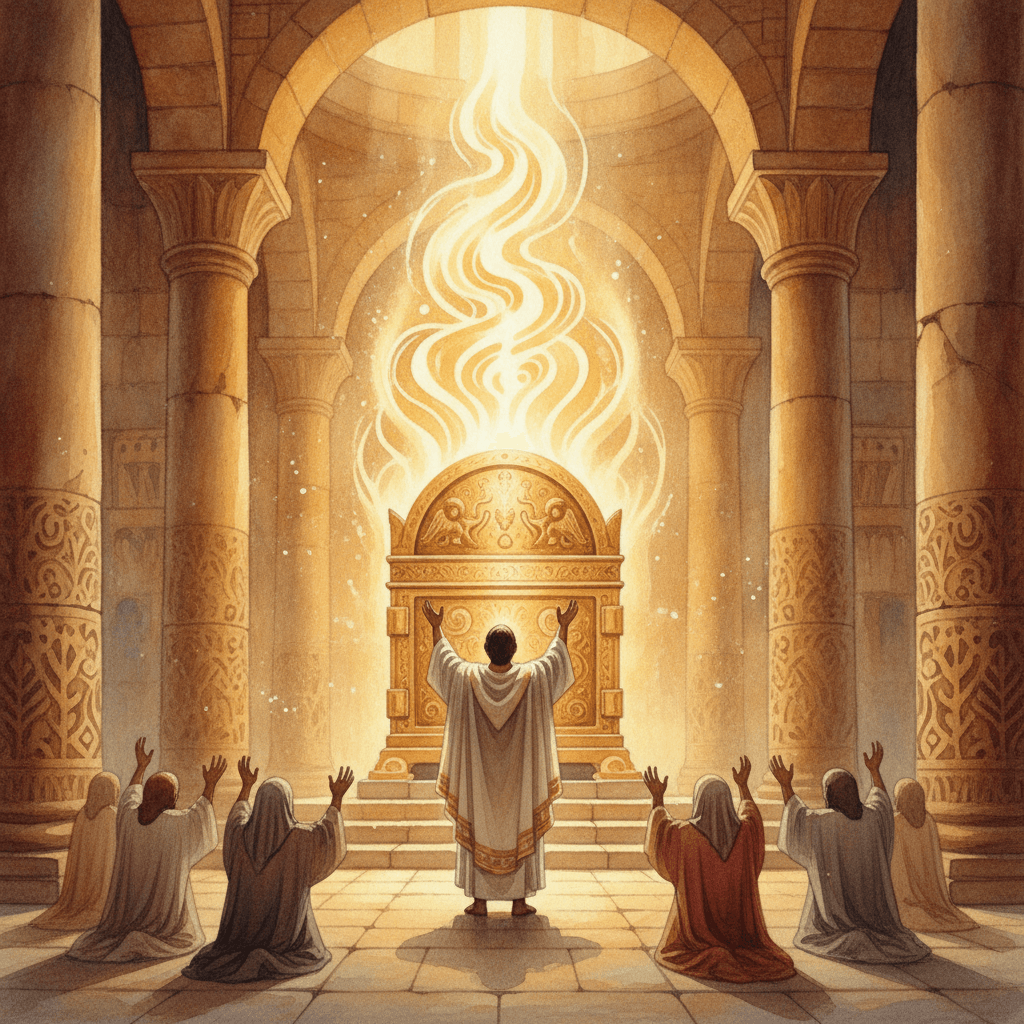
A particularly striking scene in 1 Chronicles is the Ark of the Covenant and worship. David attempts to bring the Ark to Jerusalem, initially doing so according to human convenience rather than God’s instructions, which results in Uzzah’s death. Afterward, David halts in fear and resumes the effort in obedience to God’s word. This teaches us that zealousness alone cannot substitute for obedience. Good intentions must align with God’s commandments. 1 Chronicles 16:11 encourages, “Seek the LORD and his strength; seek his face continually.” The core of 1 Chronicles is not just successful King David but the worship of the people who seek God.
The later chapters dedicate much space to preparations for the temple. Though David doesn’t build it himself, he prepares his heart, resources, and people. He does not aim for personal glory but paves the way for future generations to worship God. 1 Chronicles 22:5 records David’s desire for the temple to “be glorious and renowned throughout all the lands.” Its grandeur aims not to showcase human achievement but to exalt God’s name. Additionally, in 1 Chronicles 28:9, David instructs Solomon, “Know the God of your father, serve him with a whole heart and a willing mind.” The emphasis here is on heart and reverence over the physical structure.
For modern Christians, 1 Chronicles offers several clear applications. First, your life is part of the grand story of God. Like the names in the genealogies, even seemingly ordinary lives are kept in God’s remembrance. Second, worship is not a fringe activity but at the heart of life. It’s not just about attending church once a week but orienting daily life toward seeking God. Third, faith involves preparing the next generation. Like David, even if you don’t achieve everything yourself, living to prepare a path for God’s worship remains meaningful.
Additionally, 1 Chronicles helps us understand worship not simply as emotional uplift but as an ordered act with divinely appointed ways and roles. The service of the Levites, the organization of choirs, and temple preparations illustrate that approaching God is serious business. As New Testament believers, we can approach God boldly through Christ, but must also worship in reverence. The liberty of worship is a privilege given through grace, not a license for casualness.
When reading 1 Chronicles, it’s helpful to focus on the broad flow rather than getting lost in intricate details. Divided into sections—genealogy, Saul’s death, David’s coronation, the ark, worship and Levitical roles, and temple preparation—makes it clearer. For those eager to start reading directly, visit 성경 읽기 and explore each chapter. When you encounter lengthy sections of genealogies or temple preparations, try not to understand everything at once. Instead, underline recurring themes—covenant, worship, preparation—and consider their significance. If you want to see the overall narrative plan of the Bible, refer to 성경 통독이란. For a daily reading plan, 오늘의 맥체인 읽기표 can be helpful.
1 Chronicles is a book about restoring God-centered order rather than dazzling accomplishments. Hidden among the names is a faithful God; stories of kings reveal the priority of worship; and preparations for the temple teach the faithfulness of hope for the future. Even in unnoticed times and routine days, God does not forget His people. As you read, reflect not only on Israel’s history but also on how your life should be centered and ordered today. Do I value God’s presence more than personal achievements? Is my day shaped by a desire to worship God? 1 Chronicles quietly positions us before the Lord, compelling us to look toward the faithfulness of the covenant-keeping God.
Related articles
Overview of 2 Samuel: Reading the Glory and Rift of King David
Following the flow of 2 Samuel, we reflect on the Davidic covenant, Bathsheba incident, Absalom's rebellion, and the census event, contemplating God's faithfulness, the limitations of human kings, and the true King, Christ.
Judges at a Glance: God's Mercy Amid Repeated Apostasy
An overview of the cyclical structure and core message of the Book of Judges. Reflect on human sinfulness, God's enduring mercy, and the need for a true king amidst cycles of apostasy, oppression, crying out, and salvation.
Core Summary of Deuteronomy: Hearing the Covenant Call on the Plains of Moab
A concise overview of the background, structure, and key messages of Deuteronomy. Follow Moses' final sermon proclaimed on the plains of Moab to see how love for God, remembrance, obedience, and the choice of life continue in our lives today.
 Bible Habit
Turn this article into today’s reading habit
Keep your McCheyne plan, sequential reading, notes, and progress together so the next passage is always clear.
- Today’s passages
- Reading checklist
- Notes and highlights