

Overview of 1 Kings: Solomon's Glory and Warnings of a Divided Kingdom
1 Kings vividly demonstrates the importance of fidelity and true worship before God through Solomon's wisdom and the construction of the temple, his downfall, the kingdom’s division, and the ministry of Elijah.
Overview of 1 Kings: Solomon's Glory and Warnings of a Divided Kingdom
1 Kings chronicles both the most glorious moments and the deepest divisions of the Israelite kingdom. As a continuation of Samuel, this book covers David’s later years, Solomon’s accession to the throne and the building of the temple, the kingdom’s split, and the appearance of Elijah. On the surface, it may seem like a political history of kings, but the Bible is more than a simple chronology; it questions how kings and the people respond to God's Word. Therefore, when reading 1 Kings, the more crucial question isn’t who was the strongest king, but who feared God and obeyed His commands.
In the opening chapters, Solomon shows an impressive start. He does not ask for longevity, riches, or revenge against his enemies. Instead, he asks for a listening heart and wisdom to judge the people rightly. God delights in his prayer and responds, “Because you have not asked for long life or riches or the death of your enemies, but have asked for discernment to understand justice,” and promises, “Moreover, I will give you what you have not asked for—both riches and honor” (1 Kings 3:11, 13). This scene reveals that true wisdom begins not with self-expansion but with a heart committed to responsibly fulfilling the duties entrusted by God.
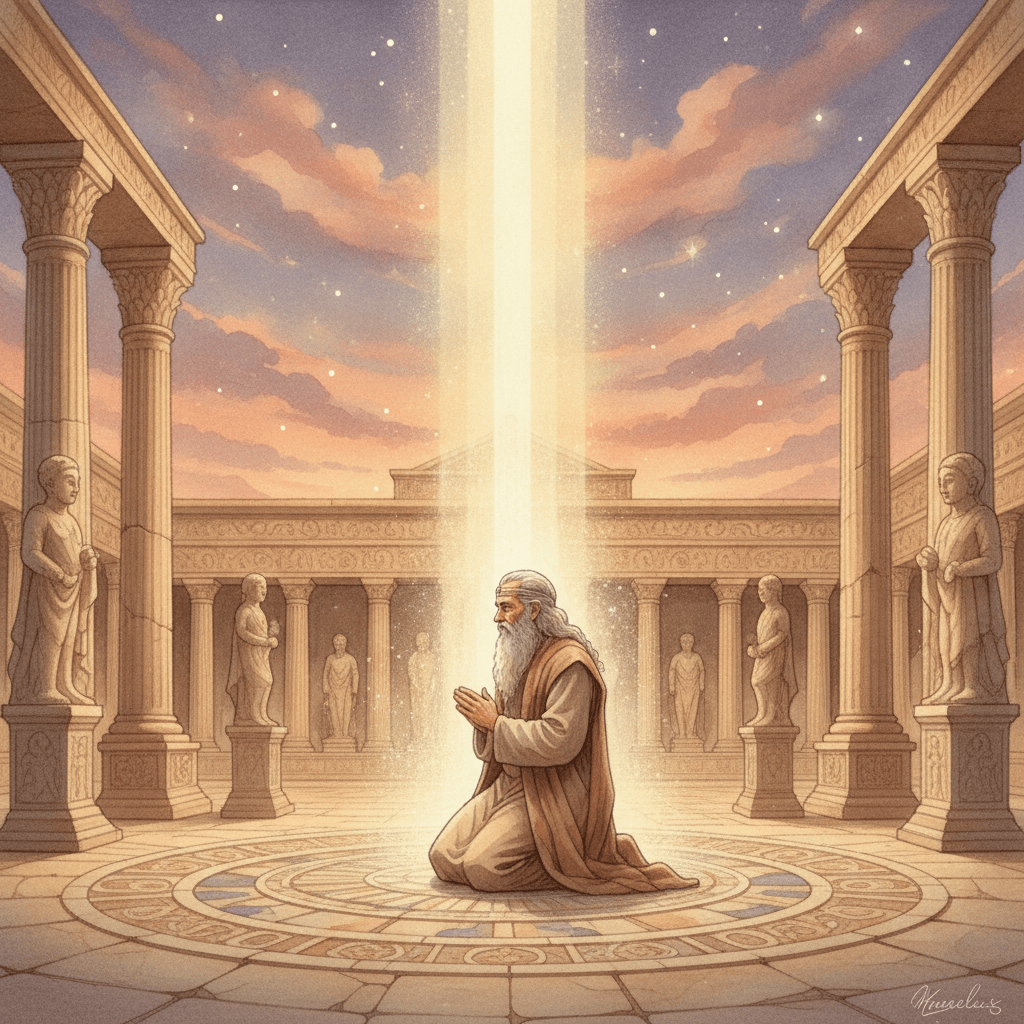
The construction of the temple, which follows, is one of the central scenes in 1 Kings. As Solomon dedicates the temple, he declares, “But will God really dwell on earth? The heavens, even the highest heaven, cannot contain you, how much less this temple I have built!” (1 Kings 8:27). This declaration is significant. The temple doesn’t confine God; it’s a sign of God's grace that allows His people to approach Him in covenant relationship. No matter how grand the worship rites may be, they cannot surpass God Himself, nor does a sacred place automatically make a person holy. While emphasizing the glory of the temple, 1 Kings always keeps the focus on obedience to God as its core.
However, 1 Kings does not stop at Solomon’s glory. His later years are marked by tragedy. The Bible states, “King Solomon loved many foreign women, along with the daughter of Pharaoh—Moabites, Ammonites, Edomites, Sidonians, and Hittites” and notes, “And his wives turned away his heart after other gods” (1 Kings 11:1, 4). Even a wise king can falter if he does not guard his heart. The crisis of faith often begins not with a sudden collapse but through repeated small compromises. Outwardly, he may still seem successful, but when he begins to love others or worldly pleasures more than God, his grip on faith weakens.
As a result, the kingdom splits during Rehoboam's reign into the southern kingdom of Judah and the northern kingdom of Israel. Rehoboam’s disregard for his people's suffering and his proposal to tighten their burdens accelerate division. Jeroboam, attempting to resolve political instability, sets up golden calves at Bethel and Dan, creating a distorted form of worship. He claims, “It is too far to go to Jerusalem,” citing convenience for the people, but in reality, this is a change from God's prescribed worship. Through these scenes, 1 Kings demonstrates two ways the people of God can fall—one through stubbornness clinging to power, the other through false worship based on convenience. Both are results of forsaking God's Word.
This serves as a direct warning for us today. Faith isn’t just about maintaining religious emotions but about knowing and serving God in His way. Zeal alone doesn’t always equate to righteousness, nor does convenience guarantee God's approval. Therefore, 1 Kings prompts us to examine not only external success or grandeur but the focus of our worship and the direction of our obedience.
In the latter part of the book, Elijah takes center stage. During Ahab and Jezebel’s era, idolatry spreads like a national order. Elijah challenges the people, crying out on Mount Carmel, “How long will you waver between two opinions? If the LORD is God, follow him; but if Baal is, follow him” (1 Kings 18:21). This is a key question throughout the book. A faith that combines the worship of God and idols is unacceptable in Scripture. The scene where God sends fire from heaven to consume the sacrifice on Mount Carmel unmistakably reveals who the true God is.
However, Elijah’s story doesn’t end with victory at Carmel. Despite a great win, he flees in fear and despair into the wilderness. At that moment, God does not simply rebuke Elijah but provides food, rest, and renewal. In the quiet whisper after the mighty wind, earthquake, and fire at Horeb, God encounters Elijah (1 Kings 19:12). 1 Kings doesn’t hide that even the faithful can tire; yet, it also shows that God doesn’t abandon His exhausted servant and gently yet surely restores him through His Word.
Throughout the narrative of 1 Kings, we see a recurring pattern of glory and fall, reform and rebellion, bold victories and deep despair. Recognizing this pattern makes it clear that this book isn’t just a list of events but reveals how God's people respond to His covenant and His Word. To follow this story closely, you can review the flow via Bible Reading, and if you want to understand where you are in your reading progress, using Progress Calculator can help. If you want to develop a habit of reading historical books like Kings, check out 7 Tips for Building a Bible Reading Habit.
The core messages of 1 Kings are clear: First, external success cannot replace faithfulness before God. Second, when the central focus of worship blurs, both individuals and communities are destabilized. Third, God raises up people of His Word even in times of apostasy and does not abandon His covenant. Fourth, God’s people will be judged not by outward splendor but by obedience to His Word. Therefore, reading 1 Kings is not just to review the deeds and failures of ancient kings but also to reflect on who rules our hearts today.
Even today, like Solomon, we can start well but become complacent; like Rehoboam, we can ruin relationships through arrogant judgments; like Jeroboam, we might devise substitutes out of fear; and like Elijah, we can grow weary after faithfully fulfilling our calling. 1 Kings invites us to examine ourselves in these realities in the presence of God. Beginning each day by holding onto a verse of Today’s Word can be a small but meaningful habit to check where our hearts are heading.
1 Kings warns us not to be deceived by appearances. No matter the temple, wisdom, or achievements, God’s focus remains on the heart. It also reminds us that even in turbulent times, God’s Word remains true, and He will ultimately bring His promises to pass. As we read, we shouldn’t just criticize the failures of kings but also reevaluate our own worship, choices, and obedience before the Lord.
A question for reflection: Do I rely more on outward success and visible achievements rather than on God’s grace? Are there small idols built out of convenience and fear in my life? During times of exhaustion and despair, do I listen again to God's quiet Word instead of waiting only for great signs? 1 Kings honestly confronts us with these questions and gently, yet firmly, calls us back to the true King—God Himself.
 Bible Habit
Turn this article into today’s reading habit
Keep your McCheyne plan, sequential reading, notes, and progress together so the next passage is always clear.
- Today’s passages
- Reading checklist
- Notes and highlights