

Antioch in Acts: From Scattered Believers to a Church for the World
Antioch in Acts was built upon the testimony of scattered believers, growing from a place that received the gospel to a church that sends it out. Through the Antioch church, we revisit our identity and mission today.
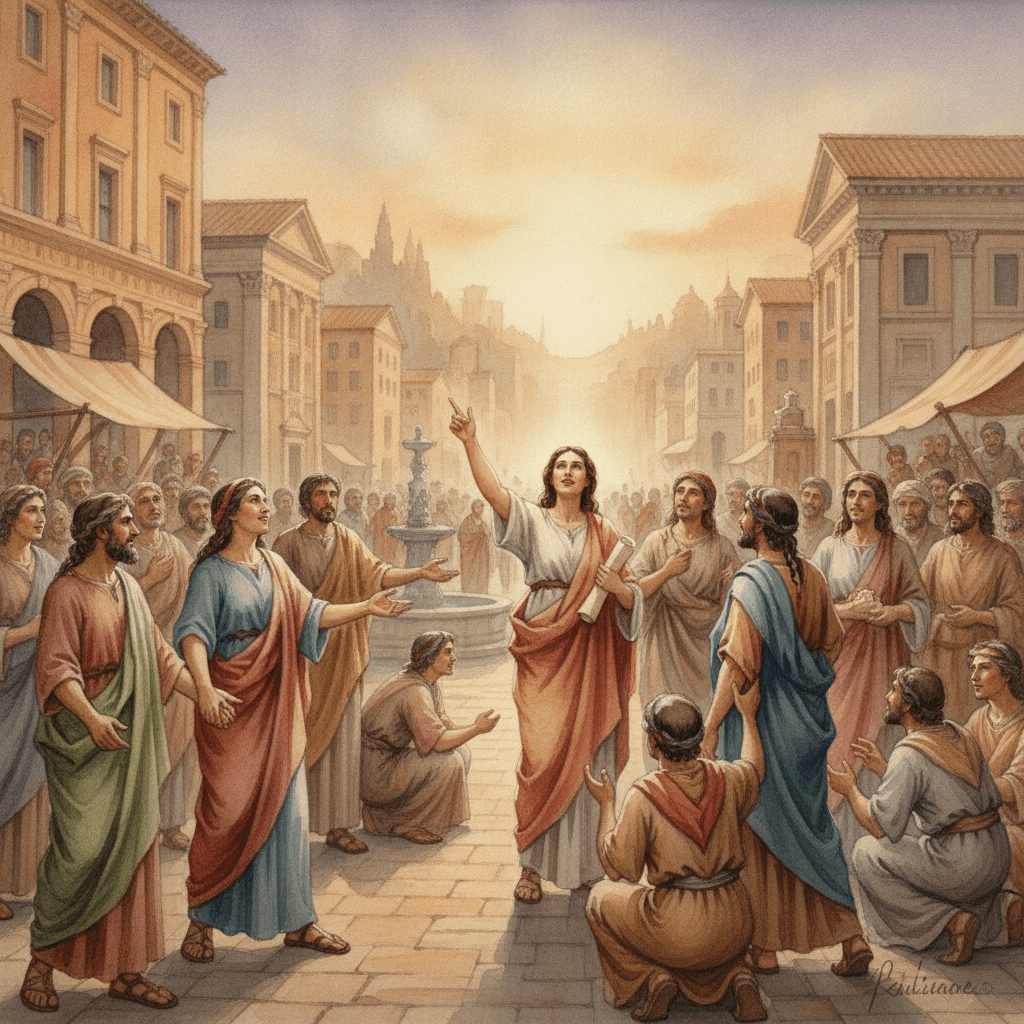
Antioch in Acts: From Scattered Believers to a Church for the World
Antioch is a city in the New Testament that’s worth paying attention to. If Jerusalem symbolizes the start of the gospel, then Antioch marks a turning point where the good news extends beyond one region into a broader world. Several cities named Antioch appear in the Bible, but when discussing the early church, it generally refers to the Antioch in Syria. Known today as near Antakya in southern Turkey, this was a major city in the Orontes River basin and one of the key centers within the Roman Empire.
Historically, Antioch was an international city founded during the Hellenistic era. It was a hub of commerce, administration, military activity, and culture, where various nations, languages, and lifestyles mixed. This background helps us better understand scenes recorded in Acts. The process of the gospel crossing Jewish boundaries and reaching various peoples was not just an abstract idea but actually happened right in the heart of such a city. The gospel was active not only in quiet regions but also in the bustling city centers.
Acts 11 vividly shows the significance of Antioch. After Stephen’s martyrdom, scattered believers traveled as far as Phoenicia, Cyprus, and Antioch proclaiming the word of God. At first, they were only speaking to Jews. However, some from Cyprus and Cyrene reached Antioch and began to proclaim the Lord Jesus to the Greeks too. The Bible records: “The Lord’s hand was with them, and a great number of people believed and turned to the Lord” (Acts 11:21). Here, the key isn’t the size or atmosphere of the city but the fact that God’s hand was with them. The expansion of the gospel was not merely human strategy but was under God's sovereign work.
This scene clearly reveals the essence of the gospel. The gospel is open to all nations. Jesus Christ’s cross and resurrection are not messages confined to a specific lineage or culture. Any sinner can be justified through repentance and faith in Christ. The doctrine of justification by faith makes this especially clear in a city like Antioch, where people of different backgrounds believed in the same Lord and received salvation through grace. This doesn’t mean lowering the church’s standards but rather demonstrating that the power of the gospel transforms people and builds them into one body.
Antioch is also remembered for the phrase, “It was in Antioch that the disciples were first called Christians” (Acts 11:26). This phrase goes beyond being just a nickname. People recognized that Christ was at the center of this community. In the midst of a culturally diverse city, they received the most important name about their identity—‘Christian’—from Jesus. The church’s identity isn’t determined by background, tastes, origin, or language, but by their relationship with Jesus Christ.
The formation of the Antioch church is also impressive. The Jerusalem church heard about Antioch’s growth and sent Barnabas. He arrived, saw God’s grace at work, and encouraged everyone to remain firm in the Lord. Barnabas was not trying to control the situation but rejoiced in how God was already working there. Later, he sought Saul (Paul), and the two spent a year teaching many people at Antioch. This highlights that the church grows not just by zeal but through the teaching of the Word. The gospel doesn’t stop at gathering people but nurtures them to maturity through teaching. That’s why consistent Bible reading and study are vital. Small practices like Bible Reading can establish a solid foundation for the church.
By Acts 13, Antioch had shifted from a city receiving the gospel to a church sending the gospel out. The prophets and teachers in the church were ministering to the Lord and fasting. The Holy Spirit then set apart Barnabas and Saul for a specific work. After praying and fasting, the church laid hands on them and sent them off. This scene beautifully demonstrates the direction of the early church. A healthy church isn’t just inward-focused; it’s willing to send out people for the sake of the gospel. Antioch didn’t hoard its abundance but let God’s grace flow out into the world.
This fact prompts us to reflect on our churches today. We often prioritize stability and comfort. However, the Antioch church chose obedience over familiarity. While they might have wanted to keep their best partners close, they willingly surrendered under the Spirit’s guidance. Faith often shows itself in acts of obedience that surpass calculations. In our lives, there are moments when we need to adjust our plans before God’s Word. The example of Antioch is inspiring—if God’s will is clear, surrendering may be the greater act of obedience.
The significance of Antioch isn’t only rooted in its historical background; it resonates with our daily lives. In a time when thoughts and values clash, Christians often want to hide their identity. Yet, despite cultural diversity, the believers in Antioch were called by the name of Christ. Their faith was not just peripheral ornament but the core of their life. At work, school, or home, how do we define ourselves? While diligence and kindness are important, if they aren’t rooted in Christ, our core identity can easily shake.
Consider a small example: someone faced with a critical decision in a busy day. The atmosphere pushes for compromise and warns against loss. At such moments, thinking of Antioch can be helpful. The gospel doesn’t make us retreat from the world; rather, it empowers us to live as Christ’s people right in the middle of it. Choosing honesty, holding onto truth more than profit, and maintaining attitudes fitting the gospel in relationships—all these small acts reflect our faith today.
Another vital point is that Antioch’s revival began amidst scattering. The believers didn’t go to Antioch in comfort but were scattered due to persecution and turmoil. Yet, that scattering became a channel for the gospel. What looks like a loss in human eyes can be a new beginning within God’s sovereignty. This truth offers deep comfort to believers facing unfamiliar places and unexpected changes. The current shifts and upheavals are not the end but part of God opening a new chapter of obedience.
Understanding Antioch also clarifies the broader flow of Acts. As the gospel started in Jerusalem and moved through Judea and Samaria towards the ends of the earth, Antioch became an essential link. It marked a moment when the church gained a wider vision and began actively fulfilling God’s will for the Gentile world. Therefore, Antioch isn’t just a geographic location but a vivid symbol of the universality of the gospel and the church’s mission. To follow this story more intentionally, consider using 오늘의 맥체인 읽기표 or 365일 읽기 일정.
When reading the Bible, instead of just noticing the city name Antioch, take time to observe what God reveals there. The testimonies of the scattered believers, God’s sovereign work, the name ‘Christian,’ the teachings of the Word, and the Spirit’s sending are interconnected. As we read in this way, Antioch is no longer a famous ancient city but a mirror reflecting how the church should be today. The gospel crosses boundaries, the church embraces that gospel, and Christ remains at the center of the process.
What we need today is the same direction: trust in God's guidance amid scattering, and not only seek stability or comfort but remember our mission to be sent out for the gospel. The faith and obedience of the Antioch church aren’t just stories of a particular era. A church that stands on the Word, lives in the name of Christ, and obeys the Spirit’s leading continues to be used by God. In that sense, Antioch isn’t just a place in history; it’s a living signpost pointing to the true direction of faith every church must follow today.
 Bible Habit
Turn this article into today’s reading habit
Keep your McCheyne plan, sequential reading, notes, and progress together so the next passage is always clear.
- Today’s passages
- Reading checklist
- Notes and highlights