

The Meaning and History of Bethlehem: The Messiah's Background in a Small Village
Exploring the significance and history of Bethlehem, the lineage of David, messianic prophecies, and Jesus' birth, connecting the entire Bible to illuminate God's salvation plan contained within this humble village.
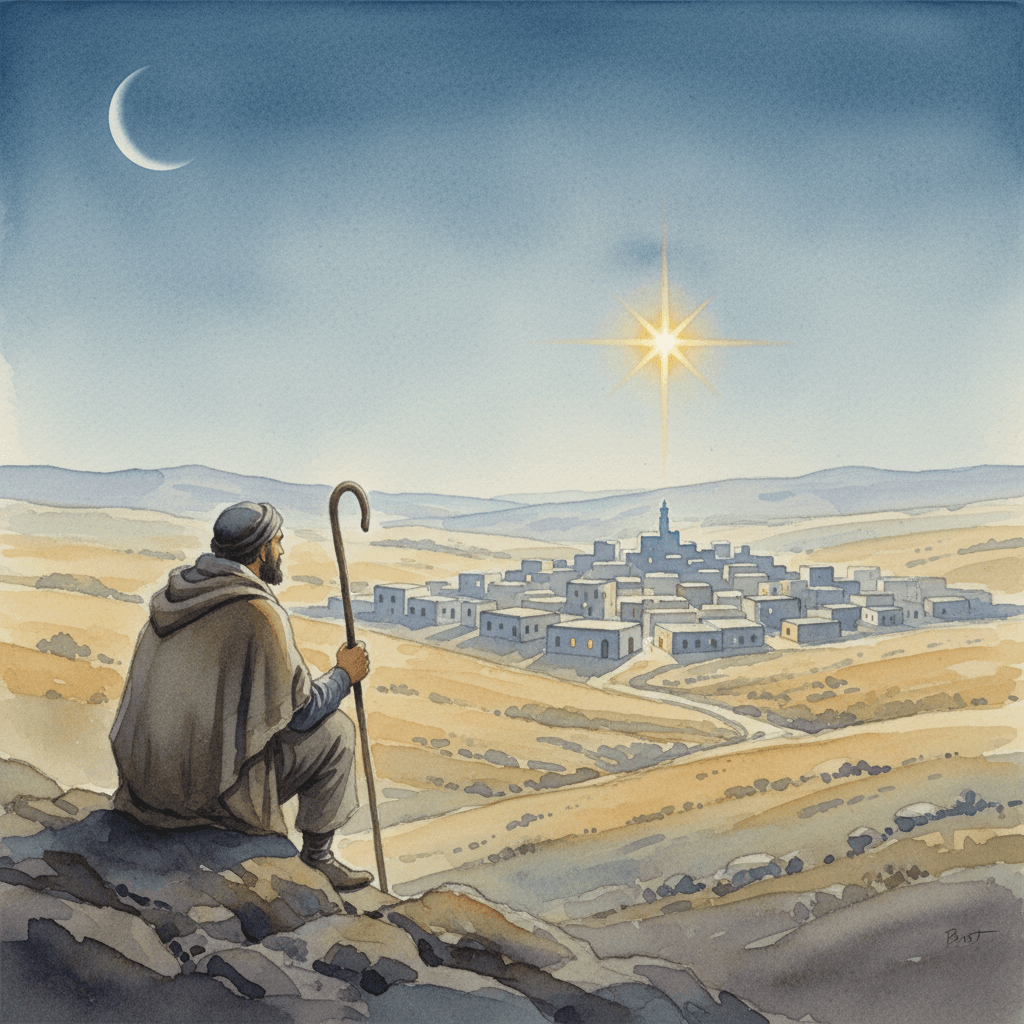
The Meaning and History of Bethlehem: The Messiah's Background in a Small Village
Bethlehem is a place name that is very familiar to those reading the Bible. However, upon calmly examining its background, it becomes clear that it cannot be explained merely by the fact that Jesus was born there. Bethlehem is a site where the promises of the Old Testament, the memory of the Davidic monarchy, and the hope for the Messiah converge. Understanding Bethlehem allows us to see why the story of Jesus’ birth is not just a simple event but a proclamation of the gospel.
First, we can consider the meaning of its name. In Hebrew, Bethlehem is commonly understood to mean "House of Bread" or "Bread House." "Beth" refers to house, and "Lhem" pertains to bread. When recalling its geographical setting—a small village in the Judean hills—such a name feels natural. Bethlehem is known as a town about 8 kilometers south of Jerusalem, close yet distinctly separate from the political and religious center of the capital. While Jerusalem was the hub of political and religious life, Bethlehem appears more as a place filled with everyday life and the scent of ordinary living.
In the Bible, Bethlehem does not initially emerge as a grand city but rather as a 'small place.' The prophet Micah states, "But you, Bethlehem Ephrathah, though you are small among the clans of Judah, out of you will come for me one who will be ruler over Israel, whose origins are from of old, from ancient times" (Micah 5:2). This prophecy is not merely about predicting the birthplace of the Messiah; it reveals that God often accomplishes His purposes through small and seemingly insignificant places. Bethlehem is a symbolic location demonstrating God's method of working behind the scenes.
Bethlehem also plays a crucial role in the stories of Ruth and David. Naomi, who fled Moab due to famine, returned to Bethlehem, and Ruth met Boaz there—experiencing God's guidance and redeeming grace. Ruth 1:19 states, "So the two of them went on until they came to Bethlehem." Although brief, this verse subtly contains the flow of redemption: from loss to restoration, emptiness to fullness. Furthermore, the genealogy of Ruth and Boaz eventually leads to David. Samuel’s visit to the house of Jesse to anoint a king (1 Samuel 16) also took place in Bethlehem. So Bethlehem is not just a rural town, but a place that reminds us of the beginning of the Davidic monarchy.
This background takes on profound significance in the New Testament. Matthew records that Jesus was born in Bethlehem during King Herod’s reign (Matthew 2:1). When the wise men visited Jerusalem asking where the newborn king of the Jews was, the chief priests and scribes cited Micah 5:2, based on prophecy, saying the Messiah would be born in Bethlehem (Matthew 2:4–6). Luke presents the same fact from a different angle, explaining that Joseph, being a descendant of David, traveled from Nazareth to Bethlehem to comply with the census, as Luke 2:4 states, "So Joseph also went up from the town of Nazareth in Galilee to Judea, to Bethlehem the town of David." Jesus’ birth was not a random event but one fulfilled by God's covenant and prophecy.
Here, another point for reflection is Jesus’ words in John 6:35, "I am the bread of life." Considering Bethlehem’s name as "House of Bread," the fact that the bread of life, Christ, was born there is profoundly meaningful. Of course, this connection should not be exaggerated into mere symbolism. Yet, it prompts us to meditate on how God's history and places reveal the message of the gospel with remarkable intricacy.
Another noteworthy aspect is the shepherds. Luke 2:8 says, "And there were shepherds living out in the fields nearby, keeping watch over their flocks at night." Given Bethlehem’s surrounding environment, which was associated with shepherding, this scene feels natural. It also connects to David’s background as a shepherd whom God chose to become king. The message of the Messiah’s birth, announced first to the shepherds in the same fields, reflects God's grace toward humble and ordinary people. Bethlehem, the city of kings, was also a town where daily life of ordinary people thrived. Therefore, the Messiah who came from there does not reveal worldly power but humility and salvation.
When reading the Bible, if a place name feels unfamiliar, reviewing the surrounding context Bible Reading is very helpful. Bethlehem, being significant, appears repeatedly, and gathering related verses makes the biblical flow from the Old to the New Testament clearer. To assist, using AI Bible Search to find related passages about David, Ruth, Micah’s prophecies, or Jesus’ birth can be quite valuable. Also, when meditating briefly on familiar verses through Today’s Word, understanding their background makes their meaning richer and more profound.
In the end, Bethlehem is a small town but holds enormous significance. God established David there, reminded His people of the messianic promise through this place, and ultimately fulfilled that promise in Jesus Christ. Therefore, knowing Bethlehem is not merely acquiring background knowledge about Christmas but affirming that the whole biblical narrative consistently points toward the one Savior, Jesus Christ.
Finally, we should revisit Micah 5:2: "But you, Bethlehem Ephrathah, though you are small among the clans of Judah, out of you will come for me one who will be ruler over Israel, whose origins are from of old, from ancient times." God accomplishes His salvation plan faithfully even from humble, seemingly insignificant places. Even locations that appear ordinary and unnoticed in the eyes of the world are never trivial within God's divine purposes. The same is true of our lives today: even if the place where we stand now seems quiet and small, the Lord can reveal His faithfulness through that very place. Bethlehem quietly yet clearly teaches us this truth. Remembering the profound gospel message embedded in this small town deepens our trust that God is working mightily, both in history and now in our everyday, ordinary lives.
 Bible Habit
Turn this article into today’s reading habit
Keep your McCheyne plan, sequential reading, notes, and progress together so the next passage is always clear.
- Today’s passages
- Reading checklist
- Notes and highlights