

What Is Bible Chronology? The Redemptive Flow Seen When Reading in Order
Bible chronology is a way to see God’s history of salvation more clearly by following the flow of events rather than the arrangement of books. This guide calmly organizes the broad line of redemption from creation through Christ and the church.
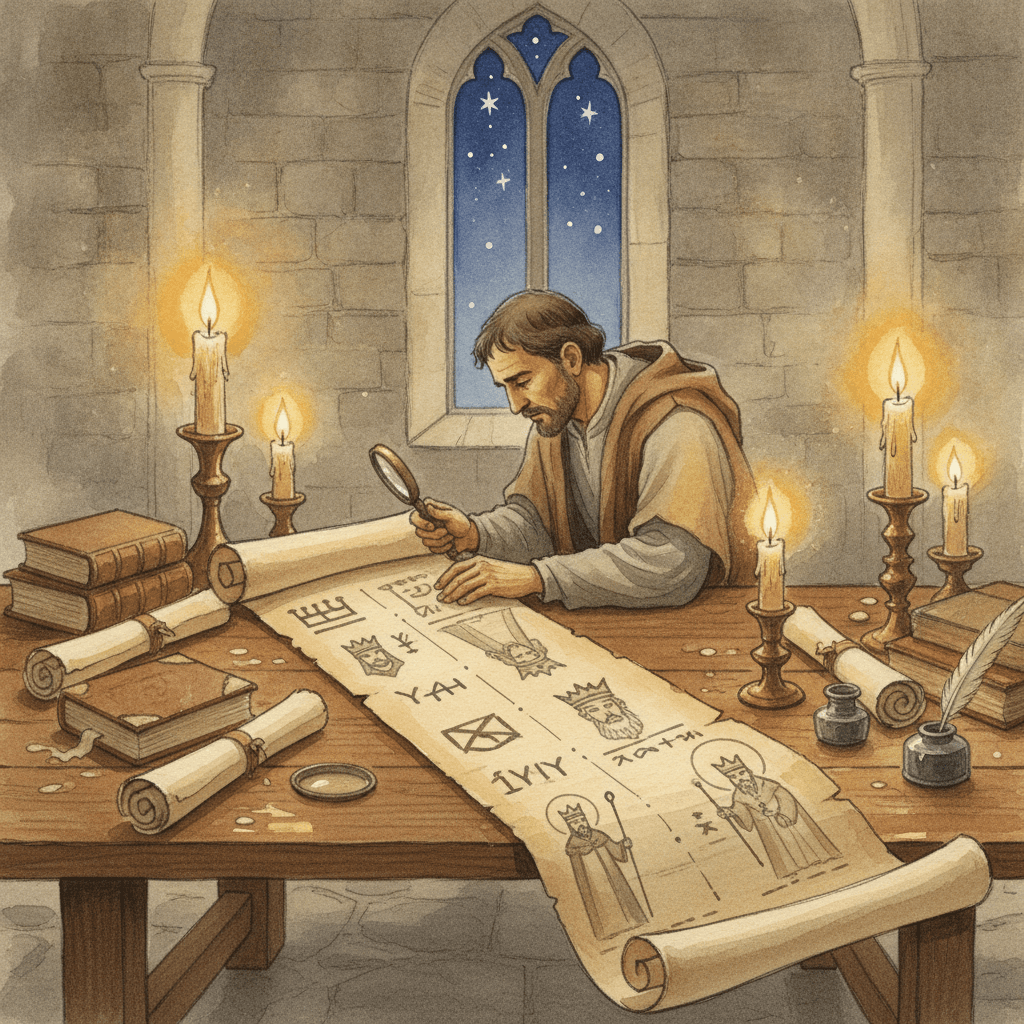
Why Are So Many People Looking for Bible Chronology?
People who look for Bible chronology usually describe a similar difficulty. They began reading from Genesis, but at some point they lose the whole flow when they discover that the arrangement of the Bible’s books differs from the actual chronological order of events. They become unsure in which king’s time to read the Prophets, what historical setting to use for the Gospels, and how to read Acts together with the Epistles. Bible chronology is not a tool that turns the Bible into a different book; it is a window that makes the revelation already given clearer within the flow of time.
The central point is clear. The Bible is not merely a timeline but a testimony to God’s history of salvation. The purpose of reading chronologically is not knowledge management itself, but holding on to the flow of redemption. After his resurrection Jesus explained to the disciples “what was said in all the Scriptures concerning himself, beginning with Moses and all the Prophets” (Luke 24:27). The time of the Bible ultimately gathers toward Christ.
First Clarify the Concept: The Arrangement of Books and the Order of Events Differ
Bible chronology does not mean reading the sixty-six books in the order in which they were written. It is a way of understanding them according to the timeline of the events addressed by the text. For example, Job is placed among the poetic books in the Bible, but a widely held view understands its setting as close to the patriarchal era. Kings and Chronicles also present the same period from different perspectives. Prophets such as Isaiah, Jeremiah, and Hosea become clearer when read amid the reigns of particular kings and historical crises.
There is also something to be careful about. Bible chronology is a supporting line that helps us understand the Bible better, not an absolute standard in itself. Scholars may differ over the exact date or detailed placement of some events. But the broad flow is clear: creation, the Fall, covenant, the Exodus, the wilderness, settlement in Canaan and the period of the judges, the monarchy, the divided kingdom, exile and return, the coming of the Messiah, the cross and resurrection, and the expansion of the church. Holding on to this line helps us see the center rather than becoming bound only to detailed debates.
Connections Become Visible When We Read Comparatively
The advantage of chronological reading is that it connects passages that seem scattered. For example, if we read David’s life in Samuel and read the Psalms alongside it, history and prayer meet. We see more deeply that David’s suffering was not merely a political event but a place of lament, repentance, and trust before God. Even the rebellion of Absalom becomes more than a story; it becomes a scene that illuminates human sin and God’s mercy together.
When we place Kings and Chronicles side by side, we also see that the records of the same king have different emphases. Kings shows more directly the obedience and disobedience to the covenant and the spiritual condition of Northern Israel and Judah, while Chronicles focuses more on the temple, worship, and the line of the Davidic covenant. Understanding this difference helps us see that the texts do not conflict, but testify more richly to the same history.
The New Testament is the same. When reading the Gospels, knowing the background of Roman rule, Herod’s dynasty, and the temple system makes Jesus’ proclamation clearer. His proclamation of the kingdom of God is not a vague religious expression, but the declaration of the Messiah who came to save sinners and as the true King. Reading Acts together with Paul’s letters also shows that the Epistles are not documents floating in the air, but God’s Word given within the circumstances of actual churches and believers. Once you understand what reading through the Bible is, it becomes natural to see chronological reading as a way that makes reading through the Bible more three-dimensional.
How Can We Actually Begin?
If we try to create an overly precise timeline at the start, we soon become tired. It is best to begin simply. First divide the broad flow into four sections. Genesis through Esther establishes the broad skeleton of Israel’s history. Job, Psalms, Proverbs, Ecclesiastes, and Song of Songs can be read as voices of faith rising from within history. The Prophets become helpful when placed in the flow of Northern Israel and Judah, the exile, and the return. In the New Testament, hold on to the broad line of the Gospels, Acts, the Epistles, and Revelation. Organizing only this much gives an important starting point for reading Bible chronology.
The daily routine should also be short and steady. If you have fifteen minutes in the morning, spend ten minutes reading and five minutes writing, “Where does the event I am reading now lie in redemptive history?” Once a week, you can summarize the week’s reading in one sentence. For example: “The repeated pattern of Judges reveals the limits of human kings and makes us wait for Christ, the true King.” Reading this way allows each event in the Bible to find its place within the flow of the gospel rather than remaining scattered information.
When your reading amount becomes unstable, using a set range such as Today’s McCheyne Reading Chart can help you recover your rhythm. When people, places, or historical settings in the text become confusing, continue reading the surrounding context on Bible Reading and confirm the flow. If you want to make a long-term reading plan, it is also helpful to consider the 365-day reading schedule or what a Bible reading plan is. Chronological reading is not a method limited to special people; it is a useful tool for every believer who wants to understand the whole Bible more rightly.
Words to Hold On To When Reading Bible Chronology
“Your word is a lamp for my feet, a light on my path” (Psalm 119:105). Chronology is not a technique for accumulating knowledge; it is following the light of God’s Word so that we do not lose our way. Paul also explains the events in the wilderness by saying, “These things happened to them as examples and were written down as warnings for us” (1 Corinthians 10:11). Past events are both warning and comfort for the church today. Reading Bible chronology is not merely organizing old stories; it is entering the history of salvation that the living God still accomplishes.
What matters is connection rather than speed. When we see the promise that began with Abraham’s calling pass through the Exodus and the Davidic covenant and reach fulfillment in Christ, the Bible no longer feels like scattered sentences but comes to us as one gospel. Moreover, the church is called to proclaim that gospel as its witness in the world. A person who reads Bible chronology rightly ultimately sees not the timetable itself, but God who governs the ages and certainly fulfills his promises.
In one short line: Bible chronology is a tool for organizing scattered events, but more deeply it is a way of following God, who fulfills his promise through every age.
Ask yourself once where today’s passage lies within the whole Bible. That one question can open a familiar passage anew and help you see more clearly that each scene ultimately testifies to Christ. When we read this way, the Bible stands before us not merely as a book to read a lot, but as God’s Word to hear in faith, obey, and live out.
Related articles
 Bible Habit
Turn this article into today’s reading habit
Keep your McCheyne plan, sequential reading, notes, and progress together so the next passage is always clear.
- Today’s passages
- Reading checklist
- Notes and highlights