

The Thread of Words Revealed Through Handwriting: How to Make Bible Copying a Part of Your Daily Life
Guidance on how to start and maintain consistent Bible copying. It covers the relationship with reading, memorizing, and meditating on Scripture, recommended passages, practical routines, and points of caution, helping you cultivate a habit of staying longer before God's Word.
The Thread of Words Revealed Through Handwriting: How to Make Bible Copying a Part of Your Daily Life
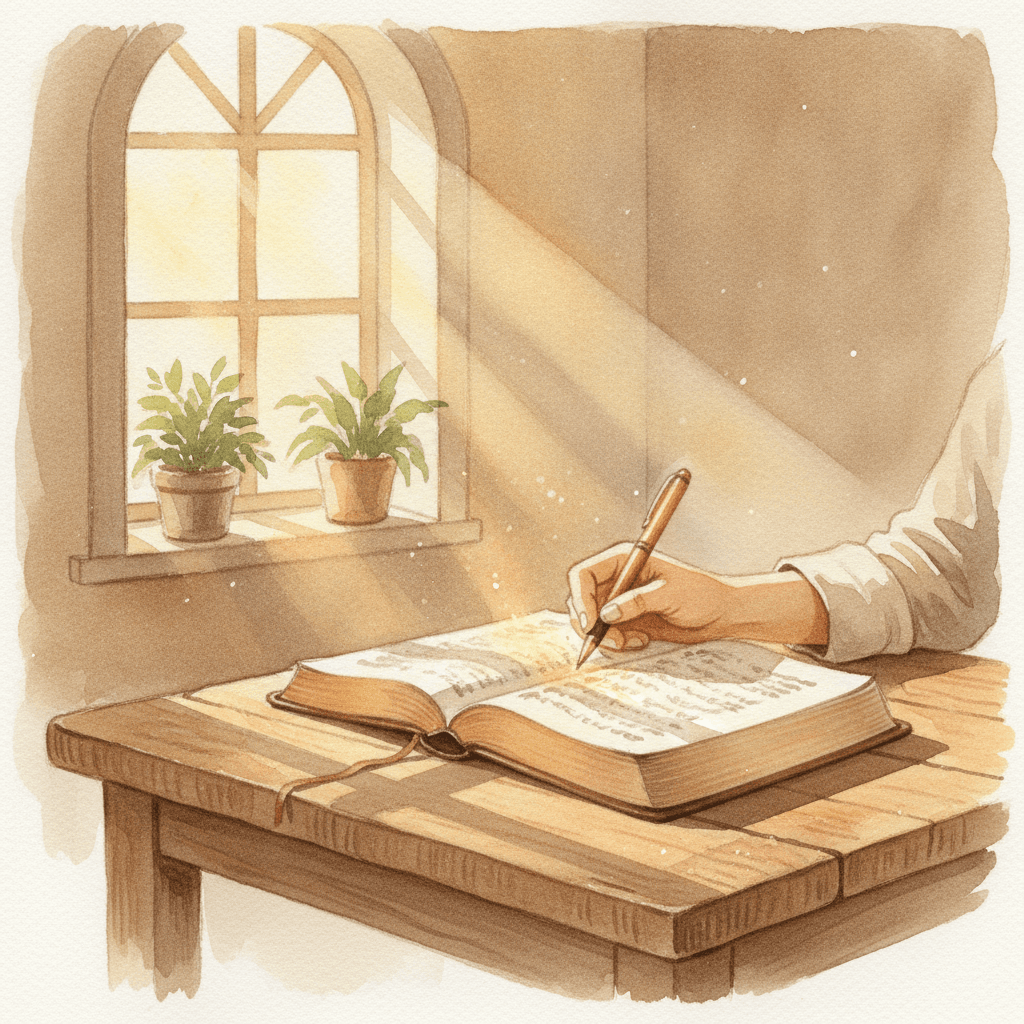
Sometimes, when you want to start Bible copying, your mind gets overwhelmed once you pick up a pen. You might wonder if it’s necessary to write by hand, how it differs from just reading, and where to begin so that it feels manageable to continue. These questions are completely natural. In fact, they often arise because we don't take the Word lightly. Bible copying is not reserved for a special kind of pious person; it's a simple but profound practice of slowing down to transcribe the Word, gathering eyes, hands, and hearts in one place. The goal isn’t quantity; it’s about pausing the hurried mind and lingering before God's Word.
While reading and copying are similar, their roles differ slightly. Bible reading helps follow the flow of the text. It provides a broad view of who is speaking, what words follow after certain events, and how the context connects. On the other hand, copying slows down the process. When you transfer a sentence by hand, words that usually pass by quickly tend to stay longer. Copying psalms lets you feel the prayerful emotions of the psalmist, and copying the Gospels makes repeated exhortations and comfort more distinct within Jesus’ words. Therefore, copying is not a replacement for reading but a way to deepen it. A balanced start is to read the entire Bible regularly and copy particular passages that resonate deeply. If you're curious about why consistent Bible reading is important, see Why Bible Reading Is Important.
It’s also helpful to consider the relationship between memorizing and meditating on Scripture. Memorization stores God's Word in your heart, and meditation reflects on how that Word reveals God and shines light on your life. Copying acts as a bridge between them. Slow writing leads to naturally encountering and memorizing repeated expressions, and during the act, you ponder their meaning. However, copying alone doesn’t automatically guarantee grace; your heart must remain engaged, even if your hand is moving. After finishing, jot down a couple of lines. Questions like “How does this verse reveal God's character?” or “Which aspects of my thoughts, words, or actions does this passage call me to change?” are enough. When you understand what meditation is[/glossary/devotion] and continue with copying, simple recording can lead to living obedience.
So, which passages are good to start with? Short and clear verses are the best for beginners. For example, Psalm 1 is an excellent starting point because it plainly shows the path of the blessed and the way of the wicked. The opening line, “Blessed is the man who walks not in the counsel of the wicked,” sets a spiritual direction from the outset. Psalm 23 is also a gentle introduction. The confession, “The Lord is my shepherd; I shall not want,” is brief yet profound. On days filled with anxiety, even simply copying John 14:1—“Let not your hearts be troubled. Believe in God; believe also in me”—can calm your mind. If you want to examine your faith attitude, consider copying Romans 5:1—“Therefore, since we have been justified by faith”—which clearly emphasizes that our righteousness comes not from actions but through faith in Christ.
When choosing a passage, three criteria are helpful: First, length—avoid long chapters on the first day; two or three verses or a paragraph is enough. Second, relevance—connect the verse to your current circumstances. When feeling scared, Psalms offers comfort; during times of discouragement, Gospel passages can uplift; and when you want self-examination, James is suitable. Third, understanding the context—don’t just write a pretty verse in isolation; read the surrounding paragraphs first. Scripture isn’t just a collection of individual sentences but a revelation from God in history. Exploring What is Quiet Time (QT)? will help you grasp how to approach short passages without losing the context or miss applying it.
Knowing the brief historical background makes copying more meaningful. Psalms isn’t just a collection of beautiful lines; it contains David’s repentance, praise, cries in suffering, and songs of worship. When copying Psalms, you learn not only to read emotional expressions but also to stand honestly before God. The Gospels, likewise, are not just vague comfort but the actual words Jesus proclaimed along roads in Galilee and Judea among the sick, sinners, and burdened. Reflecting on this background while copying makes the Word more than abstract sentences—it becomes the living voice of the Lord who still works today.
Practice doesn’t have to be complicated; simplicity is more sustainable. Create a routine that takes no more than 10 minutes at a time. First, read the passage aloud once. Then, write down the date and slowly copy two or three verses. Finally, leave a single line. Questions like “What’s the word that stays with me the longest today?” or “What stubborn attitude in me should I let go of in light of this Word?” are enough. You don’t need to strive for perfect handwriting from the start. The core of copying isn’t producing a masterpiece but receiving the Word.
Here’s a small example: Suppose one morning, you feel particularly distracted, and you decide to copy Psalm 1:2. “But his delight is in the law of the Lord, and on his law he meditates day and night.” As you slowly transcribe this verse, you reflect on how your day is being filled. Are worries, news, or a to-do list dominating your thoughts? In the evening, copying John 14:1 helps realign your worries with faith. As such, Bible copying is less about grand commitments and more about subtly changing your daily rhythm.
To turn this into a habit, avoid changing the time and place too often. Pick a consistent spot, like the table at breakfast, your desk before sleeping, or a small corner before heading to work—your body will start to remember. Keep it simple—prepare your notebook, pen, and Bible beforehand. Making the start easy encourages obedience. If you wish to track your progress, using tools like Progress Calculator can be helpful. But remember, numbers are not the goal; rather, it’s about how often you bring yourself before the Word. To keep a daily flow, refer to 365-Day Reading Plan or Today’s McChain Reading Chart.
There are specific Bible verses that are especially meaningful to hold onto during copying. Psalm 119:105, “Your word is a lamp to my feet and a light to my path,” emphasizes the importance of holding onto that light without rushing past it. Romans 10:17 declares, “So then faith comes by hearing, and hearing by the word of God,” highlighting that all processes—reading, hearing, copying—ultimately strengthen faith. Hebrews 4:12 assures us, “For the word of God is living and active,” reminding us that what we write isn’t just dead words but the living, active Word of God that pierces and renews hearts.
Most importantly, it’s vital to remember that Bible copying is not a hobby of completing beautiful notebooks but a discipline of humbling oneself before God. Missing a day is okay; simply pick up from where you left off next time. Even if your handwriting isn’t perfect, it’s okay. God values not your penmanship but your heart. After copying a paragraph today, quietly reflect on what this reveals about God's nature and how you should live. As you accumulate moments of faithfully transferring the Word, you will gradually be shaped—not just as a person who records Scripture, but as someone being led by it.
 Bible Habit
Turn this article into today’s reading habit
Keep your McCheyne plan, sequential reading, notes, and progress together so the next passage is always clear.
- Today’s passages
- Reading checklist
- Notes and highlights