

Bible Reading Plan PDF: More Important Than Printing
If you're looking for a Bible reading plan PDF, focus on how to use it first, not just downloading the file. Here's a guide to maintaining consistent Bible reading habits and realistic tips for long-term devotion.

What You Need to Know Before Downloading a Bible Reading Plan PDF
Many people seeking a ‘Bible reading plan PDF’ are actually looking for a clear starting point rather than a vague resolution. While printing a single file might seem to make reading the Bible easier right away, what’s truly important is how you use it. The reading plan isn’t a tool to save us; it’s a small guide to help us stay steady before God's Word.
The Bible clearly shows us the benefit of His Word: “Your word is a lamp to my feet and a light to my path” (Psalm 119:105). Additionally, Joshua 1:8 encourages us to keep this law constantly close and meditate on it day and night. The goal of reading isn’t simply to cover the entire text, but to anchor your life in the light of His Word.
1. What Is a Bible Reading Plan PDF?
A Bible reading plan PDF is a schedule that organizes the entire Bible’s content and order within a set period, making it easy to follow and check off as you go. It’s advantageous because you can print it out and see the overall flow at a glance. However, PDFs are static tools. They don’t tell you what to do if you miss a day, or how to adjust your plan to your pace.
When choosing a plan, prioritize these three aspects over appearance:
- Duration: Does it fit your lifestyle—90 days, 180 days, or one year?
- Method: Does it follow the chronological order from Genesis to Revelation, or combine Old and New Testament readings?
- Checkability: Can you easily mark the days you read and maintain consistency?
If you want to understand the purpose of consistent Bible reading first, consider reading What Is Bible Reading.
2. Which PDF Fits Me?
Bible reading plans generally fall into two categories. First, sequential. These follow the order from Genesis to Revelation, helping you grasp the overall storyline of the Bible. Second, scattered. This approach mixes Old Testament and New Testament readings, including wisdom literature, to ease monotony and expose you to diverse parts of Scripture.
For those new to understanding the Bible step by step, sequential plans work well. If you often find yourself stopping in Leviticus or Chronicles, a scattered plan might be more practical. If you’re interested in a McChaine-style approach, where several passages are read daily, see What Is McChaine Bible Reading for guidance.
Most importantly, it’s not about finding the “best PDF,” but about choosing a method you can stick with till the end. Even with a deep love for the Bible, plans that ignore your daily rhythm will be hard to sustain.
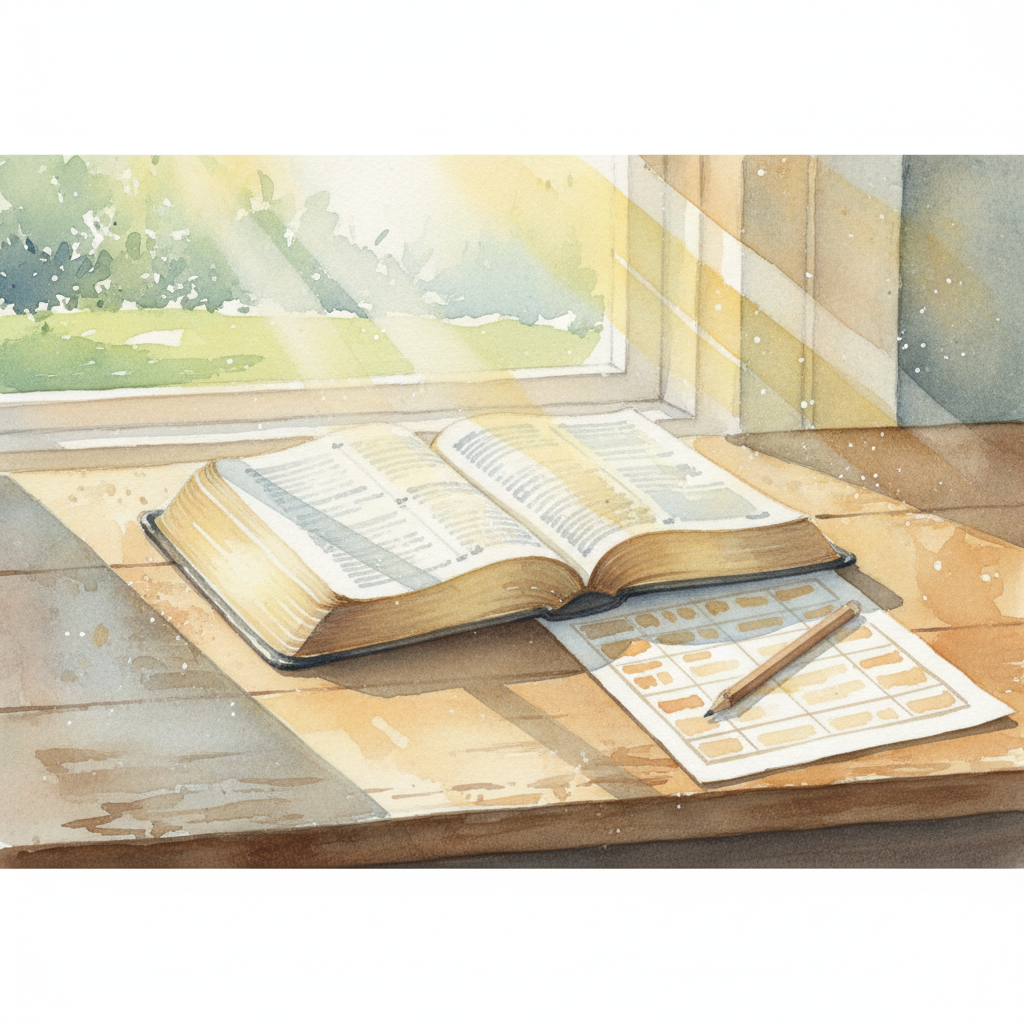
3. Turning Printed PDFs into a Habit
Many stop after just a few days of using their printed plans. This isn’t due to weak will, but because their daily routines haven’t quite settled yet. Ezra 7:10 shows Ezra’s commitment to studying, practicing, and teaching the Law of the Lord. Similarly, Bible reading requires not just reading but meditating and applying.
Start small, like:
- 10 minutes after waking up: check today’s passage
- 10 minutes before lunch or during commutes: do an initial read
- 10 minutes in the evening: finish the remaining text and jot down one thought
- 1 minute before sleep: recall a verse that stood out today
The key is not to read a lot each day but to create a routine—same time, same place, same order. Some prefer checking off items on a printed sheet, while others want to read along with a daily schedule like 365-Day Reading Plan; both are effective.
Some days, you might not finish the entire section. That’s okay—don’t feel pressured by the backlog. Start again from today’s date. Remember, reading the Bible isn’t a test—it’s the nourishment for your soul. Missing a day doesn’t mean the Word leaves you.
4. Realistic Standards for Long-term Consistency
When establishing habits, standards matter more than feelings. Set these four principles to help you stay on track:
- Set a minimum: Decide that even on busy days, you’ll read at least one chapter.
- Keep a record: Jot down a word or two beside your reading to connect Scripture with your life.
- Drop perfectionism: It’s more important not to give up when plans slip, even if you’re behind.
- Remind yourself of the goal: Remember you’re reading to know God more, not just to gather information.
The Bereans “examined the Scriptures daily to see if what Paul said was true” (Acts 17:11). Notice the emphasis on “daily.” Steady repetition, more than talent, deepens faith.
Practical Application
If you’re currently searching for a Bible reading plan PDF, choose one that you will open daily, no matter how beautiful it looks. Then, start today—read Genesis 1 or Mark 1. Printing is just the beginning; completing your plan is about ongoing obedience. People like Ezra, who dedicated themselves to staying close to God's Word, move forward slowly but surely. Bible reading isn’t about rushing to an end; it’s about learning to walk with His Word for life.
Rules:
- Use natural English style (no literal translation)
- Maintain markdown format (##, -, [], etc.)
- Don’t modify internal links (/tools/today, etc.), only translate the link text
- Never change the image markdown (
)
- Use the common Bible translation style for citing verses (e.g., Psalm 119:105, Acts 17:11)
Related articles
Bible Checklist App: What to Look For
When choosing a Bible reading app, this guide organizes the criteria to examine before its features. It evaluates biblically why the flow of the Word, an easy return after interruptions, and a structure that leads into meditation matter more than checkmarks and statistics.
When Familiar Bible Phrases Confuse You: Practical Ways to Read Words Within Their Context
When encountering unfamiliar Bible expressions like reconciliation, redemption, grace, justification, and holiness, it's easy to stop at dictionary definitions. This guide arranges practical methods and meditations to read these words within their context and gospel message, beyond mere memorization.
Shared Bible Reading: How to Keep Reading Together for the Long Term
People who continue reading the Bible over time share certain habits. When they encourage one another, remain in the passage, and continue with small obedience instead of demanding plans, the rhythm of the Word takes deep root in life.
 Bible Habit
Turn this article into today’s reading habit
Keep your McCheyne plan, sequential reading, notes, and progress together so the next passage is always clear.
- Today’s passages
- Reading checklist
- Notes and highlights