

Faith at Mount Moriah in Genesis 22
Exploring the meaning of Abraham's test at Mount Moriah in Genesis 22 and the significance of Jehovah-Jireh. Reflecting together on God's path of salvation revealed through Abraham and Isaac, and the obedience we are called to today.
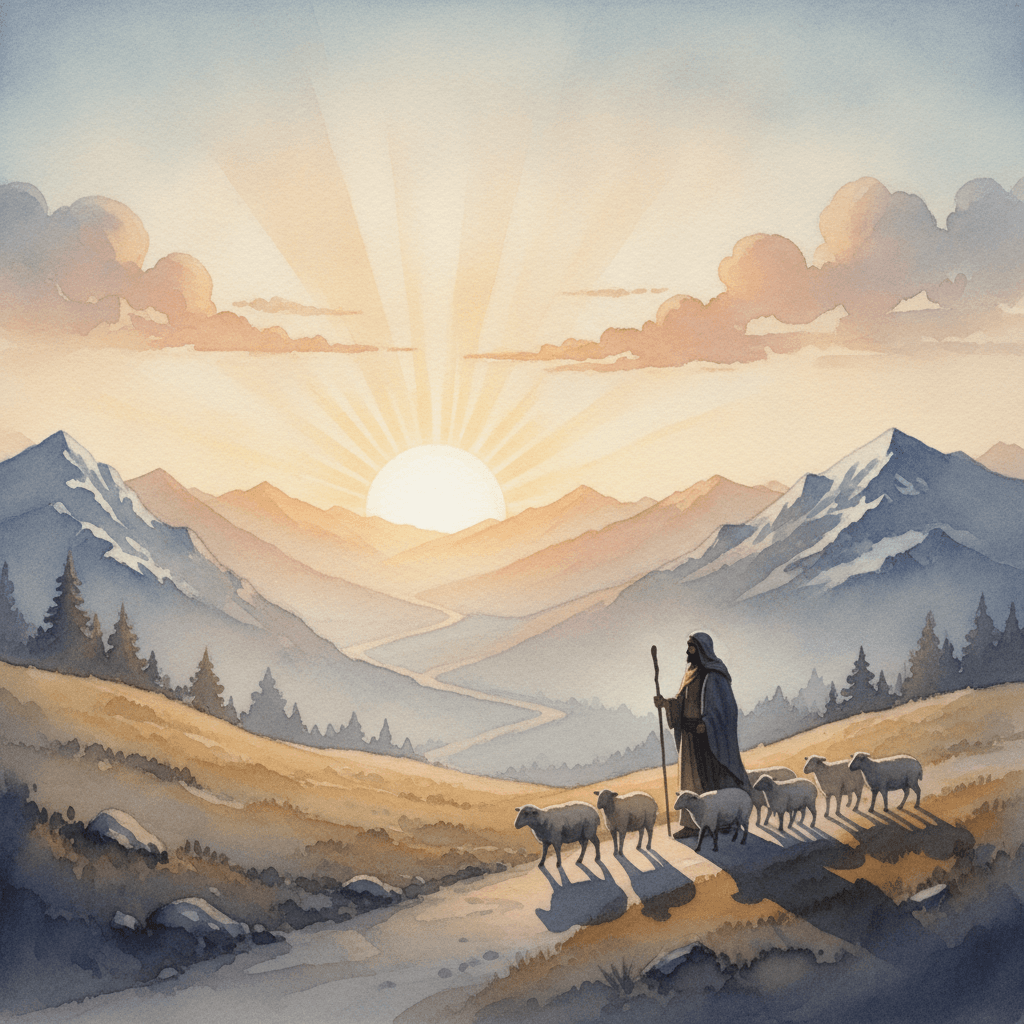
Faith at Mount Moriah in Genesis 22
Genesis 22 is a passage that even those familiar with the Bible can find challenging to pass over easily. The scene where God commands Abraham to offer his beloved son Isaac as a burnt offering weighs heavily on the heart when read — because it sounds like God is asking for his son he promised, as a sacrifice. It's necessary, therefore, to take a slow and careful look at what God reveals through this chapter, rather than simply seeing it as an emotional story of obedience.
The opening of the chapter clearly states the nature of the event: “God tested Abraham,” (Genesis 22:1). This test isn’t a temptation to topple someone; it is a place where the true substance of faith is revealed. God does not intend to break Abraham, and at the end, He clearly restrains him from harming Isaac, saying, “Do not lay a hand on the boy” (Genesis 22:12). That one phrase directs our understanding of Genesis 22.
Abraham’s response is also worth noting. Early in the morning, he sets out on his journey, saddling his donkey, taking two servants and Isaac with him. The text doesn’t describe his feelings in detail; in fact, its restrained narration increases tension. It’s clear that he isn’t moving because he’s fully settled in heart, but because he is walking in obedience even when he doesn’t understand.
The mention of traveling for three days is significant. The test isn’t completed instantly; during this time, Abraham’s heart must have wavered. As he saw the mountain in the distance, he probably repeated the same thoughts over and over — God, who promised, Isaac, right in front of him, and the command he received, continually clashed in his mind. The hardship of faith becomes more apparent not in a single decision, but over the sustained period of holding onto that faith.
When Abraham speaks briefly but profoundly to the servants below the mountain, he says, “We will worship and then return to you” (Genesis 22:5). This is not mere surface-level diplomacy. Abraham clings onto the certainty that God's promise doesn’t end here — his faith that God’s words to make a great nation through Isaac can’t be false.
Isaac’s question is one of the quietest yet most poignant moments of the entire chapter: “Behold, the fire and the wood, but where is the lamb for a burnt offering?” (Genesis 22:7). As the father and son climb the mountain together, it’s clear something prepared is missing. Facing that question, Abraham replies, “God will provide for himself the lamb for a burnt offering” (Genesis 22:8). This statement isn’t vague optimism but reflects a steadfast faith that holds onto the story until the very end.
In ancient Near Eastern culture, child sacrifice was a real pagan custom. Some interpret Genesis 22 as similar to such stories. But, in reality, this passage conveys a completely different message. God does not delight in human sacrifice. He stops Abraham’s hand and provides a ram caught in the thicket as a substitute. This isn’t a story of humans reaching God through extreme sacrifice but of God Himself preparing the offering.
This is where the meaning of “substitute” becomes clear. A ram is offered instead of Isaac — a different sacrifice in place of one destined for death. This shadow of substitution is woven throughout Scripture. Human beings cannot make their own way to God by their strength; only God’s prepared way is enough. Genesis 22, therefore, is a dramatic scene in one family’s story but also prefigures how God Himself provides salvation.
The place called Moriah also leaves an impression. 2 Chronicles 3:1 tells us that Solomon built the temple on Mount Moriah in Jerusalem. There’s no need to forcibly link the mountain of Genesis 22 with that specific site. Still, a natural connection emerges in reading the Bible, united by themes like worship, sacrifice, atonement, and God's providence.
The moment when Abraham names that place “Jehovah-Jireh” (Genesis 22:14) is very significant. It’s often remembered as “God will provide,” but that declaration isn’t just a relief after narrowly escaping a crisis. It’s a witness to how God has revealed the answer during the climb — even before it was visible. Faith isn’t only possible when the answer is in our hands; it means trusting that God’s work, even unseen, is good and faithful.
Whenever we read this chapter, we may find ourselves overly focused on calculating our own capacity for obedience or questioning, “Could I do that?” or “Why is my faith so weak?” Such questions are natural. But if we stay only there, we risk missing the core message Genesis 22 offers: It’s not a story about human heroism, but about a God who keeps His promises.
Our everyday lives contain small “Mount Moriahs,” moments of fear and temptation to compromise honesty or plan behind God's back. We might delay honesty to avoid loss, fudge the facts, or prioritize calculations over God's Word — even if these seem trivial on the surface, they reveal where our heart truly is. The question arises: Do we trust in God, or do we place more faith in our own safety nets?
For instance, there might be times at work when covering a mistake feels easier — honesty risking evaluation, silence seeming to let things pass, or pride making us delay reconciliation even when we know it’s necessary. In relationships, similar choices come up. The “Mount Moriah” becomes that moment of decision today, not some distant mountain.
For some, waiting itself can be Their Mount Moriah. Years of prayer, unfulfilled promises, and seemingly blocked paths might shake faith. In those moments, genuine obedience and small, consistent acts of trust — not grand declarations — show true faith. Facing the unknown, choosing to stay close to God’s Word, and withstanding unsettled feelings of anxiety — all these are part of walking the journey, like Abraham walking three days.
Clinging to Genesis 22 ultimately reveals one thing clearly: God isn’t a promise breaker but the One who deepens our understanding of who He is. Abraham was not fully understanding every detail, but he believed that God does not lie, and that trust moved his steps. That’s why Jehovah-Jireh isn’t just a comforting phrase; it’s a name rooted in real life, something to hold onto.
Today, we are also prompted to reflect: What do I cling to for peace? Is there anything more significant than God's promises? Can I step forward in faith, trusting that even when answers aren’t visible, God’s prepared way is the best? Genesis 22 isn’t about pressuring people but returning our gaze to God. As our focus stays on Him, even the weight of Mount Moriah begins to turn into a declaration of faith.
Related articles
 Bible Habit
Turn this article into today’s reading habit
Keep your McCheyne plan, sequential reading, notes, and progress together so the next passage is always clear.
- Today’s passages
- Reading checklist
- Notes and highlights