

Reading Jesus' Ministry Path in the Small Town of Gennesaret, North of Galilee
Gennesaret was a focal point of Jesus’ Galilean ministry and a place where people's hearts were revealed before the Word and miracles. Reflecting on the significance of Gennesaret in the Gospels, we reconsider our faith and repentance today.
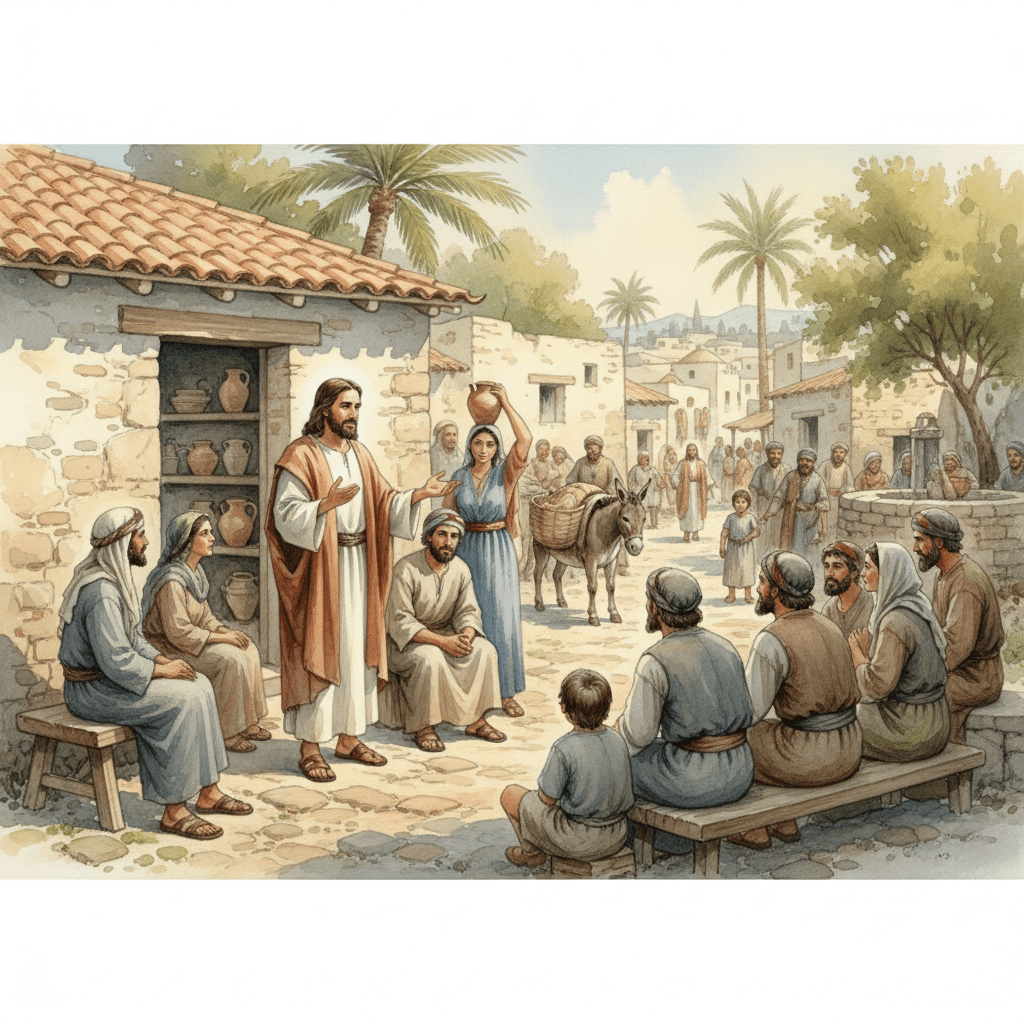
Reading Jesus' Ministry Path in the Small Town of Gennesaret, North of Galilee
As we read the Gospels, Gennesaret appears more frequently than expected. The name is familiar, but it’s not always easy to vividly recall what kind of place it was. However, biblical place names are not just background details—they represent real stages that support the meaning of the text. Understanding Gennesaret helps us see why Jesus’ Galilean ministry spread so rapidly, and why many people who saw Jesus up close couldn’t ultimately come to faith.
Gennesaret is known as a town located along the northwest coast of the Sea of Galilee. Situated conveniently amidst various villages around the lake, it was a hub of fishing and transportation. While it may seem like a quiet outskirts, it was actually a lively place with significant human interaction. In the Gospels, Jesus used Gennesaret as an important base for His ministry. Luke 4:31 states, “He went down to Capernaum, a town in Galilee, and on the Sabbath began to teach the people.” Jesus’ ministry was not in an abstract space; it took place among real people who lived, worked, suffered, and wrestled with conflicts.
The name Gennesaret is often understood as “City of Nahum,” but its precise origin is uncertain. What matters more than the etymology is the role the town plays in the Gospel accounts. Gennesaret was both the place where Jesus proclaimed His words and the place where people's hearts were exposed before those words. Some listened with wonder, some followed Him, and others remained stubborn.
The scenery of Gennesaret shown in the Gospels is diverse. There were fishermen, a synagogue, and traces related to taxation. In Luke 7:5, the Jewish elders say of the centurion, “He loves our nation and has built our synagogue.” This one verse suggests that Gennesaret was more than just a small fishing village. It had a Jewish religious community, was influenced by Roman rule, and was a bustling economic area. It’s natural that people around Jesus included fishermen, tax collectors, synagogue attenders, and soldiers.
Especially, Gennesaret was a place where Jesus’ authoritative words were vividly displayed. Mark 1:21 and following tell how Jesus entered the synagogue on the Sabbath and taught, and the people were amazed at His teaching. Why? Because He spoke with authority, unlike the scribes (“And they were astonished at His teaching, because He taught them as one having authority, and not as the scribes,” Mark 1:22). The narrative continues with Jesus healing an unclean spirit, Peter’s mother-in-law, and many others. This shows that Gennesaret was a scene of both word and miracle—miracles demonstrating the authority of His word, and the words providing the interpretive center for those miracles.
Furthermore, John 6:59 reports that Jesus was teaching in the synagogue at Gennesaret when He said, “I am the bread of life that came down from heaven.” While many were excited about the miracle of feeding with loaves, they hesitated to accept the truth that Jesus Himself was the true bread of life and that only belief in Him could lead to life. Gennesaret was a place that welcomed miracles but was hesitant to accept the deeper truth those miracles pointed to. This is a recurring human tendency shown in the Gospels: people long for grace but are reluctant to surrender their entire lives to Christ as Lord.
Thus, Gennesaret stands as both a privileged city and a city of warning. In Matthew 11:23, Jesus declares, “And you, Capernaum, will you be exalted to heaven? You will be brought down to Hades.” He explains: though many mighty works had been performed there, they did not repent. This warning is very serious: simply hearing many words does not automatically guarantee faith. The experience of Jesus’ nearness alone cannot save unless it leads to repentance and faith. The Bible clearly teaches that seeing grace up close is different from trusting in that grace. Regularly hearing the gospel is not the same as living by it.
At this point, Gennesaret also becomes a mirror for us today. Being familiar with worship or the language of Scripture does not automatically produce faith. The longer we listen to the Word, the more tender we may become—or the more dulled. For example, even if we hear the Word every Sunday, if in our daily lives we prefer convenience over honesty, speak thoughtlessly to family, and still hold onto our own righteousness inwardly, we cannot take the warning of Gennesaret lightly. Conversely, those who humble themselves before the Word, hate sin, and rely on Christ—even in ordinary days—will bear fruit of transformation like the unnoticed disciples in Galilee.
Knowing Gennesaret also changes how we read the Gospels. Jesus’ ministry was not just a distant ideal or abstract teaching; it happened on streets, in homes, synagogues, and by the seaside. People heard His calling amid their livelihoods, approached Him with their sick bodies, and encountered grace even as sinners. This means the gospel is not outside life but enters into the heart of life. Jesus does not only visit at specific moments; He comes into busy routines, repetitive work, complex relationships, and broken hearts and minds, speaking to us. In this context, regularly reading the Gospels is very important. If you continue with Bible Reading and pay attention to place names and events, Jesus’ ministry will come alive in a more vivid, three-dimensional way.
Another point not to overlook is that Jesus’ ministry was always centered on the Word. People marveled at His miracles, but the Gospel emphasizes His authority first and foremost in His teaching. Healing and miracles were signs revealing His truth, not spectacles that pushed His Word aside. Therefore, when contemplating Gennesaret, our focus should be clear: not just marveling at the wonders, but looking to Christ who revealed Himself through those wonders. Using resources like Meditation or QT can help cultivate the habit of reflecting on the Word.
Ultimately, Gennesaret was a place where human hearts revealed themselves in the face of the near-coming Kingdom of God. Some were amazed by His authority and turned away, while others left everything behind and followed Him. Even within the same town, with the same words and the same era, reactions varied. Knowing Gennesaret is not just geographic knowledge; it prompts us to examine our attitude toward the Word. Are we long-time hearers of the gospel, or are we still repenting and believing before Him today? The place of Gennesaret is not distant. Wherever we hear His Word today, that question is again posed before us.
As we continue reading the Gospels, Gennesaret becomes more than just a town of a bygone era—it symbolizes the human heart that can grow numb even near grace. Therefore, we should not stop at merely knowing much about the Word but should humble ourselves before it. Jesus Christ is not just a miracle worker but our Savior who calls sinners and proclaims the Kingdom of God. The authority revealed in Gennesaret remains the same today, and His words still demand repentance and faith. If we wish to stand daily before His Word and examine ourselves, resources like Today’s Word or Today’s Reading Chart can be helpful for faithfully following the Gospel.
Related articles
 Bible Habit
Turn this article into today’s reading habit
Keep your McCheyne plan, sequential reading, notes, and progress together so the next passage is always clear.
- Today’s passages
- Reading checklist
- Notes and highlights