

A Living Faith That Turns Tongue and Hand: Lessons from James 2
Exploring the meaning of unconditional love and active faith based on James 2. Salvation rests solely on 믿음 in Christ, and 행함 is the fruit that reveals that 믿음 is alive.
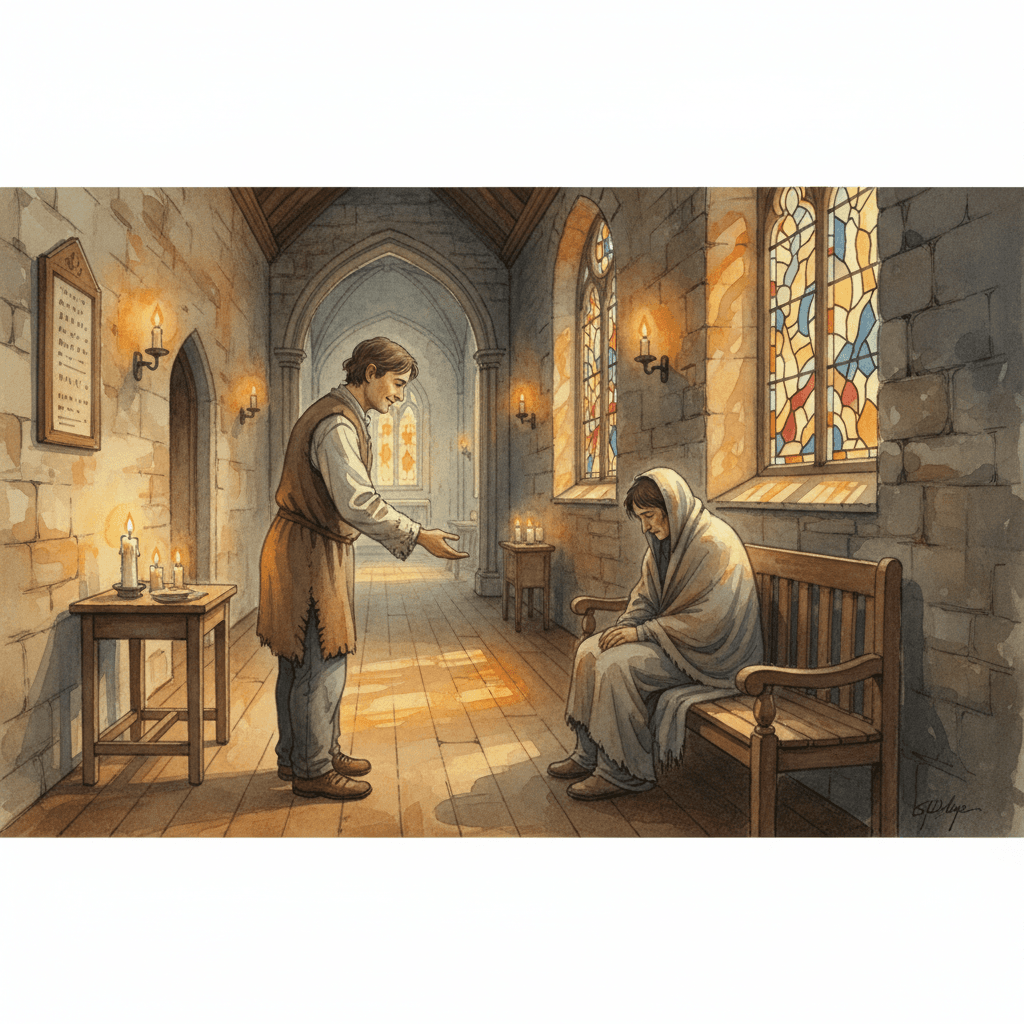
A Living Faith That Turns Tongue and Hand: Lessons from James 2
Faith is not something we merely confess on Sundays. The hymns and Amen we utter in worship ultimately influence our tone of voice on Mondays, our perspective on others, our honesty in taking losses, and our attitude towards the weak. This is why James 2 can be both uncomfortable and healthy for us. It states clearly that if 믿음 is truly alive, it will inevitably change the fabric of our lives.
First, we must be clear on one point: we are not saved by works. Sinners are justified solely through 믿음 in Jesus Christ. This is the unshakeable core of the gospel. The 행함 James talks about is not the price of salvation but the fruit produced by those who have been 믿음-받은. Thus, when reading James 2, the foremost understanding should be that 행함 is not replacing the gospel but a result of 믿음 transforming a person.
James begins by directly addressing the issue of 차별 (discrimination). "My brothers, show no partiality as you hold the 믿음 of our Lord Jesus Christ, the Lord of glory" (James 2:1). In the early church, wealthy and poor people came together, and it was tempting to judge and treat them differently based on appearance or social status. The worldly order, which seemed to value one's worth based on status and possessions, might have seemed natural even within the church. However, James emphasizes that this is incompatible with 믿음. A community confessing Jesus as Lord cannot follow the same social hierarchies the world upholds.
This message remains vital today. We often think we don't discriminate openly, but reality shows we quickly classify people. We are kinder to eloquent speakers or those who seem to have good backgrounds, while shutting the door to those who feel clumsy or inconvenient. 믿음 is tested precisely here. Reflecting on whom we greet more warmly, whose mistakes we forgive easily, and who triggers cold reactions in us reveals our heart's standards. James reminds us that not only our worship attitude but also our way of seeing people should be renewed by the gospel.
Next, James states, "If you truly fulfill the royal law according to the Scripture, ‘You shall love your neighbor as yourself,’ you do well" (James 2:8). This contains a very practical challenge. Loving neighbors is not an abstract feeling but a respectful attitude towards others because God considers their souls precious. Love is demonstrated through actions, not just emotions. Listening attentively when someone is in trouble, considering their circumstances before judging, and not ignoring their need for help—all these are acts of love.
The most well-known verse in James 2 is, "Faith without works is dead" (James 2:17). While this might seem to conflict with Paul’s teaching, in reality, they address different errors. Paul clearly states that no one can be justified by the works of the law. Conversely, James warns against dead faith—profession without life change. Paul discusses the basis of salvation, while James points to the evidence of a 믿음-생긴 life. True 믿음 is not merely mental assent but a trust that moves us.
James uses a practical example: if a brother or sister is hungry or lacking daily food, and we only say, "Go in peace, be warmed and filled," without providing what they need, what value is there? (James 2:15-16). Although kind words are not wrong, words without actual help can be mere indifference in the name of love. Similar moments happen in everyday life: when someone shares struggles, we might quickly offer advice or instinctively draw boundaries, not wanting to be involved. Of course, we cannot meet every request, but the gospel awakens us from apathy. It urges us to find small ways to help, to show genuine interest, and to offer honest comfort.
When applied practically, this becomes clearer: if at work a new colleague struggles and makes mistakes, instead of dismissing or ignoring them, 믿음 that is alive chooses to explain kindly. It may take more time and delay our tasks, but it reflects that we see people beyond just numbers or efficiency. The same applies at home. Instead of snapping at tired family members, pausing and responding gently shows living 믿음. Addressing hurt feelings swiftly, rather than letting them fester, also demonstrates authentic faith. These choices are subtle but precious in God's eyes.
James illustrates with the example of Abraham: faith is made complete by 행함 (James 2:21-22). Abraham believed God first, and his 믿음 was expressed through obedience. 행함 is not an adversary to 믿음 but its companion. If 믿음 is the root, 행함 is the fruit. As a healthy root bears fruit over seasons, genuine 믿음 manifests over time through life changes. The speed and shape vary—some change in words first, others in handling money, and some in restoring relationships. The key is not perfection but life. A living tree inevitably bears leaves and fruit.
James also cites Rahab as an example. Though she was someone with no social or moral standing, her 믿음 in God was demonstrated through行动 (James 2:25). This exemplifies the beauty of the gospel: God does not only accept those with a good background. He welcomes those who approach Him in 믿음, and that 믿음 changes their lives’ course. James 2 is not a chapter meant to crush us with despair; instead, it prompts us to examine ourselves with hope. If we truly 믿음 in Christ, that 믿음 will gradually influence our choices today.
So, how can we live out James 2 today? First, practice viewing others with dignity rather than benefit. Remember that every person is created in God's image, not primarily based on how helpful they are to us. Next, reduce superficial kindness and increase genuine acts of love. Start by asking about their needs, taking time to listen, meeting small needs, and thinking concretely about how we can help. Also, be cautious with judgments and biases in our 믿음 confessing. Our habit of evaluating people through our tastes and standards often conflicts with the gospel.
These self-checks become clearer when we read and meditate on the Word regularly. Confirm the passage through 성경 읽기, start your day with 오늘의 말씀, and revisit what 묵상이란 truly means. Passages that directly guide our life direction, like James, are more fruitful when meditated upon slowly rather than hurried.
Most importantly, when reading James 2, guard against building self-righteousness. Emphasizing 행함 can easily lead us to think, “I do this much.” However, true 행함 flows from knowing Christ’s grace. Because the Lord compassionately accepted us despite our unworthiness, we cannot treat others dismissively. Because He loved us not only with words but by giving Himself, we are compelled to translate love into tangible actions. Ultimately, James 2 demonstrates that faith practically transforms a person, not that mere external works make us righteous.
When 믿음 that begins in the tongue extends to the hands and feet, faith gains a language for everyday life. The attitude towards one person today, noticing needs and choosing love instead of discrimination—these small, conscious decisions keep James 2 always in the present tense. 믿음 is invisible, but its fruits are unmistakable. In our daily routines, we can quietly reflect: how is the gospel I confessed affecting my speech and actions today? It’s okay not to be perfect; genuine 믿음 today continues to lead us toward imitating Christ.
Related articles
Why Did Israel Disobey Both Commands?
Deuteronomy 1 contrasts Israel’s refusal to go up when commanded with their later decision to go up after being told not to.
Why the Israelites Could Not Enter Canaan in Numbers 14
The Israelites rejected Canaan out of fear, then defied God’s command again by trying to enter after hearing His judgment. Explore the repetition and contrasts in Numbers 14.
How Does Leviticus 26 Connect Obedience and Covenant?
Leviticus 26 draws a sharp contrast between the consequences of obedience and disobedience while affirming that, even in the midst of discipline, God will not break His covenant with Israel.
 Bible Habit
Turn this article into today’s reading habit
Keep your McCheyne plan, sequential reading, notes, and progress together so the next passage is always clear.
- Today’s passages
- Reading checklist
- Notes and highlights