

Pharaoh’s Refusal Continued After the Locusts and Darkness
Explore the plagues of locusts and darkness in Exodus 10, Pharaoh’s restrictive proposals and repeated refusal, and God’s purpose in displaying these signs.
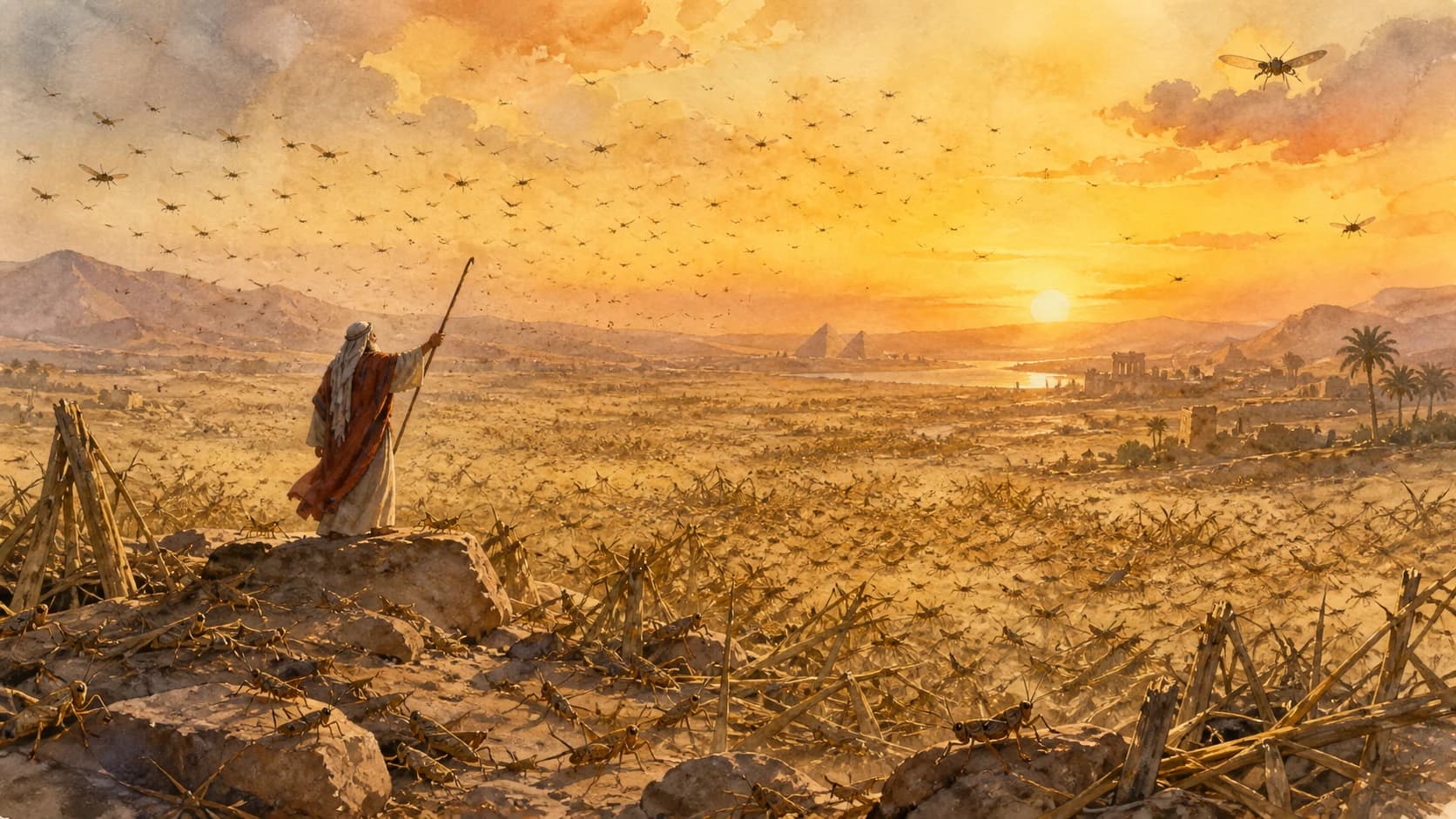
Even after enduring the plagues of locusts and darkness, Pharaoh refused to let all the Israelites go. Exodus 10 shows him placing restrictions on God’s command to let the people worship the LORD—and then refusing once again. Throughout this process, God displayed His signs and declared that the Israelites would tell their children about what He had done so that they might know the LORD.
Pharaoh Put Conditions on the Command to Worship the LORD
The LORD sent Moses and Aaron to Pharaoh. They asked him how long he would refuse to humble himself before the LORD. Then they delivered God’s command to let the Israelites go so that they could worship Him.
Pharaoh’s officials urged him to release the Israelites, warning that he should realize by now that Egypt was ruined. Pharaoh summoned Moses and Aaron again and asked who would be going. Moses replied that everyone—young and old, sons and daughters—would go, along with their flocks and herds, because they were to celebrate a festival to the LORD.
Pharaoh, however, told them that only the men could go and worship. He would not accept Moses and Aaron’s request as given. In the end, the two of them were driven from Pharaoh’s presence.
The Locusts Devoured Even What the Hail Had Left Behind
The LORD warned that if Pharaoh continued to refuse to release His people, locusts would invade Egypt. They would cover the ground and consume everything that had survived the hail, including the trees in the fields. They would also fill Pharaoh’s palace, the homes of his officials, and the houses of all the Egyptians.
When Moses stretched out his staff over Egypt, the LORD caused an east wind to blow across the land. By morning, the wind had brought in the locusts. They covered all of Egypt and devoured every plant in the fields and every fruit on the trees. Nothing green remained anywhere in the land.
Pharaoh urgently summoned Moses and Aaron. He confessed that he had sinned against the LORD and against them, and pleaded with them to take this deadly plague away. When Moses prayed to the LORD, a powerful west wind swept the locusts into the Red Sea. Yet Pharaoh still refused to let the Israelites go.
Even After the Darkness, Pharaoh Would Not Let Everything Go
The LORD instructed Moses to stretch out his hand toward the sky. When Moses did so, thick darkness covered all of Egypt for three days. People could not see one another or leave their homes. The Israelites, however, had light wherever they lived.
Pharaoh summoned Moses again. This time, he said that even the children could go, but their flocks and herds had to remain behind. Moses replied that not a single animal could be left behind. They would need some of the livestock to worship the LORD, and until they arrived, they would not know what they were to use in worship.
Once again, Pharaoh refused to let them go. He ordered Moses to leave and warned that Moses would die if he ever appeared before him again. Even after the locusts and darkness had passed, Pharaoh’s refusal continued.
Summarize the Repeated Pattern in Exodus 10 in One Sentence Today
God said that the Israelites would tell their children and grandchildren about the signs He had performed in Egypt so that they would know that He is the LORD. As you read this chapter, look beyond the severity of the plagues. Notice also how Pharaoh responded to God’s word by imposing restrictions and then refusing once again.
Today, read all of Exodus 10, then write one sentence summarizing Pharaoh’s repeated refusal after both plagues and God’s purpose in displaying these signs.
Scripture References
- Exodus 10:1–2
- Exodus 10:3–11
- Exodus 10:12–20
- Exodus 10:21–29
Related articles
Why Does Deuteronomy 4 Tell Us to Remember and Obey?
Deuteronomy 4 explains why Israel must remember what they personally saw and heard God do, refuse to make idols, and obey his word without adding to it or taking away from it.
Why Did Israel Disobey Both Commands?
Deuteronomy 1 contrasts Israel’s refusal to go up when commanded with their later decision to go up after being told not to.
Why Does Numbers 33 Record Israel’s Journey?
Numbers 33 records Israel’s journey from Egypt to the plains of Moab and reveals the commands the Israelites were required to obey when they entered Canaan.
 Bible Habit
Turn this article into today’s reading habit
Keep your McCheyne plan, sequential reading, notes, and progress together so the next passage is always clear.
- Today’s passages
- Reading checklist
- Notes and highlights