

Exodus 14: Salvation at the Sea
Explore how the LORD saved Israel in Exodus 14 by turning the sea into dry ground as Pharaoh’s army pursued them.
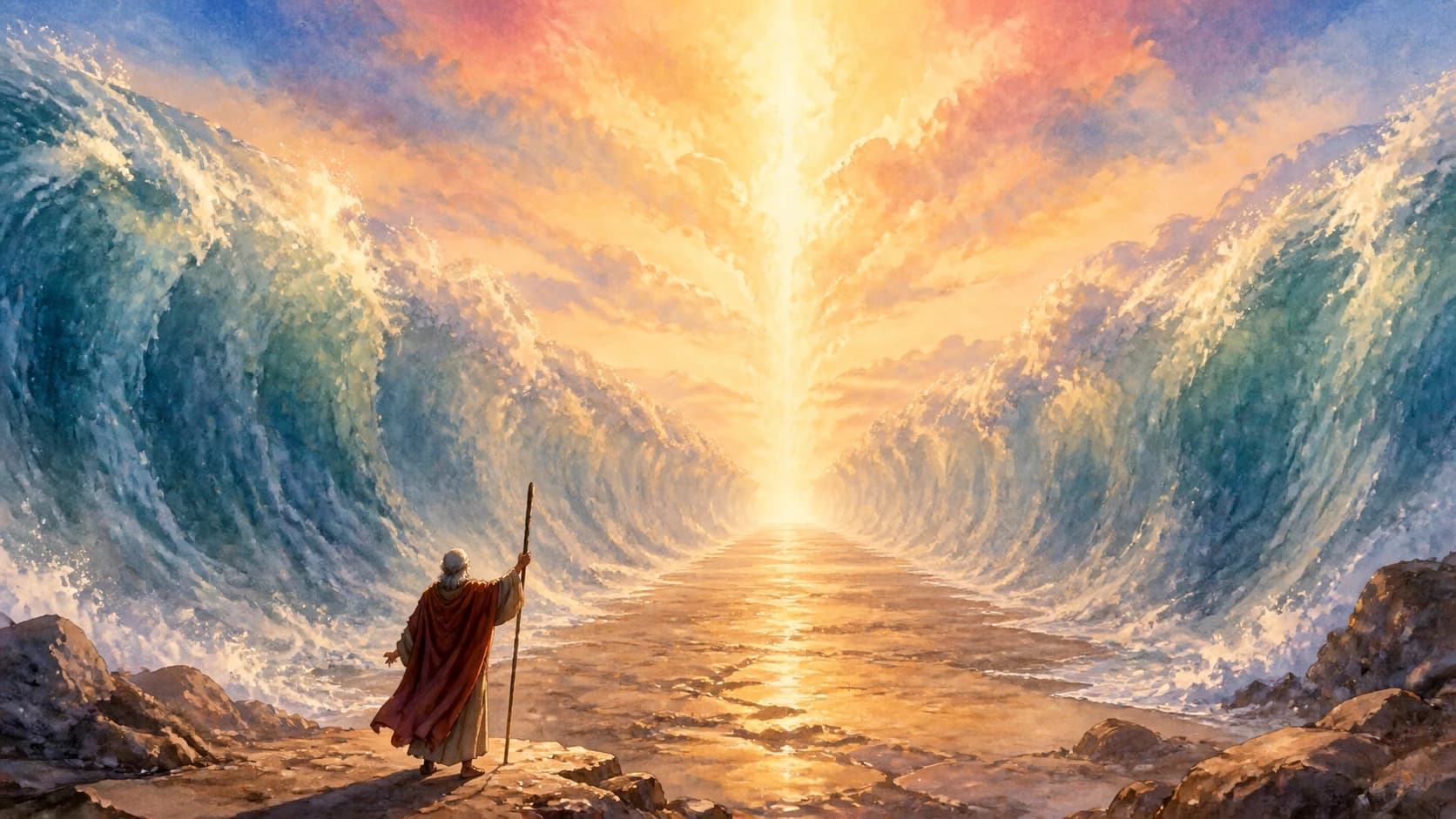
In Exodus 14, it is the LORD who saves Israel from the crisis at the sea. He turned the sea into dry ground so that the people could cross, and He stopped the Egyptian army pursuing them. This event shows that the LORD fought for Israel and delivered them.
The People Were Afraid Between the Sea and the Army
The LORD instructed the Israelites to camp by the sea. Pharaoh assumed that they were trapped in the wilderness. Pharaoh and his officials regretted letting Israel go, so he set out in pursuit with six hundred of his finest chariots, along with all the other chariots of Egypt.
When Pharaoh’s army drew near to the camp, the Israelites became terrified. They cried out to the LORD and confronted Moses, asking whether he had brought them into the wilderness to die. They feared the army before them so much that they said it would have been better to serve the Egyptians than to die in the wilderness.
The LORD Fights and Commands Them to Move Forward
Moses told the people not to be afraid but to stand firm and watch the LORD deliver them. He said that the LORD would fight for them and that they only needed to remain still. Defeating Pharaoh’s army did not depend on the people’s strength.
The LORD then commanded Moses to tell the Israelites to move forward. When Moses raised his staff and stretched out his hand over the sea, the waters would divide, and the people would walk through the sea on dry ground. They had to move forward along the path the LORD was making for them.
The Sea Becomes Dry Ground and a Path Opens
The angel of God and the pillar of cloud, which had been traveling in front of Israel’s camp, moved behind them. The pillar of cloud stood between the Egyptian and Israelite camps. As a result, the Egyptian army could not approach Israel throughout the night.
When Moses stretched out his hand over the sea, the LORD drove the water back with a powerful east wind that blew all night. The sea became dry ground, and the Israelites walked through with walls of water on their right and left. Just as the LORD had said, a path opened through the sea for His people to cross.
The People See the LORD’s Great Work and Believe
The Egyptian horses, chariots, and horsemen followed Israel into the sea. The LORD threw the Egyptian army into confusion and made their chariots difficult to drive. The Egyptians recognized that the LORD was fighting for Israel and tried to flee.
When Moses again stretched out his hand over the sea, the waters returned and covered the Egyptian chariots and horsemen. The Israelites, however, crossed through the sea on dry ground. That day, the LORD saved Israel from the hands of the Egyptians.
The people saw the great work the LORD had done against the Egyptians. As a result, they feared the LORD and put their trust in Him and in Moses. Exodus 14 begins with fear at the sea, but it ends with the LORD fighting for His people and saving them.
Read Exodus 14 Today
One simple step you can take today is to open Read the Bible and slowly read Exodus 14:13–16. Consider in order the words Moses spoke to the people and the LORD’s command to move forward. The passage itself reveals who does the fighting and what the people are commanded to do before Him.
Scripture References
- Exodus 14:1–12
- Exodus 14:13–18
- Exodus 14:19–29
- Exodus 14:30–31
Related articles
Why Israel Could Not Claim to Have Gained the Land by Its Own Righteousness
Deuteronomy 9 explains that Israel did not receive the land of Canaan because of its own righteousness, pointing to the nation’s repeated rebellion in the wilderness and Moses’ intercession.
What Should a Small Nation Remember in Deuteronomy 7?
Deuteronomy 7 explains why Israel, though small in number, was to remember God’s deliverance from Egypt, reject other gods, and obey His commands when facing stronger nations.
Why Did Israel Pass Through Some Lands but Fight Sihon?
Deuteronomy 2 reveals the boundaries of God’s commands: Israel was to pass through the lands of Edom, Moab, and Ammon without conflict, but fight for the land of Sihon, which God had given into their hands.
 Bible Habit
Turn this article into today’s reading habit
Keep your McCheyne plan, sequential reading, notes, and progress together so the next passage is always clear.
- Today’s passages
- Reading checklist
- Notes and highlights