

How Did the LORD Lead the People He Saved in Exodus 15?
Explore Israel’s song after crossing the sea and the bitter water at Marah in Exodus 15 to see how the LORD continued to lead the people He had saved.
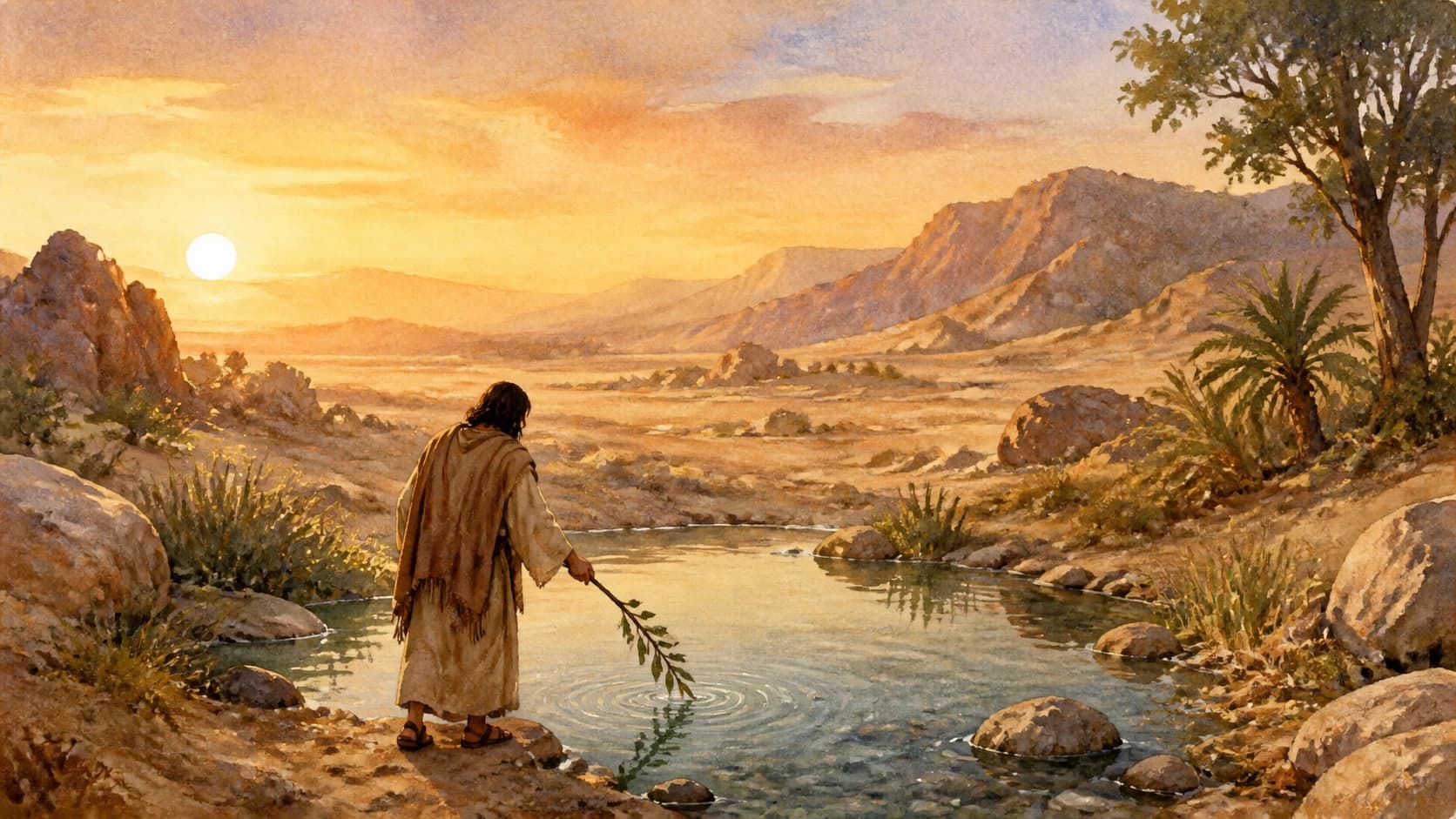
In Exodus 15, the LORD saved Israel at the sea and continued to lead His redeemed people by making the bitter water at Marah sweet. The chapter moves from the people’s song after crossing the sea to their lack of water in the wilderness and the LORD’s response. These two events reveal what the LORD did for His people.
After the Song, There Was No Water to Drink
Moses and the Israelites sang about what had happened at the sea. Miriam took a tambourine in her hand, and all the women followed her with tambourines and dancing. The people praised the LORD for His glorious triumph, declaring that He had thrown the horse and its rider into the sea.
Afterward, Moses led Israel away from the Red Sea and into the Wilderness of Shur. The people traveled for three days without finding water. When they reached Marah, they could not drink its water because it was bitter. They grumbled against Moses and asked what they were supposed to drink.
Exodus 15 places the song sung immediately after crossing the sea alongside the people’s struggle to find water in the wilderness. This raises a clear question: How would the LORD who saved them at the sea respond when they had no water to drink?
They Sang of the LORD Who Saved Them at the Sea
In the song, the LORD is called Israel’s strength, song, and salvation. Pharaoh’s chariots and army entered the sea, and the waters flowed back over them. Meanwhile, the Israelites walked through the sea on dry ground.
Moses and the Israelites sang of this event as an act of salvation performed by the LORD. They confessed that His right hand was majestic in power. They also asked who could compare with the LORD—majestic in holiness and working wonders.
The song looks beyond what happened at the sea. It declares that the LORD leads the people He redeemed with unfailing love. It sings of His protection until His people pass by and of how He will bring them to His dwelling place. It concludes by proclaiming that the LORD will reign forever.
He Answered the Cry at Marah
When there was no water to drink, the people grumbled against Moses. Moses cried out to the LORD, and the LORD showed him a piece of wood. When Moses threw it into the water, the water became sweet.
There the LORD established a statute and ordinance for the people and tested them. He told them to listen to His voice, do what was right in His sight, and obey His commands and decrees. He also revealed Himself as the LORD who heals them.
The people then came to Elim, where they found twelve springs of water and seventy palm trees. They camped there beside the water. The passage begins with a lack of drinkable water, continues with the bitter water at Marah becoming sweet, and ends with the people staying at Elim, where springs of water were plentiful.
Both Events Reveal the LORD’s Guidance
At the sea, the LORD saved Israel when Pharaoh’s chariots and army pursued them. At Marah, He answered Moses’ cry when the people stood before water they could not drink. The circumstances and the form of His response differed, but in both events the people received help because of what the LORD did.
The song describes the LORD as Israel’s salvation and as the One who leads His redeemed people with unfailing love. The account at Marah then shows that He also answered them when they had no water in the wilderness. Through both a song of praise and an event in the wilderness, Exodus 15 shows that the LORD continues to lead the people He has saved.
Read Exodus 15 Today
One thing you can do today is read Exodus 15:1–27 once. Follow the sequence of what the LORD did at the sea, the song Israel sang, His response at Marah, and their arrival at Elim. As you read, you will see how the chapter describes salvation and guidance in its own words.
Scripture References
- Exodus 15:1–21
- Exodus 15:22–27
Related articles
Why Israel Could Not Claim to Have Gained the Land by Its Own Righteousness
Deuteronomy 9 explains that Israel did not receive the land of Canaan because of its own righteousness, pointing to the nation’s repeated rebellion in the wilderness and Moses’ intercession.
What Should a Small Nation Remember in Deuteronomy 7?
Deuteronomy 7 explains why Israel, though small in number, was to remember God’s deliverance from Egypt, reject other gods, and obey His commands when facing stronger nations.
Why Does Deuteronomy 4 Tell Us to Remember and Obey?
Deuteronomy 4 explains why Israel must remember what they personally saw and heard God do, refuse to make idols, and obey his word without adding to it or taking away from it.
 Bible Habit
Turn this article into today’s reading habit
Keep your McCheyne plan, sequential reading, notes, and progress together so the next passage is always clear.
- Today’s passages
- Reading checklist
- Notes and highlights