

How Did God Provide Food in Exodus 16?
Exodus 16 recounts how God heard the Israelites’ complaints, provided them with food each day in the wilderness, and taught them to gather it as instructed and rest on the Sabbath.
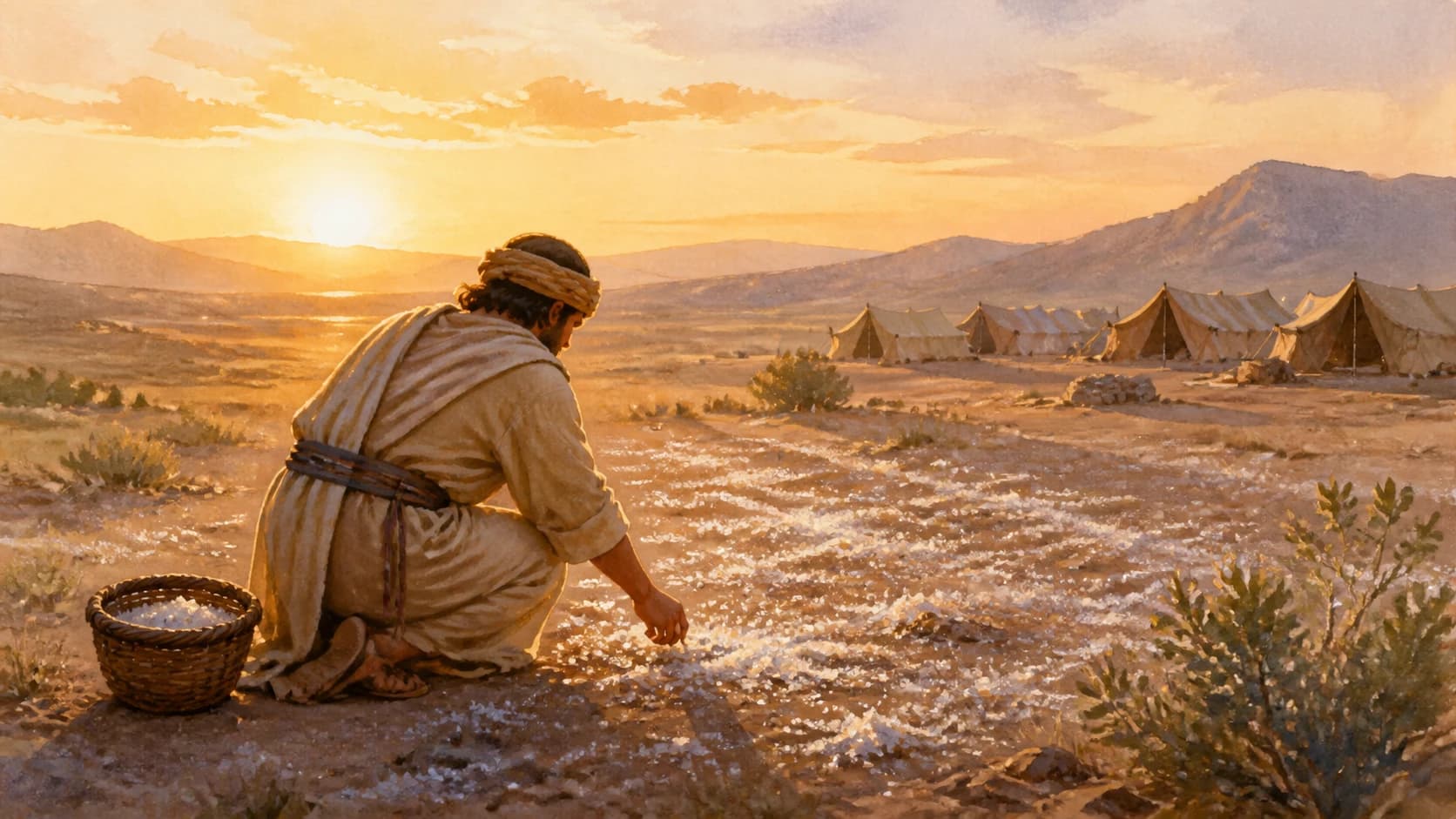
God provided food for the Israelites when they complained in the wilderness. He instructed them to gather only what they needed each day and to rest on the seventh day. Exodus 16 shows how God responded when the people feared they would run out of food. It also explains in detail how they were to gather what He provided.
The People Worried About Food in the Wilderness
The whole Israelite community left Elim and arrived in the Wilderness of Sin. There they complained against Moses and Aaron. They recalled sitting by pots of meat in Egypt and eating all the bread they wanted. They then accused Moses and Aaron of bringing them into the wilderness to starve them to death.
The passage makes clear that their complaints were not directed at Moses and Aaron alone. Moses told them that they were grumbling against the Lord. God also said that He had heard the complaints of the Israelites. Both the hardship they faced and the resentment they expressed were fully known to God.
The Food God Provided in the Evening and Morning
God said that He would rain down bread from heaven. The people were to go out each day and gather only what they needed for that day. In the evening, quail came and covered the camp. In the morning, after the dew had dried, thin flakes as fine as frost appeared on the ground throughout the wilderness.
The people did not know what it was. Moses explained that it was the bread the Lord had given them to eat. When they gathered it as God had commanded and measured what they had collected, those who gathered much had nothing left over, while those who gathered little had no shortage. Everyone gathered as much as they needed.
God said that through this provision, the people would know that He was the Lord their God. The food did more than satisfy their hunger. Through the food they actually received each evening and morning, the Israelites came to recognize the One who had heard their complaints.
Gathering Each Day Without Keeping Any Overnight
Moses instructed the people not to keep any of the food until morning. Some, however, refused to listen and saved part of it. By morning, it was full of maggots and began to smell. After that, the people gathered what they needed every morning. When the sun grew hot, whatever remained on the ground melted away.
This command taught the people to receive their food according to God’s instructions instead of storing up as much as they could according to their own judgment. The passage connects God’s command to gather daily with the result of gathering only what was needed for that day. Whether someone gathered much or little, everyone had enough food.
Preparing on the Sixth Day and Resting on the Seventh
On the sixth day, each person gathered twice the usual amount. Moses explained that the next day would be a Sabbath rest, holy to the Lord, so they were to keep what remained until morning. This time, the food neither smelled nor developed maggots overnight.
No food could be gathered from the ground on the seventh day. Even so, some of the people went out to gather it but found nothing. God had given them two days’ worth of food on the sixth day and commanded them to remain where they were on the seventh. In obedience to His word, the people rested on the seventh day.
One thing you can do today is read all of Exodus 16 and mark the food God provided each day separately from the food He provided in advance for the seventh day. This will help you see within the passage how God’s provision, the people’s obedience, and Sabbath rest are woven together.
Scripture References
- Exodus 16:1–3
- Exodus 16:4–18
- Exodus 16:19–21
- Exodus 16:22–30
- Exodus 16:31–35
Related articles
Why We Must Remember God in Times of Plenty
Deuteronomy 8 places the hunger and manna of the wilderness alongside the abundance of the Promised Land, explaining why we must not forget God when we have plenty.
How the Ten Commandments Transformed the Lives of a Formerly Enslaved People
Deuteronomy 5 teaches that Israel, once enslaved in Egypt, was to hear God’s covenant and live in a way that protected rest, life, and the property of others.
Why Does Numbers 28 Repeat the Offerings Appointed for Specific Times?
Numbers 28 begins with the regular burnt offerings presented each morning and at twilight, then adds offerings for the Sabbath, New Moon, and appointed festivals. Explore how these repeated commands ordered Israel’s days, months, and sacred seasons.
 Bible Habit
Turn this article into today’s reading habit
Keep your McCheyne plan, sequential reading, notes, and progress together so the next passage is always clear.
- Today’s passages
- Reading checklist
- Notes and highlights