

How the Water Crisis and Battle Were Resolved in Exodus 17
Follow the two events in Exodus 17 to see how Israel’s lack of drinking water and Amalek’s attack were resolved.
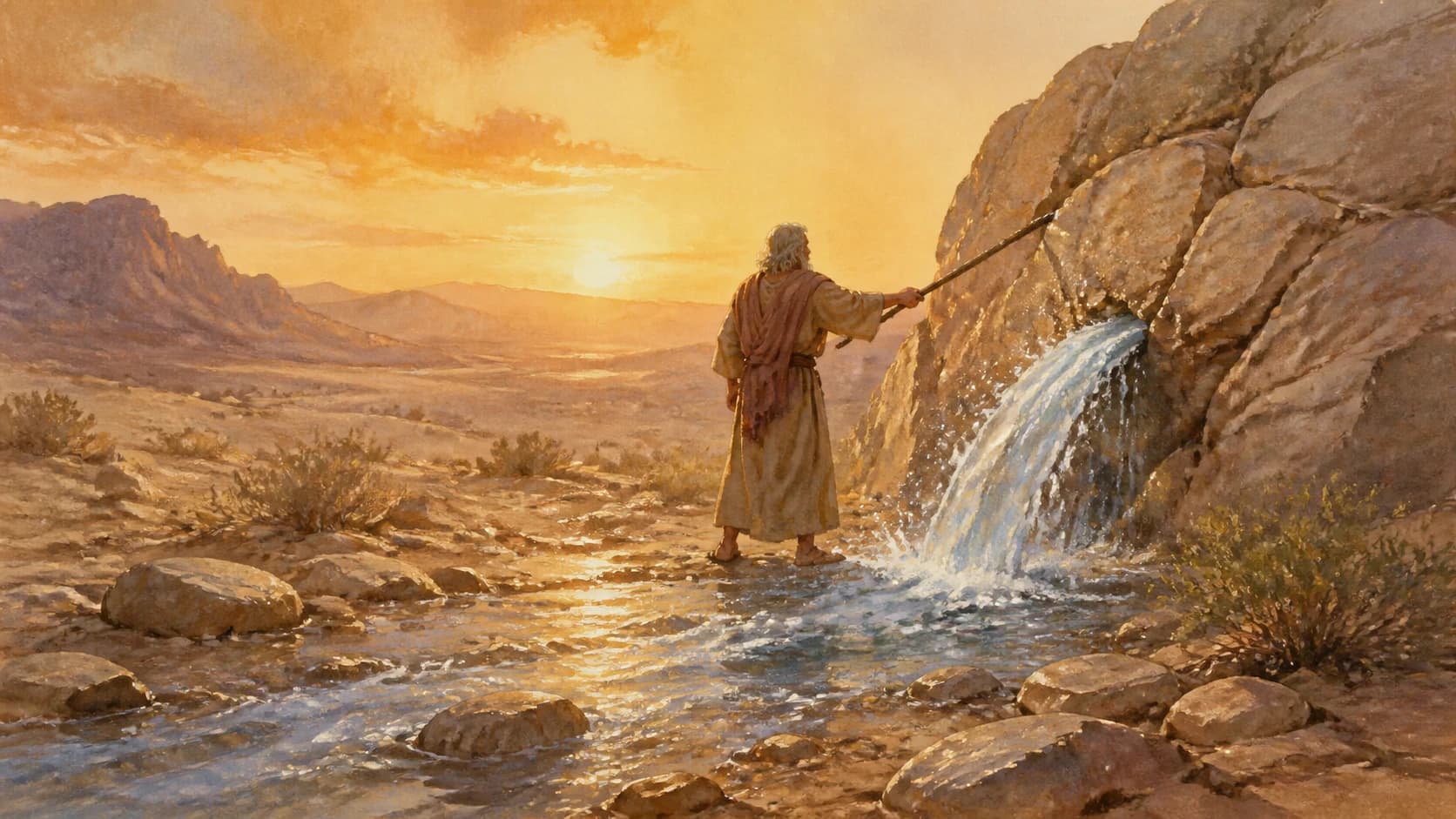
In Exodus 17, the crisis caused by a lack of water was resolved when the LORD commanded Moses to strike the rock, and water flowed from it. During the battle against Amalek, Aaron and Hur supported Moses’ hands while Joshua fought, and Israel prevailed. Exodus 17:1–16 records these two crises and how each was resolved.
The People Quarreled When There Was No Water to Drink
The whole congregation of the Israelites left the Wilderness of Sin as the LORD commanded. Following their journey, they camped at Rephidim, but there was no water for the people to drink.
The people quarreled with Moses and demanded water. As their thirst grew, they complained that he had brought them, their children, and their livestock out to die of thirst. Moses told them not to quarrel with him or put the LORD to the test.
Their demand for water eventually became a question of whether the LORD was truly among them. Moses cried out to the LORD, saying that the people were nearly ready to stone him. The lack of drinking water had intensified the conflict between the people and Moses.
The LORD Brought Water from the Rock
The LORD told Moses to go ahead of the people. He was also instructed to take some of the elders of Israel with him and carry the staff with which he had struck the Nile.
The LORD said that when Moses struck the rock at Horeb, water would flow from it for the people to drink. Moses did exactly as he was told in the sight of the elders of Israel. Water came out of the rock, and the people were able to drink.
Moses named the place Massah and Meribah. The passage connects these names with the Israelites’ quarreling and their testing of the LORD. The crisis ended when Moses followed the LORD’s instructions and struck the rock.
In Battle, Some Hands Fought While Others Gave Support
Afterward, Amalek came and fought against Israel at Rephidim. Moses told Joshua to choose some men and go out to fight. He said that he would stand on top of the hill with the staff of God in his hand.
While Joshua fought against Amalek, Moses, Aaron, and Hur went up to the top of the hill. Whenever Moses held up his hands, Israel prevailed, but whenever he lowered them, Amalek prevailed.
When Moses’ arms grew tired, Aaron and Hur brought a stone for him to sit on. Standing on either side, they supported his hands and kept them steady until sunset. Meanwhile, Joshua defeated Amalek and his people with the sword.
Each Crisis Called for Different Roles
When there was no water, the LORD instructed Moses to strike the rock, and Moses obeyed. During the battle, Joshua led the men into combat. Moses held the staff of God, while Aaron and Hur supported his weary hands.
The two crises were not resolved in the same way. The passage records not only the roles of Moses, who struck the rock, and Joshua, who fought, but also those of the elders, Aaron, and Hur. After the battle, Moses built an altar and named it The LORD Is My Banner.
Today, Write Down What Each Person Did
Today, read Exodus 17 and summarize each person’s role in the two events in one sentence. You might write, “When there was no water, Moses struck the rock as the LORD commanded; during the battle, Joshua fought while Aaron and Hur supported Moses’ hands.” This single sentence captures both the crises and the way each was resolved.
Scripture References
- Exodus 17:1–7
- Exodus 17:8–16
Related articles
Why Does Deuteronomy 4 Tell Us to Remember and Obey?
Deuteronomy 4 explains why Israel must remember what they personally saw and heard God do, refuse to make idols, and obey his word without adding to it or taking away from it.
What Responsibility Did Deuteronomy 3 Give Those Who Had Received Their Land?
Deuteronomy 3 recounts the defeat of King Og of Bashan, the allocation of land east of the Jordan, the command to lead their fellow Israelites into battle, and the responsibility entrusted to Joshua.
Why Did Israel Disobey Both Commands?
Deuteronomy 1 contrasts Israel’s refusal to go up when commanded with their later decision to go up after being told not to.
 Bible Habit
Turn this article into today’s reading habit
Keep your McCheyne plan, sequential reading, notes, and progress together so the next passage is always clear.
- Today’s passages
- Reading checklist
- Notes and highlights