

Why Did the Israelites Prepare at the Foot of the Mountain in Exodus 19?
Explore the meaning of Israel’s preparation at Mount Sinai by tracing the flow of Exodus 19, where God first reminds them of the exodus and then commands them to consecrate themselves and observe the boundaries.
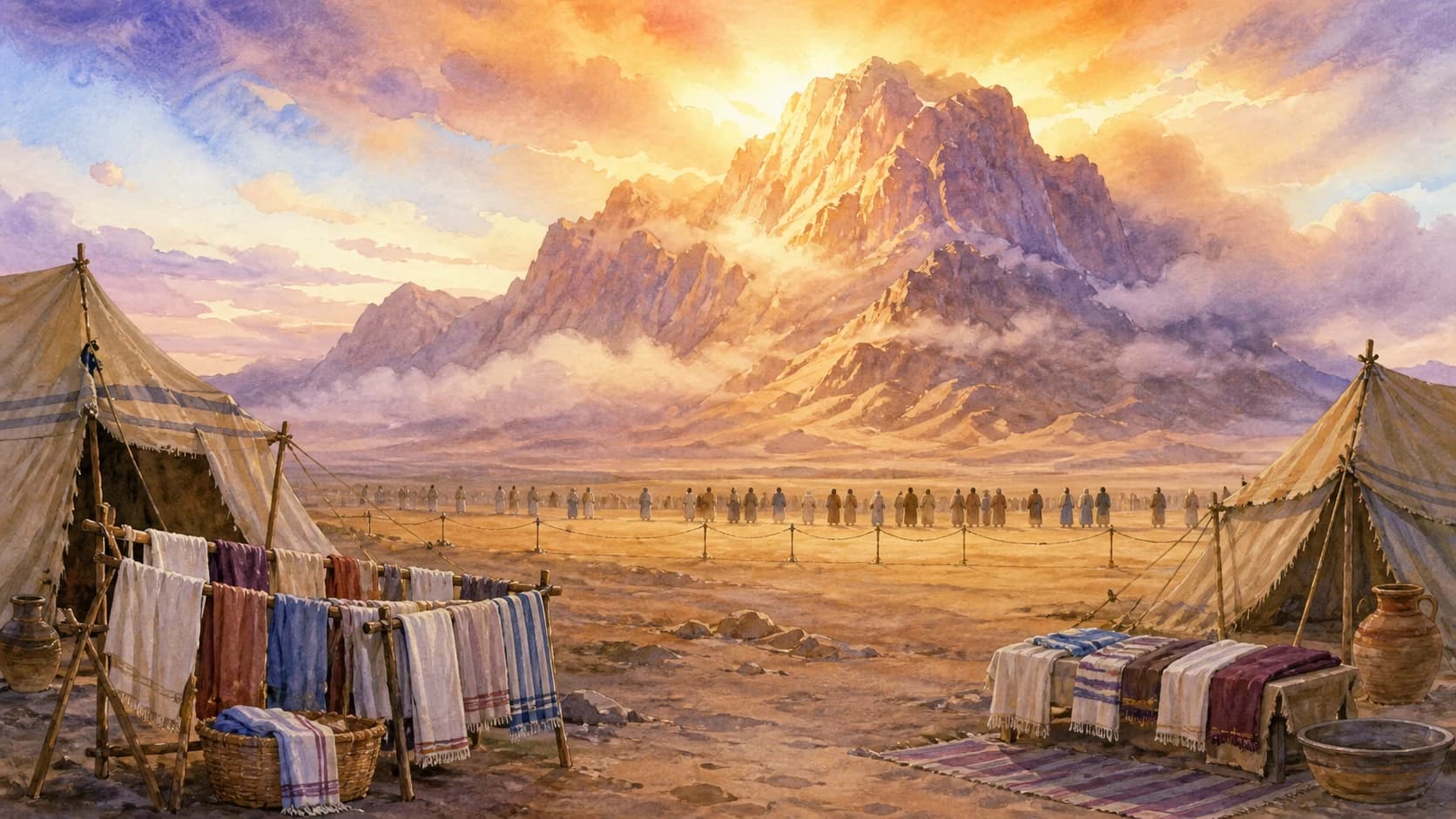
In Exodus 19, the Israelites prepared at the foot of the mountain to await the LORD’s descent on Mount Sinai in the sight of all the people. God commanded them to wash their clothes, consecrate themselves, and not cross the appointed boundaries. Exodus 19:1–25 begins with God reminding them of the exodus, then moves through the people’s response and preparation to God’s descent and repeated warnings.
God First Spoke of What He Had Done
In the third month after leaving Egypt, the Israelites arrived at the Wilderness of Sinai. They camped in front of the mountain, and Moses went up to God. God told Moses to remind the people of what they had already witnessed.
God spoke of what he had done to the Egyptians and how he had carried Israel on eagles’ wings and brought them to himself. The people’s arrival at Mount Sinai cannot be explained merely as the result of finding their own way there. They stood there because God had brought them out of Egypt and led them to himself.
God then said that if the people faithfully obeyed him and kept his covenant, they would be his treasured possession among all nations—a kingdom of priests and a holy nation. Although the whole earth belonged to God, Israel was called to listen to his voice and keep his covenant. When Moses delivered these words to the elders, all the people answered together that they would do everything the LORD had commanded.
The People Awaited God’s Descent in the Way He Appointed
God declared that on the third day he would descend on Mount Sinai in the sight of all the people. They were to consecrate themselves that day and the next and wash their clothes. Moses came down from the mountain, consecrated the people, and they washed their clothes. The command to prepare led to concrete action.
Their waiting also involved boundaries. God instructed Moses to set limits around the mountain and forbade the people from climbing it or crossing its boundary. When the ram’s horn sounded a long blast, they could approach the mountain, but they were also warned that any person or animal crossing the boundary would not live. Hearing that God would descend did not give the people permission to climb the mountain as they pleased. They had to follow the time and place God had appointed.
On the morning of the third day, thunder and lightning came, and a dense cloud covered the mountain. A very loud trumpet blast rang out, and everyone in the camp trembled. Moses led the people out of the camp, and they stood at the foot of the mountain. The LORD descended in fire, smoke covered the mountain, and the whole mountain shook violently.
God Reaffirmed the Boundary Twice
After descending on the summit, God called Moses up the mountain. As soon as Moses came up, however, God told him to go back down and warn the people. Otherwise, they might break through the boundary to look at the LORD, and many of them could perish. Even the priests who approached God had to consecrate themselves.
Moses replied that the people could not come up because a boundary had already been established around the mountain. Even so, God again commanded him to go down. Aaron could come up with Moses, but the priests and the people were not to break through the boundary and ascend the mountain. Moses therefore returned to the people and delivered God’s warning.
The reason the command to wash their clothes and wait for the third day—and the warning not to cross the mountain’s boundary—was repeated is clear within the passage. God truly descended before all the people, and they could die if they tried to cross the appointed boundary to see him. Their preparation at Mount Sinai was neither vague apprehension nor empty ritual. It was concrete obedience: waiting for the day God had named and listening to his voice from the place he had appointed.
One action you can take today is to read all of Exodus 19 and write down separately what God did and what he commanded the people to do. Distinguishing between God’s work of bringing them out of Egypt to Mount Sinai and his commands to wash their clothes, wait, and observe the boundaries will help you follow the chapter’s progression.
Related articles
Why Does Deuteronomy 4 Tell Us to Remember and Obey?
Deuteronomy 4 explains why Israel must remember what they personally saw and heard God do, refuse to make idols, and obey his word without adding to it or taking away from it.
Why Did Israel Disobey Both Commands?
Deuteronomy 1 contrasts Israel’s refusal to go up when commanded with their later decision to go up after being told not to.
Why Does Numbers 33 Record Israel’s Journey?
Numbers 33 records Israel’s journey from Egypt to the plains of Moab and reveals the commands the Israelites were required to obey when they entered Canaan.
 Bible Habit
Turn this article into today’s reading habit
Keep your McCheyne plan, sequential reading, notes, and progress together so the next passage is always clear.
- Today’s passages
- Reading checklist
- Notes and highlights