

Exodus 23 Commands Both Justice and Compassionate Service
Exodus 23 commands God’s people to uphold justice in speech and judgment, provide rest for the poor and the foreigner, reject other gods, and obey the word of the LORD.
Exodus 23 brings impartial judgment, rest for the vulnerable, and exclusive devotion to the LORD together as parts of one way of life. The Israelites were not to be swept into wrongdoing through their words or judgments. They were also to care for the lives of others through the way they used their land and managed labor. The chapter then shows them the path forward: obey these commands, listen to the messenger God sends, and continue toward the place He has promised.
Neither the Majority nor a Person’s Circumstances Should Determine a Judgment
Verses 1–9 command the Israelites to uphold justice in speech and legal proceedings. They must not spread false reports or join the wicked by giving malicious testimony against an innocent person. Nor should they do wrong or offer dishonest testimony merely because the majority has taken that side.
The passage forbids two opposite forms of injustice toward the poor. Verse 3 warns against showing favoritism to a poor person in a lawsuit, while verse 6 warns against denying a poor person justice. Poverty must not lead to automatic partiality, but neither should a lack of power become a reason to trample someone’s rights. Cases must be judged rightly, regardless of numbers or personal circumstances.
The commands continue: stay far from falsehood, and do not put the innocent or righteous to death. A bribe blinds those who otherwise see clearly and twists the words of the righteous. Justice, therefore, is more than an inward conviction. It becomes visible in the reports we spread, the testimony we support, and whether we allow personal gain to alter our judgment.
Even an Enemy’s Animal Must Not Be Abandoned
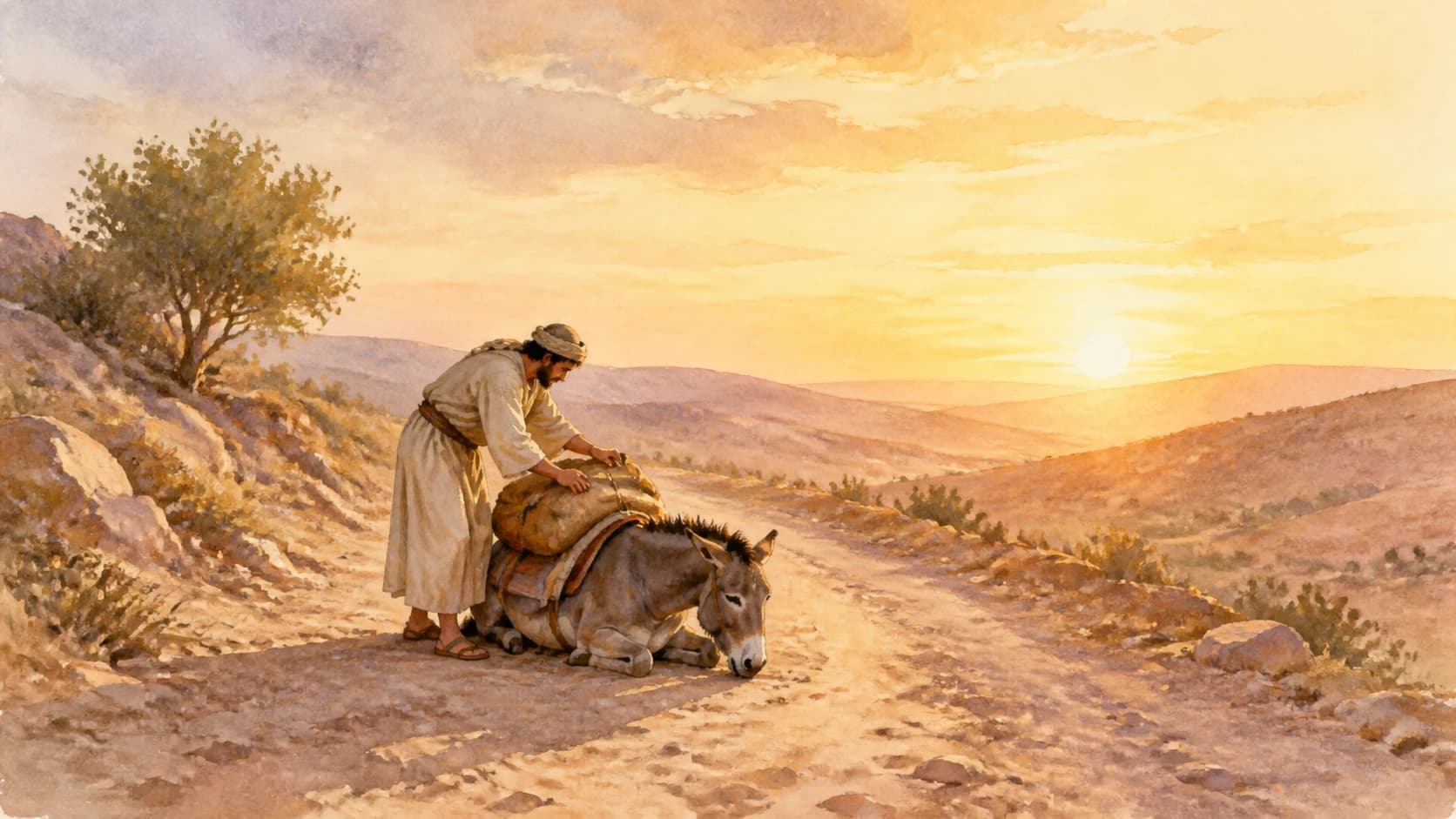
Justice extends beyond the courtroom. If someone finds an enemy’s lost ox or donkey, they must return it to its owner. If the donkey of someone who hates them has collapsed under its load, they must not leave it there. They are to help that person relieve the animal of its burden.
Whether the other person is a friend or an enemy is not the standard for deciding what to do. A lost animal must be returned, and an animal collapsed beneath a heavy load must be helped back up. Just as neither the majority nor poverty was to distort justice in court, personal hatred must not prevent someone from offering necessary help.
The command not to oppress a foreigner is equally concrete. The Israelites knew what it felt like to live as foreigners because they themselves had been foreigners in Egypt. The passage presents their own painful experience not as permission to mistreat other foreigners, but as the very reason they must not oppress them.
In the Seventh Year and on the Seventh Day, Others Rest Too
Verses 10–12 establish rhythms of rest for both the land and those who labor. The people are to sow their fields and gather their produce for six years, but in the seventh year they must leave the land unplowed and unused. The poor may eat what grows there, and wild animals may eat what remains. The same command applies to vineyards and olive groves.
The rest of the seventh day after six days of work is not reserved for the landowner alone. The ox and donkey rest, while the child of a female servant and the foreigner are given time to recover. In the seventh year, the land’s produce becomes available to the poor and wild animals; on the seventh day, rest is extended to laborers and livestock. This recurring seventh period makes the principle clear: when those who hold authority and property cease their work, those under their care must also be allowed to rest.
During the Festivals and in the Promised Land, the People Must Still Obey the LORD
The Israelites were to observe three festivals each year. During the Festival of Unleavened Bread, they were to remember their departure from Egypt by eating unleavened bread for seven days at the appointed time. At the Festival of Harvest, they gathered the firstfruits of what they had sown. At the Festival of Ingathering, they stored what they had harvested from their fields throughout the year. They were to bring the best of their firstfruits into the house of the LORD. Their deliverance from Egypt and the seasons of harvest were thus given concrete expression through festivals and offerings.
Beginning in verse 20, God promises to send a messenger ahead of the people to guard them and bring them to the place He has prepared. They must listen to his voice and do what God commands. They must neither worship the gods of the peoples in the land nor imitate their practices, and they must not make a covenant with either those peoples or their gods.
God says He will not drive out all the inhabitants of the land in a single year. Instead, He will remove them little by little until His people have grown numerous enough to take possession of the land. This gradual process will keep the abandoned land from becoming desolate and prevent wild animals from multiplying against them. Even as the Israelites follow God’s messenger who goes before them, they must remain faithful and refuse to serve other gods.
The commands in Exodus 23 do not separate speech, legal judgments, an enemy’s animal, farmland, labor, festivals, and the promised land into unrelated concerns. A life of obedience to the LORD begins with rejecting falsehood, continues through protecting the rights of the poor and the foreigner and making room for people and animals to rest, and extends to refusing to worship other gods.
One action you can take today is to refrain from repeating an unverified claim about someone. If you hear a story about another person but cannot confirm whether it is true, do not pass it along. In this way, you can practice the chapter’s opening command not to spread false reports in your everyday words and conversations.
Related articles
Why Did Deuteronomy 12 Designate a Place of Worship?
Deuteronomy 12 explains why Israel was not to worship wherever or however they pleased, but was to bring offerings to the place God chose, follow his commands, and rejoice together.
Why Does Deuteronomy 11 Set Before Israel a Blessing and a Curse?
Deuteronomy 11 calls Israel to remember what God has done, teach his word in everyday life, and obey his commands when faced with the choice between blessing and curse.
What Kind of Life Does God Require in Deuteronomy 10?
Deuteronomy 10 traces a path from the rewritten stone tablets to the command to love foreigners, revealing what it means to fear and serve God.
 Bible Habit
Turn this article into today’s reading habit
Keep your McCheyne plan, sequential reading, notes, and progress together so the next passage is always clear.
- Today’s passages
- Reading checklist
- Notes and highlights