

Why Did Exodus 29 Require Daily Sacrifices?
Explore the priestly ordination, seven days of sin offerings, and morning and evening burnt offerings in Exodus 29, tracing how they lead to God dwelling among His people.
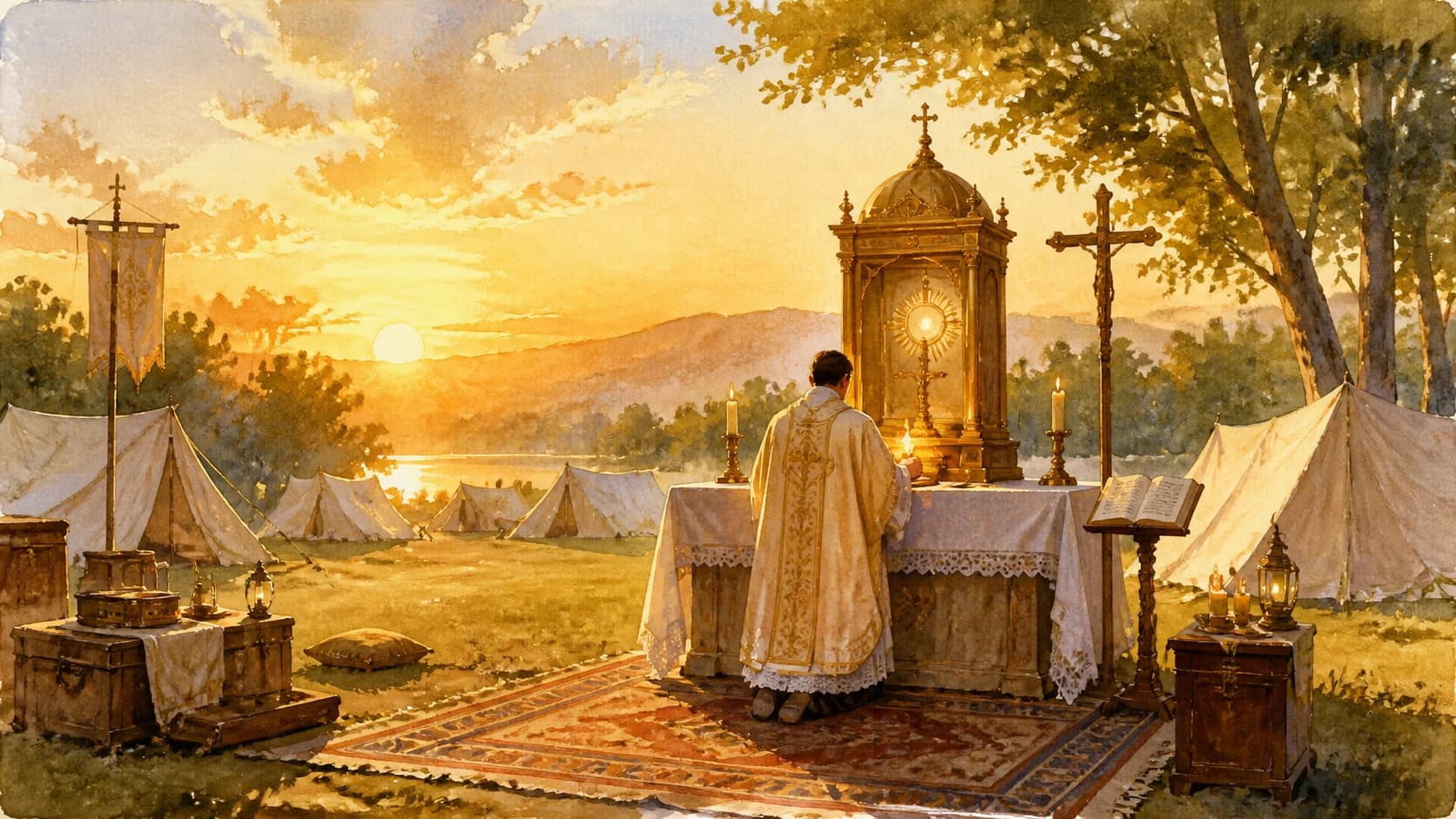
In Exodus 29, the ordination of the priests did not end when they put on their garments. Aaron and his sons were washed and anointed, presented sacrifices, and then completed a seven-day ordination ceremony. Even afterward, burnt offerings were presented every morning and evening. God promised to meet His people at the tent of meeting and dwell among them.
The Priests Entered Their Office Through a Prescribed Process
God first commanded the Israelites to prepare a young bull and two rams, along with unleavened bread, cakes, and wafers for the ordination ceremony. Aaron and his sons came to the entrance of the tent of meeting and were washed with water. Aaron was dressed in the priestly garments, including the turban and sacred emblem, and anointing oil was poured on his head. His sons were also clothed in tunics, sashes, and caps.
This process made it clear that the priesthood was not a position Aaron and his sons had claimed for themselves. God determined which sacrifices and garments were required, and He prescribed how the priests were to be washed, clothed, and anointed. Aaron and his sons could enter their ministry only by being ordained according to the order God had commanded.
The Three Offerings Were Handled Differently
Aaron and his sons first laid their hands on the bull’s head. The bull was slaughtered before the Lord, and some of its blood was applied to the horns of the altar. Its meat, hide, and waste were burned outside the camp. The passage identifies this sacrifice as a sin offering.
Aaron and his sons also laid their hands on the first ram. Its blood was splashed against the sides of the altar, and the entire ram was burned on the altar. The passage calls it a burnt offering to the Lord.
The second ram was used for the ordination ceremony. Its blood was applied to the lobes of Aaron’s and his sons’ right ears, the thumbs of their right hands, and the big toes of their right feet. Blood from the altar and anointing oil were sprinkled on them and their garments. Portions of the ram and bread from the basket were placed in their hands, waved before the Lord, and then burned on the altar. The priests being ordained, their garments, and even the offerings placed in their hands were set apart according to God’s command.
Aaron and his sons ate the meat of the ordination ram and the bread in a holy place. No one else was permitted to eat them. Any meat or bread remaining until morning had to be burned rather than eaten. What had been consecrated was handled according to God’s command, including who could eat it and when it could be eaten.
The Sacrifices Continued After the Seven Days of Ordination
The ordination ceremony was not completed in a single day. God commanded that the same procedure be followed for seven days and that a bull be offered as a sin offering each day. The altar also had to be purified and anointed for seven days to make it holy. Neither the priests nor the altar were prepared by a single declaration; they passed through the seven-day process established by God.
After those seven days, two one-year-old lambs were to be offered every day. One was sacrificed in the morning and the other in the evening. The evening sacrifice included the same grain offering and drink offering as the morning sacrifice. This burnt offering was not an observance limited to one generation. It was to be presented continually at the entrance of the tent of meeting for generations to come.
The ordination ceremony and the daily burnt offerings form one continuous movement. The priests and the altar were consecrated for seven days, and morning and evening burnt offerings continued at that same place. God promised to meet His people and speak to them there at the entrance of the tent of meeting. It was God Himself who made the tent, the altar, and the priests holy.
The closing words reveal the purpose toward which every part of this ceremony pointed. God promised to dwell among the Israelites and be their God. His people would know that He had brought them out of Egypt so that He might live among them. The repeated sacrifices in Exodus 29 were not simply about continually burning offerings. They established a God-given order in which sacrifices were offered morning and evening by the people He had appointed, at the place He had chosen, and where He would meet His people.
Today, read Exodus 29 again and mark the expressions “seven days,” “daily,” “morning,” “evening,” and “for generations to come.” Notice how the one-time ordination ceremony leads into the daily burnt offerings, and how this repeated worship culminates in God’s promise to dwell among His people.
Related articles
Why Was the Work of Moving the Tent of Meeting Divided in Numbers 4?
Numbers 4 assigns distinct loads to the Kohathites, Gershonites, and Merarites and appoints overseers for their work. This article explores how such careful division protected the boundaries surrounding the sacred objects and clarified each person’s responsibility.
The Census of the Levites in Numbers 3 Established Their Place and Duties
Explore how God took the Levites in place of Israel’s firstborn in Numbers 3, counted their three clans, and assigned each one a place beside the tabernacle and distinct responsibilities.
The Camp Arrangement in Numbers 2 Established Both the Positions Around the Tent of Meeting and the Marching Order
Numbers 2 explains how the Israelites camped around the Tent of Meeting under their tribal standards and marched in their assigned positions and order.
 Bible Habit
Turn this article into today’s reading habit
Keep your McCheyne plan, sequential reading, notes, and progress together so the next passage is always clear.
- Today’s passages
- Reading checklist
- Notes and highlights