

How Did Abraham’s Test End in Genesis 22?
In Genesis 22, God tested Abraham and kept him from laying a hand on Isaac. We look at Abraham’s obedience and the ram God provided.
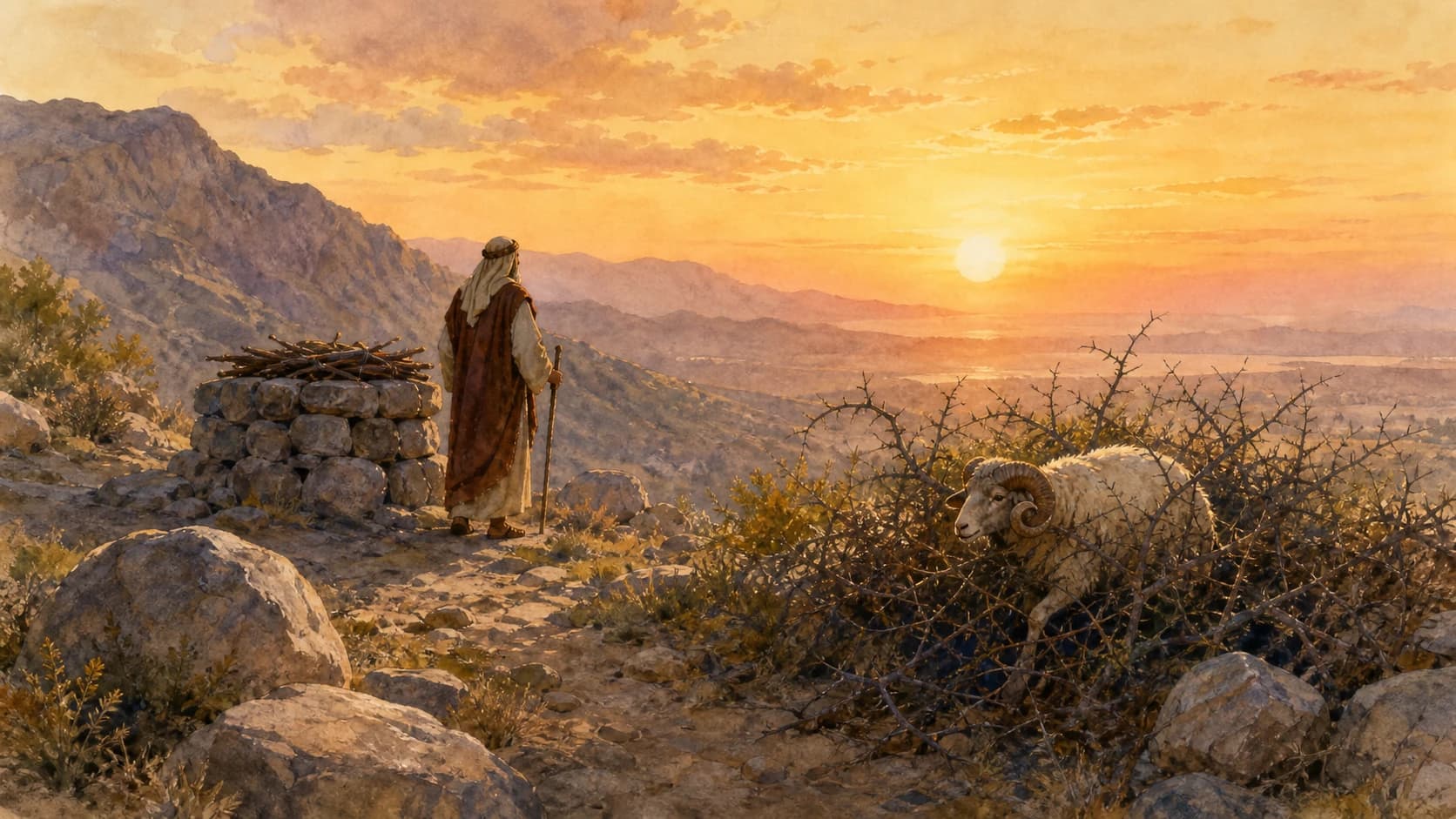
God confirmed Abraham’s obedience, kept him from laying a hand on Isaac, and prepared a ram to take Isaac’s place. Genesis 22 records Abraham’s journey to the land of Moriah in obedience to God’s word and the conclusion of that test. Following this event shows how Abraham was confirmed as a man who fears God.
What test did Abraham face
God called Abraham’s name in order to test him. Abraham answered, “Here I am.” God told him to take Isaac, his beloved only son, and go to the mountain He would show him, then offer him there as a burnt offering.
This command was the test given to Abraham. The passage records that Abraham rose early in the morning and prepared everything he needed. He saddled his donkey, took two servants and Isaac with him, and set out. He also split the wood for the burnt offering himself and carried it along.
On the third day, Abraham saw from a distance the place God had shown him. After telling the servants to wait, he went on with Isaac to worship. Abraham laid the wood for the burnt offering on Isaac, while he himself carried the fire and the knife.
How did Abraham respond to God’s word
As they walked, Isaac asked where the lamb for the burnt offering was, since they had the fire and the wood. Abraham replied that God Himself would provide for what was needed. The two of them continued on together.
When they arrived at the place he had been shown, Abraham built the altar and arranged the wood. He bound Isaac and laid him on the altar. Then he took the knife and was about to lay hold of his son. The passage shows in detail that Abraham did not stop at hearing the word, but went to the appointed place and acted on it.
The angel of the LORD called to Abraham from heaven a second time. Abraham answered again, “Here I am.” Just as when he was first called, he responded immediately.
How did God bring the test to an end
The angel of the LORD commanded Abraham not to lay a hand on Isaac or do anything to him. He said that because Abraham had not withheld his only son, he now knew that Abraham feared God. The test did not end with Isaac’s death.
When Abraham looked up, he saw a ram caught in a thicket by its horns. He took the ram and offered it as a burnt offering in place of Isaac. Abraham called that place The LORD Will Provide. Just as he had told Isaac, the offering was prepared.
The angel of the LORD called to Abraham again. God said He would bless Abraham greatly because he had not withheld his only son and had obeyed His word. He said that He would multiply his offspring greatly, and that through his offspring all the nations of the earth would be blessed. Afterward, Abraham returned to his servants, and they went together to Beersheba.
Record one response today
We cannot turn this event immediately into a command for everyone to act exactly as Abraham did. But the passage clearly records that Abraham heard God’s word and responded with actual action.
Today, read the whole of Genesis 22 and write down one action Abraham took in response to God’s word. Write just one sentence centered on the expression recorded in the passage, such as “he rose early in the morning and set out” or “he went to the place God had shown him.” This small record helps you confirm first what the text actually says before adding your own thoughts.
Textual Basis
- Genesis 22:1-2
- Genesis 22:3-8
- Genesis 22:9-14
- Genesis 22:15-19
Related articles
What Kind of Life Does God Require in Deuteronomy 10?
Deuteronomy 10 traces a path from the rewritten stone tablets to the command to love foreigners, revealing what it means to fear and serve God.
Why Did Israel Disobey Both Commands?
Deuteronomy 1 contrasts Israel’s refusal to go up when commanded with their later decision to go up after being told not to.
Why the Israelites Could Not Enter Canaan in Numbers 14
The Israelites rejected Canaan out of fear, then defied God’s command again by trying to enter after hearing His judgment. Explore the repetition and contrasts in Numbers 14.
 Bible Habit
Turn this article into today’s reading habit
Keep your McCheyne plan, sequential reading, notes, and progress together so the next passage is always clear.
- Today’s passages
- Reading checklist
- Notes and highlights