

Why Did Judah Say Tamar Was More Righteous in Genesis 38?
In Genesis 38, we examine why Judah condemned Tamar, then acknowledged after confirming his seal, cord, and staff that Tamar was more righteous than he was.
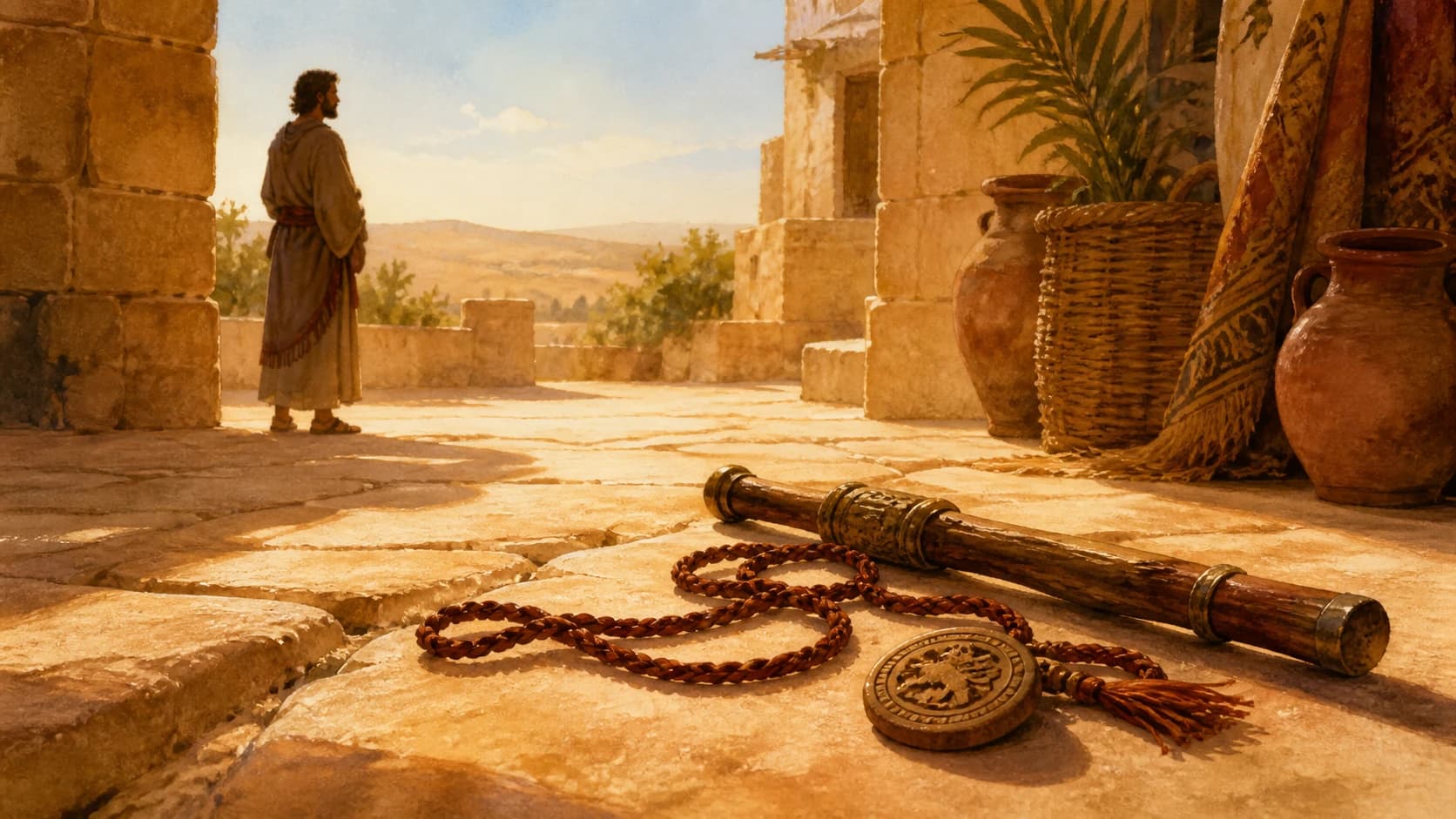
Judah acknowledged that Tamar was more righteous than he was because he confirmed that he had failed to give Tamar to Shelah. Genesis 38 shows everything from Judah telling Tamar to wait to the moment he recognized his own wrongdoing after identifying his seal, cord, and staff.
Why Judah’s Admission Matters
When Judah heard that his daughter-in-law Tamar was pregnant, he ordered that she be brought out and burned. But after he checked the items Tamar produced, he did not simply press ahead with his judgment. He recognized that they were his own, and he spoke of his failure to give Tamar to Shelah.
This scene raises the question of what basis Judah used to change his judgment. The evidence the passage gives is Tamar’s seal, cord, and staff. These items were the pledge Judah had given Tamar himself. After recognizing them, Judah said, "She is more righteous than I."
Why Did Tamar Sit at the Entrance to Enam?
After Judah’s firstborn Er died, Judah told Onan to perform his duty for his brother and raise up offspring for him. Onan refused to provide offspring for his brother, and because that was evil in the sight of the LORD, he died. After that, Judah told Tamar to return to her father’s house and wait until Shelah was grown.
Tamar returned to her father’s house and waited. But even after Shelah was grown, Judah did not give Tamar to Shelah as his wife. The passage connects this fact directly to why Tamar took off her widow’s garments, covered her face, and sat at the entrance to Enam.
Judah did not recognize Tamar because her face was covered. He promised to send a young goat, and at Tamar’s request he handed over his seal, cord, and staff as a pledge. Tamar became pregnant by Judah.
What the Seal, Cord, and Staff Revealed
About three months later, Judah was told that Tamar was guilty of prostitution and was pregnant. He immediately ordered that she be brought out and burned. At that point, Tamar did not name the man who had made her pregnant, but asked that the owner of the items be identified.
Judah recognized that the seal, cord, and staff were his own. This confirmation revealed that Tamar’s pregnancy was connected to him. At the same time, it also exposed through his own mouth the fact that he had not given Tamar to Shelah.
Judah’s words that Tamar was more righteous are not a general declaration evaluating every action recorded in the passage. He explained the reason: "because I did not give her to my son Shelah." Therefore, the central point we can confirm from this article is that Judah admitted his own wrongdoing in the face of evidence. After that, he did not lie with Tamar again.
Confirm One Promise You Have Delayed
Today’s task is to confirm one promise you have been putting off. Before judging someone else’s wrongdoing, look for any promise you made but did not keep. If one comes to mind, take action today by setting a date to keep it and letting the other person know.
This action is not an attempt to follow all of Tamar’s choices exactly. It is a direct application of the scene in which Judah specifically admitted what he had failed to do. As you read Genesis 38 again, look at Judah’s first judgment and his words after confirming the evidence side by side.
Text References
- Genesis 38:1-11
- Genesis 38:12-23
- Genesis 38:24-26
- Genesis 38:27-30
Related articles
Deuteronomy 16 Commands Remembrance, Joy, and Justice
Explore how Deuteronomy 16 connects the three annual festivals and the command to appoint judges, showing how remembering the exodus from Egypt leads to shared joy and impartial justice.
Why Does Deuteronomy 11 Set Before Israel a Blessing and a Curse?
Deuteronomy 11 calls Israel to remember what God has done, teach his word in everyday life, and obey his commands when faced with the choice between blessing and curse.
What Responsibility Did Deuteronomy 3 Give Those Who Had Received Their Land?
Deuteronomy 3 recounts the defeat of King Og of Bashan, the allocation of land east of the Jordan, the command to lead their fellow Israelites into battle, and the responsibility entrusted to Joshua.
 Bible Habit
Turn this article into today’s reading habit
Keep your McCheyne plan, sequential reading, notes, and progress together so the next passage is always clear.
- Today’s passages
- Reading checklist
- Notes and highlights