

Genesis 7 Commentary: Faith Preparation Began Long Before the Day of the Flood
Through Genesis 7, we explore Noah's obedience, God's sovereignty over judgment and salvation, and the importance of daily faith. Reflect on the meaning of living according to His Word even in unseen times.
Genesis 7 Commentary: Faith Preparation Began Long Before the Day of the Flood
Genesis 7 is not merely a record of the moment when the flood begins. This chapter vividly illustrates how our attitude toward listening and preparing for God's Word long before disaster strikes is deeply woven into the essence of faith. To the people's eyes, it might have seemed as though nothing was happening until the rains started. Yet, Scripture bears witness that even during times when everything seems silent on the surface, God's Word was already steering history. For Noah, this was a time of preparation; for the world, a time of opportunity for repentance. Therefore, when reading Genesis 7, we should not only focus on the event of the flood itself but also observe two contrasting attitudes in how people face it.
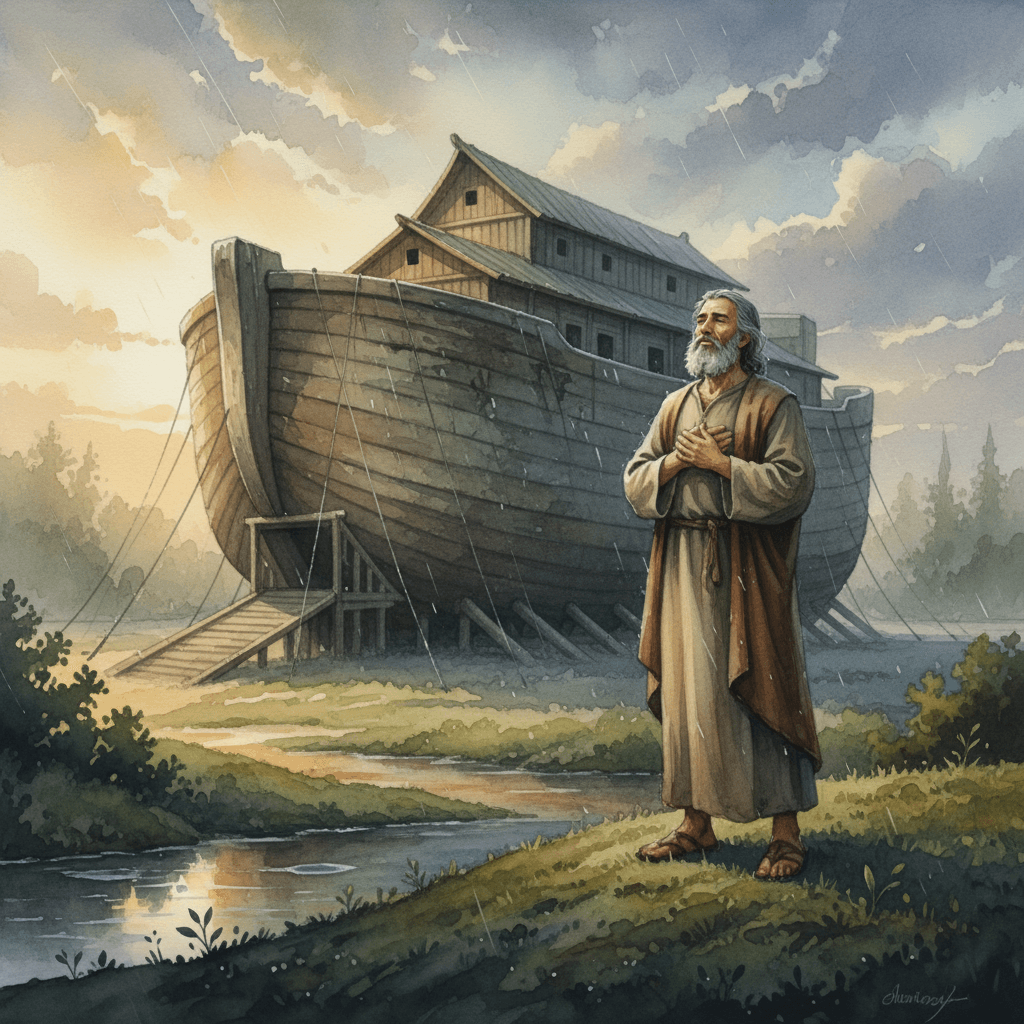
The story begins with God commanding Noah, “Go into the ark, you and all your household,” (Genesis 7:1). This command is not sudden but the culmination of God's longstanding instructions and His final call. Noah had spent years building the ark, accepting God's warnings as real throughout that time. To others, this might have seemed vague or unrealistic, but for Noah, God's Word was more certain than the unseen future. That is what faith entails: placing greater trust in God's Word than in the visible circumstances.
A recurring phrase in Genesis 7 is, “Noah did according to all that the Lord commanded him” (Gen. 7:5, 9, 16). This verse emphasizes the core of faith in a straightforward way, rather than exaggerate Noah’s greatness. Noah did not add his ideas nor alter God's commands to suit his preferences. He listened and obeyed exactly as he was instructed. Today, we often think of obedience as a grand decision or an emotional high, but the Bible describes it as a precise and continuous response to God's Word. Walking steadily in the path God reveals is a deeper form of obedience than a single zeal-filled decision.
At the center of this chapter lies a profoundly solemn scene. Genesis 7:16 says, “And the Lord shut him in.” This brief verse encapsulates both God's sovereignty and the security of salvation. The final safeguard for Noah’s family was not in their own hands but in God's. The Lord Himself closed the door. Outside, the waters of judgment continued to rise, but inside, God's protection remained firm. This scene quietly yet powerfully illustrates that salvation does not depend on human effort or strength but solely on God's authority and care. God opens, and God preserves.
Considering the historical background of Genesis 7, the tension in the text becomes even more poignant. While many ancient Near Eastern flood stories circulated, Scripture clearly distinguishes itself from them. The biblical flood is not a tale of capricious gods fighting but an act by the Holy God judging sin. At the same time, God preserves His covenant amid judgment. In essence, the flood is not merely a natural disaster; it is a moral and theological event. God's displeasure with wickedness is evident, yet His grace also ensures mercy—preserving those who trust in His covenant. Recognizing this duality is key to rightly interpreting Genesis 7. Emphasizing only judgment might make God seem fearsome, while focusing solely on preservation can diminish the seriousness of sin. Instead, the text affirms God's holiness and grace simultaneously.
Here is an important truth we must not overlook: Those who entered the ark were not perfect people but individuals under God's grace. Noah was called righteous not because he was sinless but because he trusted God and responded in obedience. Under the overall witness of Scripture, fallen humanity is justified solely by God's grace. Therefore, this chapter should not be seen as an encouragement to become “extraordinary like Noah,” but rather as an invitation to trust God's Word and enter into His salvation. From a gospel perspective, the ark symbolizes the salvation offered in Christ. Our safety does not come from our own strength but from being within the refuge prepared by God.
In everyday life, Genesis 7 emphasizes valuing ordinary days over days of crisis. Faith cannot be suddenly manufactured when the floodwaters arrive. Faith is cultivated during quiet days and trained amidst routine. Reading the Bible briefly in the morning, choosing to reflect on God's Word instead of indulging in selfish thoughts when busy, acting honestly despite potential losses, and trusting God's Word more than rumors in anxious times—they all serve as preparations for the ark. Though seemingly small and ordinary outwardly, such obedience ultimately shapes our direction. Steady Bible reading and meditation support this preparation. If needed, reviewing the importance of reading the Bible regularly or seven habits of Bible reading can help maintain this habit.
More specifically, consider situations like work scenarios where colleagues might stretch the truth for convenience. Even small compromises may seem trivial, but remaining truthful according to God's Word is far from easy. Or reflect on family conflicts that cause one to become cold or resigned in tone. Yet, showing kindness first, forgiving promptly, and making worship on Sunday flow into Monday’s attitude—these acts are also forms of obedience. The faith depicted in Genesis 7 is not about heroic deeds in extreme moments but about consistently setting God's Word as the standard of life. Understanding this also clarifies what ‘meditation’ (/glossary/devotion) involves.
This chapter also reminds us that opportunities are not endless. Once the door is shut, regrets outside the ark are impossible to undo. This is not a scare tactic but a serious warning about the danger of delaying obedience before God's Word. We often think, 'I will obey someday when I have more time, when circumstances improve, or when I feel ready.' Yet the Bible repeatedly urges us to listen and respond in grace’s time—today. Faith is not a postponed decision but living response to God's Word today.
While Genesis 7 describes solemn judgment, at the end, God's faithfulness shines even brighter. Though the world trembles and waters rise, those held by God will not ultimately be forsaken. Just as the ark did not sink despite waves, believers may experience fears and shakiness but will never fall out of God's hand. Therefore, this chapter does not aim to induce fear but calls us to reflect again on whom we follow.
As we read Genesis 7 today, we are not merely spectators of Noah’s time but are standing before the same God. Amid worldly chaos that seems to treat visible reality as everything, we face daily choices: Will we value God's Word more heavily or follow the prevailing sentiment that everything’s okay? Ultimately, faith is not only revealed on the last day but already seen in our small acts of obedience today. Genesis 7 quietly but clearly impresses this truth upon our hearts.
If you need to develop a habit of consistent Bible reading and application, reviewing why reading the entire Bible is important or seven tips for cultivating a Bible reading routine could be helpful. Genesis 7 is not a legend of an extraordinary individual but a living testimony of how ordinary days trusting in God's Word lead to standing firm in His grace. Even when unseen, living by faith in His Word prepares us for Judgment Day and days of upheaval.
 Bible Habit
Turn this article into today’s reading habit
Keep your McCheyne plan, sequential reading, notes, and progress together so the next passage is always clear.
- Today’s passages
- Reading checklist
- Notes and highlights