

Meditation on the Parable of the Good Samaritan: Unconditional Love
Following the Parable of the Good Samaritan in Luke 10, we reflect on neighborly love and God's mercy that do not pass by, and how to apply these lessons in our daily lives today.
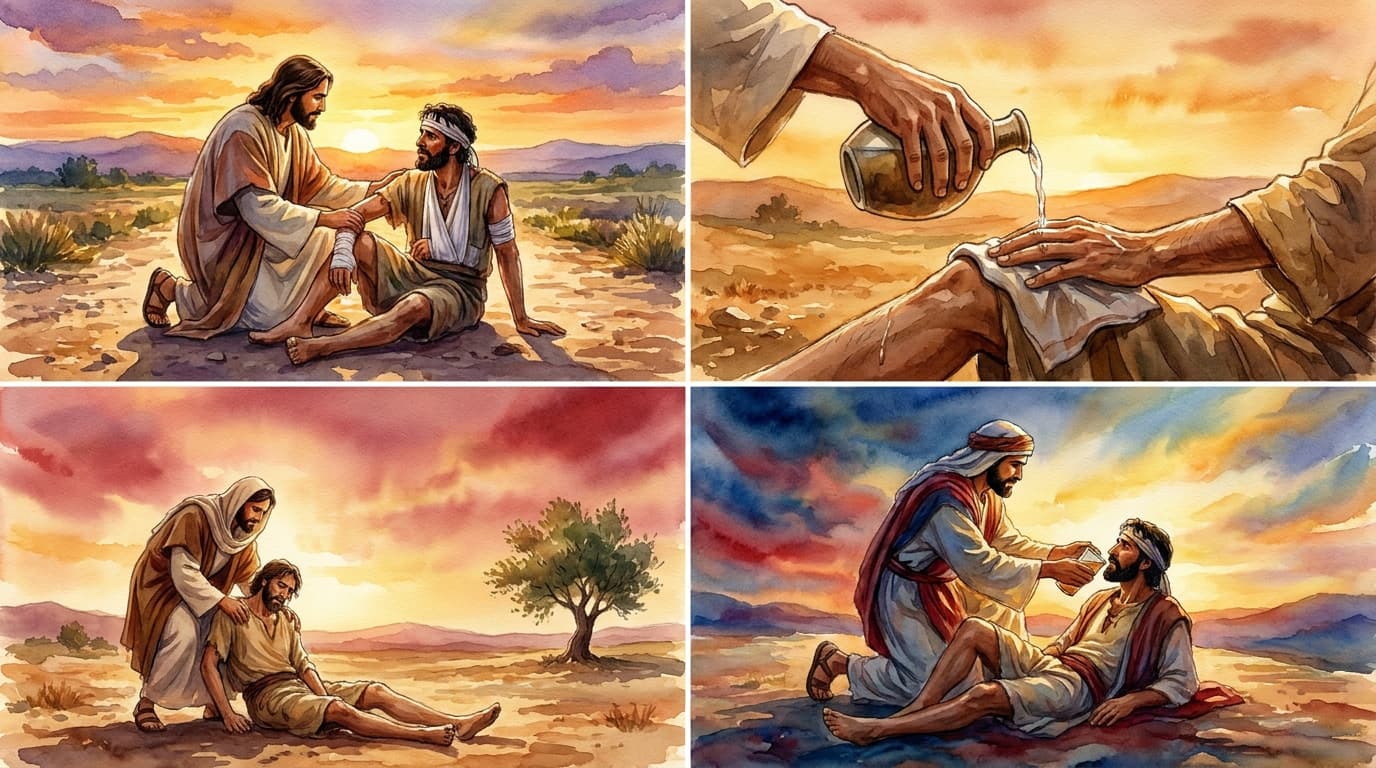
Meditation on the Parable of the Good Samaritan: Unconditional Love
The parable of the Good Samaritan in Luke 10 is so well known that sometimes it no longer feels fresh to us. However, taking a slow approach to this story reveals how Jesus' teachings on neighborly love are surprisingly specific and practical. This passage is recorded in Luke 10:25-37.
A lawyer asks Jesus, “What shall I do to inherit eternal life?” Jesus reminds him of the core of the law, and he replies, “Love the Lord your God with all your heart, with all your soul, with all your strength, and with all your mind,” and “Love your neighbor as yourself.” Then he asks again, “Who is my neighbor?” It is at this point that Jesus shares the parable of the Good Samaritan.
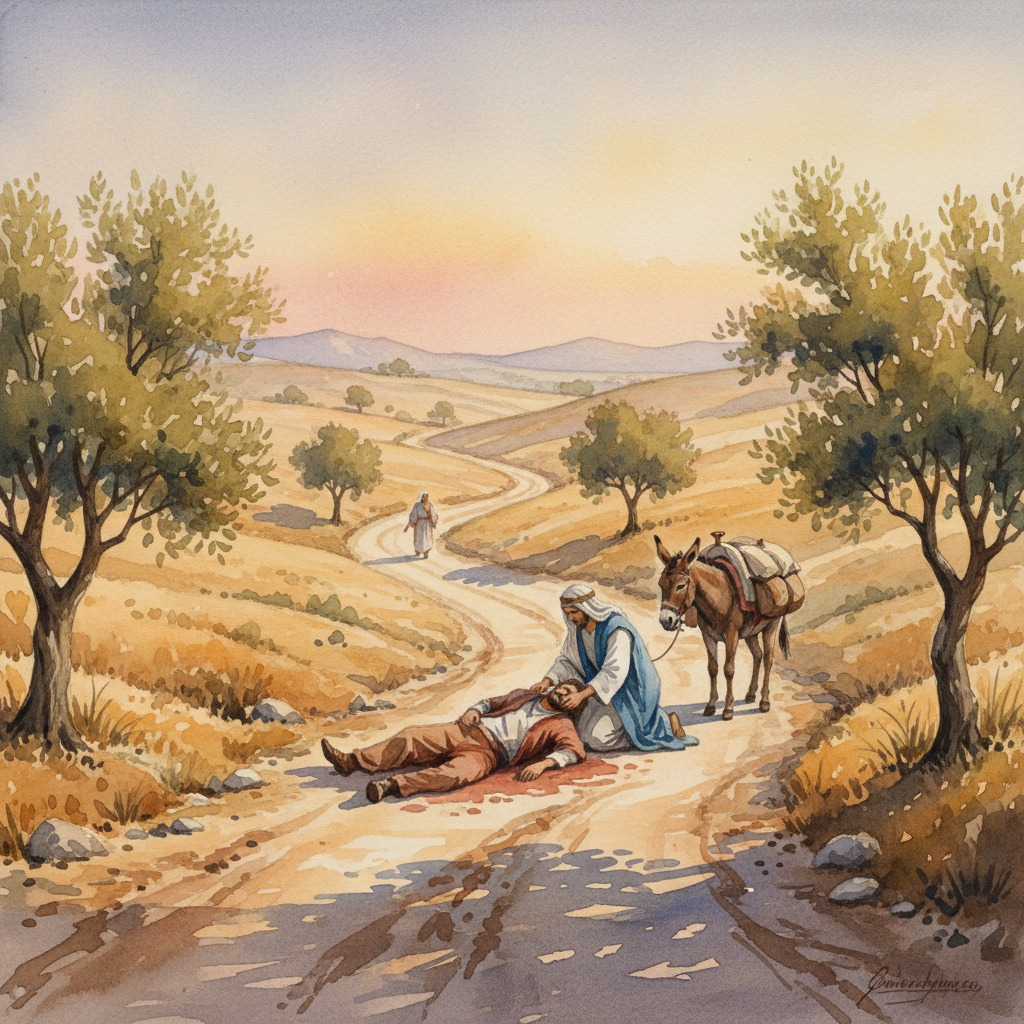
A Person Fallen by the Roadside
Jesus tells of a man traveling from Jerusalem to Jericho who was assaulted by robbers and left nearly dead. They stole his clothes, beat him, and abandoned him by the roadside. This scene honestly reveals human fragility. We do not always stand only as helpers; at times, we are the wounded, the desperate for aid, and those who cannot rise without someone’s help.
As our faith matures, we may want to appear strong, but the Bible first does not hide our wounds. Therefore, this parable asks not only, “Whom did you help?” but also, “Where are you fallen now?”
People Who Passed By Without Helping
The next scene is even sharper. A priest passes by the injured man and avoids him. So does a Levite. The important word here is “saw.” It’s not that they didn’t see; they saw but chose not to stop.
We can be similar. It’s not that we don’t notice those in need; it’s that we are too busy, too exhausted, or too complicated to stop. We may not have decided not to love, but in delaying love, those neighbors are left by the roadside.
Therefore, what is meditation is important to revisit. Meditation on God’s Word isn’t about accumulating good thoughts; it’s honesty before God about the scenes we saw but passed by.
The Samaritan Who Stopped
Jesus introduces an unexpected character—the Samaritan, whom Jews normally kept at a distance. Yet, he sees the injured man and is moved with compassion, drawing near. In Luke 10:34-35, he pours oil and wine on the wounds, bandages him, lifts him onto his animal, and takes him to an inn to care for him. He doesn’t stop there but gives two denarii and asks the innkeeper to keep caring for him.
This love doesn’t end with emotion. It involves time, touch, material resources, and commitment. The reason the parable of the Good Samaritan can unsettle us is because love is more than heartfelt kindness.
Sometimes, while reading the Bible, we pause longer before such passages. More than rushing through many chapters, moments where a single scene shakes our lives can bring deeper grace.
On Our Road Today
Who is the person wounded on our path today? It could be a family member who appears fine outwardly but is falling apart inside, a weary coworker, or a friend we haven’t contacted in a long time. Maybe it’s a close person we’ve overlooked because they are always around.
When we read the parable of the Good Samaritan, we often take away the lesson “Live kindly.” But Jesus’ words do not stop there. Loving our neighbor is not an abstract kindness; it involves setting aside our plans to come close to another’s pain. At the same time, this parable reminds us of God's mercy who first sought us out when we were in sin and wounds. We are the ones first touched by His mercy.
In busy daily life, hearts can become hardened easily. That’s why having time to reflect on the Word each day is precious. When we hold onto even a short verse, we might find moments when a passing heart is held back by grace.
Jesus’ Final Question
After the parable, Jesus asks, “Which of these three do you think proved to be a neighbor to the man who fell among the robbers?” The lawyer responds, “The one who showed mercy.” Jesus then says, “Go and do likewise.”
This isn’t a heavy burden to condemn us but a clear call to love. It’s an invitation to walk a life where we are the neighbors to someone, rather than calculating who qualifies.
Today, are there people whose pain we are passing by? The parable of the Good Samaritan teaches us that true neighborly love isn’t just saying the right words from afar, but reaching close and acting with mercy. And such love mirrors the mercy of our Lord, who loved us first.
In our busy routines, our hearts can grow cold easily. So, moments of reflection before the Word each day become even more meaningful. When we cling to even a short verse, a shift in our hearts might happen, stopping us from passing by.
Jesus’ Last Question
At the end of the parable, Jesus asks, “Which of these three do you think proved to be a neighbor to the man who fell among the robbers?” The lawyer replies, “The one who showed mercy.” Jesus’ words are not meant to burden us with guilt but to clearly point to the direction of love. It is a call to step out of our plans and walk towards a life that shows neighborly mercy.
Today, who in your life might be hurting and needs your love? The parable of the Good Samaritan teaches us that genuine neighborly love isn’t about speaking rightly from afar, but about approaching closely and acting mercifully. And in doing so, we reflect more of our Lord, who first loved us.
Related articles
Where Deuteronomy 24 Tells the Powerful to Stop
Deuteronomy 24 places limits on creditors, employers, and landowners. This article follows the chapter’s flow to explore why the poor must be allowed to keep their bedding, receive their wages, and have food to eat.
Deuteronomy 23 Sets Clear Boundaries for Holiness
Deuteronomy 23 establishes clear boundaries concerning the assembly, the camp, money, vows, and a neighbor’s property, safeguarding the community’s order and holiness.
Deuteronomy 22 Teaches Us Not to Ignore a Neighbor’s Loss or Danger
Deuteronomy 22 commands God’s people to return lost animals, help fallen animals, and build parapets around their roofs. It explores our responsibility not to ignore losses and dangers we can plainly see.
 Bible Habit
Turn this article into today’s reading habit
Keep your McCheyne plan, sequential reading, notes, and progress together so the next passage is always clear.
- Today’s passages
- Reading checklist
- Notes and highlights