

The Significance and History of Jerusalem: Clarifying the Biblical Context for Deeper Understanding
Explore the geography, history, and biblical themes related to Jerusalem—Davidic rule, the temple, prophetic rebukes, Jesus' crucifixion and resurrection, and the hope of the New Jerusalem—within the grand flow of Scripture to deepen your comprehension.
Knowing the Significance and Background of Jerusalem Deepens Your Bible Reading
Jerusalem is not simply a city name in the Bible. It embodies the overarching biblical themes of kingship, worship, covenant, judgment, restoration, and hope. Therefore, understanding Jerusalem's history and geography makes familiar passages appear more vivid and three-dimensional. The Bible is not an abstract religious text but God's revelation given through concrete spaces and real history.
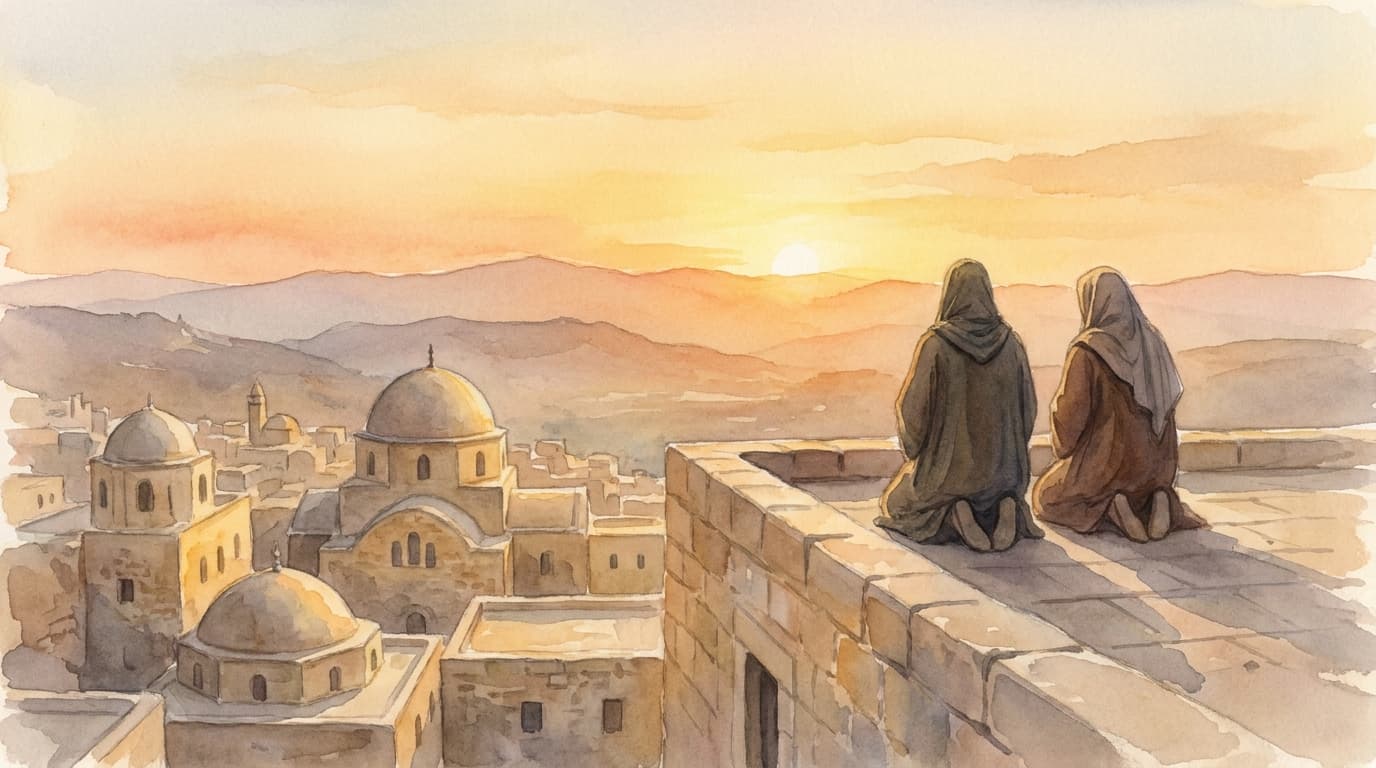
First, Jerusalem is situated in the central highlands of Canaan. It is neither a coastal city nor a bustling hub nestled next to a major river. Built on elevated terrain, it was defensible but not abundantly supplied with water or fertile land. Keeping this geography in mind helps evoke the expressions in the Psalms more vividly. Psalm 125:2 says, “As the mountains surround Jerusalem, so the Lord surrounds his people both now and forevermore.” The image of a city encircled by mountains powerfully affirms God's promise to protect His people.
Historically, Jerusalem was not Israel’s capital from the outset. It was originally a city inhabited by the Jebusites, and David made it his political center after capturing it. 2 Samuel 5:7 records, “David captured the fortress of Zion—which is the City of David.” The choice of Jerusalem as the capital carried significant meaning. It was not tied to a particular tribe's longstanding stronghold but was in a relatively neutral position, suitable for uniting the north and south. Consequently, Jerusalem came to symbolize the unity of God's covenant people and the central seat of kingship.
When Solomon built the temple, Jerusalem became not just the political hub but also the spiritual heart. The recurring phrase in Deuteronomy, “The place the Lord will choose for his name to dwell,” took on tangible form in the temple. 1 Kings 8 describes how, through the dedication of the temple, God demonstrated that He places His name among His covenant people and hears their prayers. Yet, God is not confined to a building. Solomon himself acknowledged that even heaven—not to mention the highest heavens—cannot contain the Lord. Nonetheless, the temple remained the focal point of covenantal presence, atonement, and festival worship. Recognizing this background helps interpret Psalm 122:1’s declaration, “I rejoiced with those who said to me, ‘Let us go to the house of the Lord,’” as more than mere religious sentiment but as the joy of communal worship before God.
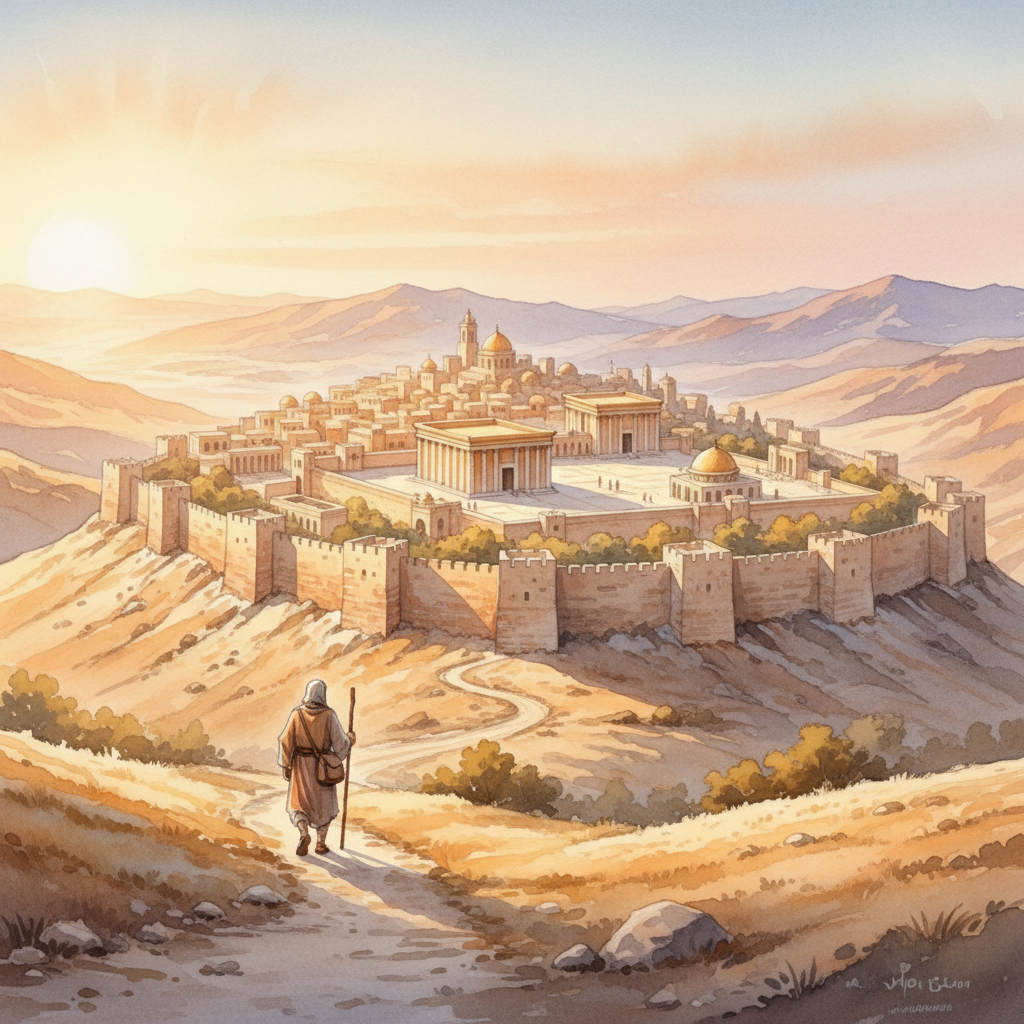
Jerusalem also served as the city of festivals. During Passover, Pentecost, and Tabernacles, Israelites from all over the land and even scattered Jews gathered there. Therefore, in the New Testament, Jerusalem was not just a static city but a vibrant gathering place that heightened anticipation and tension during festival times. Jesus’ entry into Jerusalem before Passover was not incidental; it deepened the connection between the cross, the Exodus, and the Passover lamb. Following the Gospels through Bible reading, it becomes clearer why Jesus’ final ministry centers on Jerusalem.
Another important point is that Jerusalem is depicted both as a city of glory and as a city of disobedience. Prophets repeatedly rebuked Jerusalem for idolatry, superficial worship, and social injustice. The very presence of the temple did not guarantee safety; Jeremiah 7 repeats the phrase, “The temple of the Lord,” yet sternly condemns the unrepentant people. This demonstrates that the holiness of a place does not excuse human disobedience. Jerusalem, therefore, is not only a holy city but also a place where human sins are exposed before the holiness of God. This teaches us that Scripture emphasizes the covenant relationship with God over the mere physicality of a location.
In the New Testament, this theme becomes even clearer. Jesus mourns over Jerusalem’s stubbornness, despite His love for it. Luke 19:41 records, “As he approached Jerusalem and saw the city, he wept over it.” The city that welcomed the Messiah ultimately failed to recognize Him and faced judgment. However, the events of the cross and the resurrection unfolded precisely in Jerusalem, and the spread of the gospel begins there and extends to the ends of the earth in Acts. The place where human failure is most visible also displays God’s grace most brightly. This demonstrates that God's redemptive plans surpass human shortcomings.
Finally, Jerusalem’s significance is connected to the eschatological hope of the entire Bible. Hebrews 12:22 describes believers coming to “Mount Zion, to the city of the living God, the heavenly Jerusalem.” Revelation 21 reveals the glory of the new Jerusalem where God dwells with His people. Thus, biblical Jerusalem is not merely a historical site but a symbol pointing toward the fulfillment of God's kingdom and eternal restoration. Knowing the historical Jerusalem is important, but Scripture points us beyond it to the ultimate restoration in Christ.
By reviewing these backgrounds while reading Scripture, you can grasp the text much more firmly. Following the flow of reading with tools like Today’s MacChain Reading Schedule helps maintain context. Additionally, exploring how the city appears repeatedly throughout the Bible through AI Bible Search can be enlightening. Background knowledge does not replace the Scripture itself but helps us understand its message more accurately.
The core point is this: Jerusalem, a city on high ground, represents God's covenant, human sin, David’s kingship, temple worship, the Messiah’s cross and resurrection, and the future glory. Recognizing Jerusalem reveals that the Bible is not a mere abstract religious text but God's historical revelation in action. When reading passages related to Jerusalem today, remember Psalm 125:2 and Luke 19:41. God surrounds His people and weeps over the stubborn city He loves so deeply. Therefore, we must not remain as people familiar with holy places but examine ourselves—are we responding to God's word with repentance and faith? An understanding of Jerusalem should lead us to a clearer grasp of Scripture and to hold more firmly the salvation gift in Christ.
 Bible Habit
Turn this article into today’s reading habit
Keep your McCheyne plan, sequential reading, notes, and progress together so the next passage is always clear.
- Today’s passages
- Reading checklist
- Notes and highlights