

The Meaning of the Jordan River: Understanding a Biblical Turning Point
Why does the Jordan River repeatedly appear as a significant place in the Bible? Following the crossings of Joshua, Elijah and Elisha, and the ministry of John the Baptist, this article gently explores the meaning of faith and obedience revealed through the Jordan River.
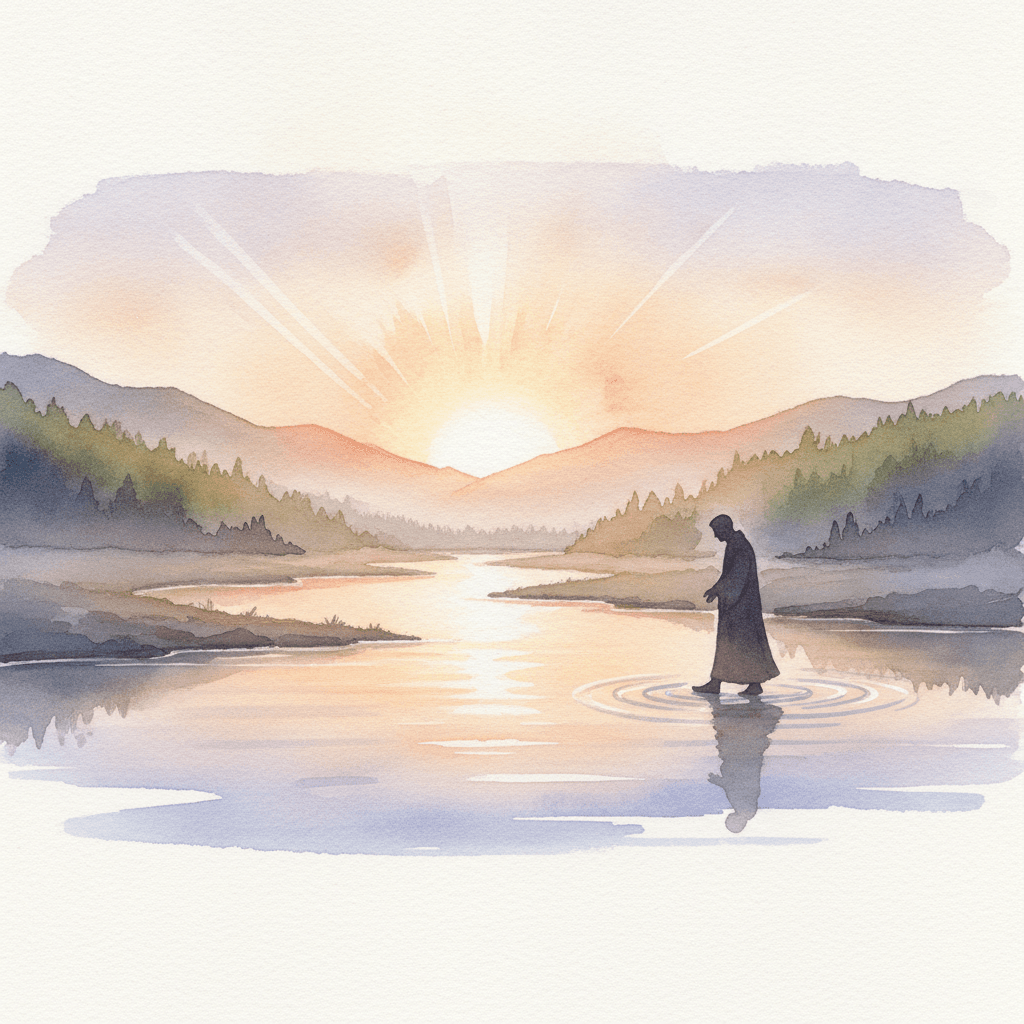
The Meaning of the Jordan River: Understanding a Biblical Turning Point
The Jordan River appears often when reading the Bible, but clearly explaining its significance isn’t always easy. Knowing where it is and why it appears so frequently makes familiar passages clearer. The Jordan begins near the Hermon Mountains in the north and flows south through the Sea of Galilee into the Dead Sea. It’s not a massive river but a stream that follows a deep valley, with water flow and volume varying depending on the season.
Its importance isn’t just geographical. In the Bible, the Jordan often symbolizes a crossing point. The Israelites in the eastern wilderness had to cross this waterway to enter Canaan on the west. Therefore, the Jordan isn’t just a boundary line but appears as a threshold where God leads His people into a new stage. It was a boundary from leaving the familiar and entering the land of promise.
In Joshua 3, this scene is vividly described. When Israel crossed the Jordan, it was the “time of harvest,” and the river was “overflowing its banks,” (Joshua 3:15) indicating a more difficult crossing than usual. God often opens the way not when circumstances seem easiest but when they appear most impossible.
Particularly noteworthy is that the priests carrying the Ark of the Covenant first stepped into the water. Joshua 3:13 states that when the soles of the priests’ feet touched the Jordan, the water would stop, and verses 16-17 describe how the water parted, allowing the people to cross on dry ground. They didn’t move first after the water was divided; they stepped out trusting God's Word. Faith involves trusting and obeying God's Word even before seeing the full outcome.
This scene naturally calls to mind the crossing of the Red Sea. In Exodus 14, God parts the sea to deliver His people from Egypt. Here in Joshua 3, He halts the Jordan to bring His people into the promised land. The God who rescued from Egypt did not abandon His people in the wilderness but led them to the fulfillment of His promise. Salvation from God isn’t just a fleeting moment of emotion; He faithfully guides the path of salvation to its end.
The Jordan also holds significance during the period of conquest. In 2 Kings 2, Elijah and Elisha cross the Jordan as a pivotal moment in their ministry transition. Elijah strikes the water with his cloak, splitting the river, and the same sign appears when Elisha later crosses back (2 Kings 2:8, 14). The Jordan here marks the boundary between one era ending and another beginning—a symbol of the border where two phases meet.
In our lives, such Jordan moments happen too. There are times to let go of long-held methods, or to step away from familiar relational patterns. Even when days seem similar outwardly, there are moments internally where we cross a line. The Bible reminds us that such boundaries are not accidental. God does not leave His people at dead ends but holds them at those points, guiding and empowering each step forward.
In the New Testament, the Jordan takes on a new depth because John the Baptist baptized there. Mark 1:5 recounts how all Judea and Jerusalem people came to the Jordan to confess their sins and be baptized. While the Jerusalem temple was the religious center, the Jordan was where people publicly stood before God without pretenses. They came openly, leaving their pride behind.
Understanding why repentance was proclaimed at the Jordan makes it clearer: repentance isn’t just a feeling of guilt; it means turning around—changing direction from sin to God. Since the Jordan was originally a crossing, it naturally fits John’s message to leave old ways behind and start anew before God. The landscape echoes this call for renewal.
Even without elaborating on Jesus’ baptism in detail, the significance of the Jordan’s weight is felt. The people waiting for the Messiah, the prophets announcing repentance, and Israel at the cusp of a new era all gathered at the Jordan. Overall, the Jordan is not just a geographical element but a recurring symbol that God uses to lead His people into new phases in history.
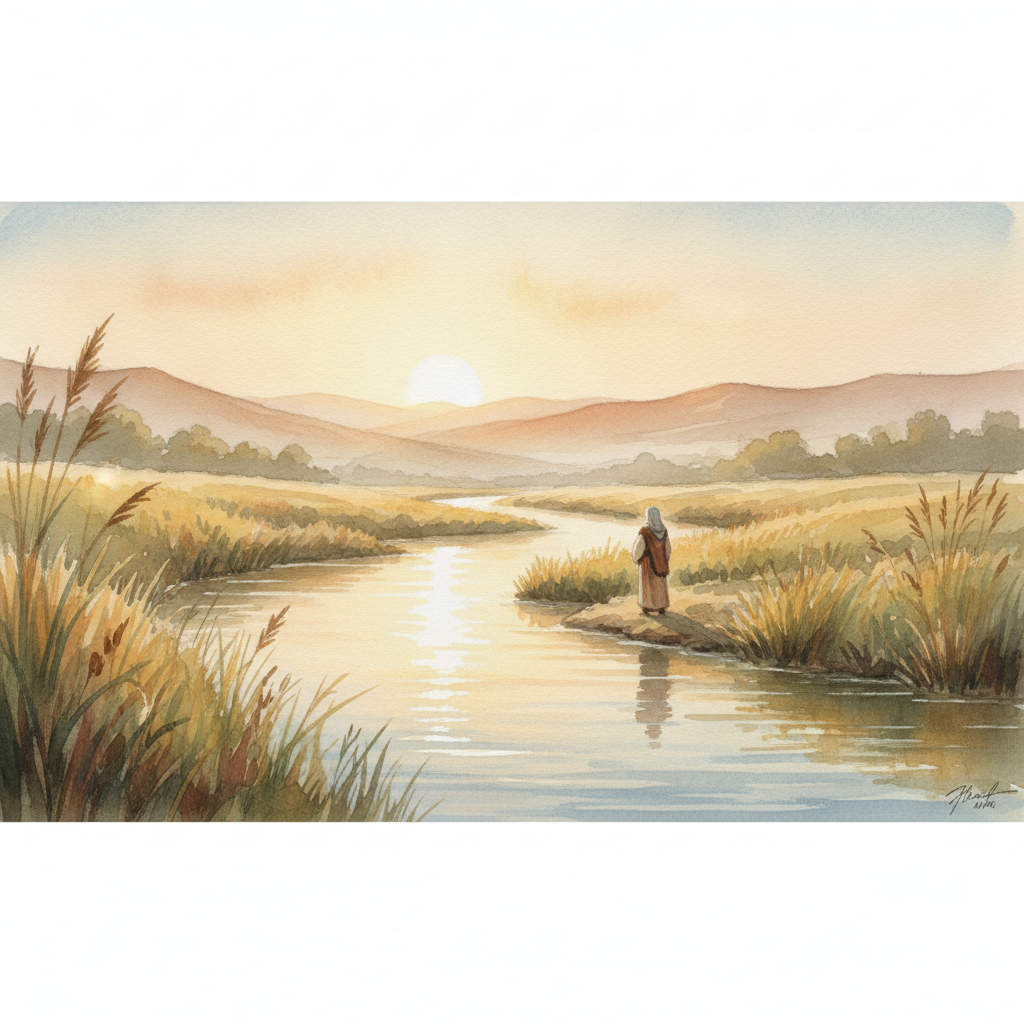
Knowing the history and geography makes it tempting to see the biblical texts as distant or cold, but often it’s quite the opposite. Recognizing that the Jordan flows through deep valleys and swells at certain seasons helps bring the tension of Joshua 3 to life. Naturally, one imagines the feelings of the priests standing at the water’s edge, the expressions of parents holding their children’s hands.
When you read this way, the Bible becomes less of a distant religious document and more like a light shining on today’s life. For example, unresolved conflicts may be ready for reconciliation. Approaching someone first might feel costly or risky. But if we recognize that we need to let go of our stubbornness before God, that single step of message can be like crossing a small Jordan.
Likewise, speaking honestly to someone can be difficult—even if we want to overlook our mistake—yet admitting and correcting it can bring peace. If we keep waiting to obey until after the water dries, we remain stuck on the riverbank. The Jordan asks: What is the word God is leading you to hold onto now? And what is the one step that requires obedience?
When reflecting on the Jordan, one more clear truth emerges: crossing the river wasn’t the confidence of the people alone but centered on the Ark of the Covenant—the symbol of God's presence. The people didn’t cross because of their courage but because of God's presence with them. Faith isn’t about making grand decisions; it’s about seeing more clearly that the Lord is with us.
Thus, the Jordan isn’t merely a symbol of pressure but a reassurance. It’s not about making a huge leap blindly but trusting that God is already ahead, making a way. We are not crossing alone but following the path the Lord has laid out. When that faith takes root, obedience shifts from obligation to trust.
There is a reason these locations recur throughout the Bible. The Jordan was the gateway to the promised land, the site of their commissioning for service, and the place where repentance was announced. A single river connects different eras, showing that God continually speaks fresh messages through history. The call is to stop, reflect, and take one step forward in obedience.
Today, the Jordan will look different for each person. Some may be paralyzed by worry; others need to leave behind long-standing sins; some might hesitate to step into the tasks entrusted to them. What matters isn’t the name of the river but the fact that God still shepherds His people at every point. When thinking of the Jordan, it’s helpful to remember the promise that — with the Lord ahead — the path to cross is ultimately a crossing in trust.
If you want to explore biblical places and flows more closely, consider using 성경 읽기 or AI 성경 검색 to delve into the relevant passages. When reading Joshua 3, 2 Kings 2, and Mark 1 side by side, it becomes even clearer that the Jordan isn’t just a place but a space where God’s guidance is revealed.
 Bible Habit
Turn this article into today’s reading habit
Keep your McCheyne plan, sequential reading, notes, and progress together so the next passage is always clear.
- Today’s passages
- Reading checklist
- Notes and highlights