

Starting at a Child’s Eye Level and Connecting Naturally to Scripture
A guide on how to choose a children’s Bible based on biblical principles, tailored reading approaches by age, family routines, and practical methods to lead children to Scripture naturally.
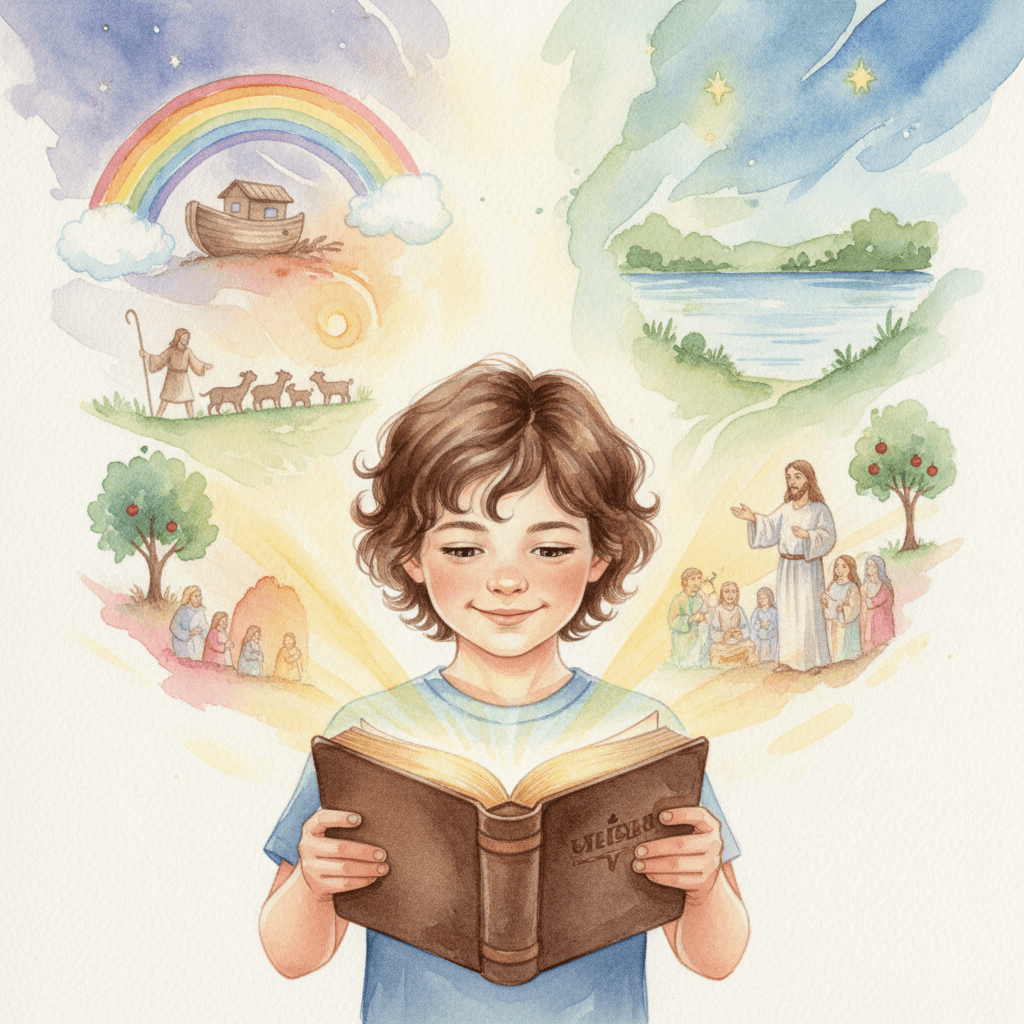
Prioritizing correctness and familiarity over simplicity and lightness in children's Bibles
When searching for a children’s Bible, my mind often wavers. I want my children to love the Word, but I worry that constantly exposing them only to simple stories might cause them to drift away from the actual Bible text. However, these two are not mutually exclusive. Starting with language they can understand is important, but ultimately, guiding them toward the Bible itself is the healthiest approach. The first impression in childhood significantly influences their lifelong attitude.
The Bible is not merely a collection of moral lessons telling us to live kindly. It is the story of salvation—God creating the world, rescuing humans in sin, and fulfilling His promises in Christ. Therefore, a children’s Bible should not be just an entertaining collection of stories, but a window revealing God's character and His work. Jesus said, “You think you find eternal life in Scripture, but it is they that testify about Me” (John 5:39). The core message must be clear, especially for the first books children read.
The three key criteria for choosing a good children’s Bible
First, check if God is revealed as the main character. Children’s books often emphasize the courage, obedience, and kindness of characters. While such applications are valuable, the focus of the Bible is God’s holiness and grace. Even when reading stories like David’s, simply ending with “Be brave like David” diminishes their depth. You should see how God protects His people and uses the weak.
Second, ensure the overall story flow isn’t distorted. The Bible from Genesis to Revelation isn’t a collection of disconnected episodes, but a unified story of redemption. If the flow of creation, fall, promise, redemption, and consummation becomes blurry, children will only remember the Bible as a collection of good stories. Luke 24:27 mentions that Jesus explained to His disciples how all Scripture — Moses and the Prophets — testify about Him. Children’s Bibles should ultimately illuminate the path to Jesus Christ.
Third, make sure it acts as a bridge to the actual Scripture text. Summaries are helpful, but should never be the endpoint. As children grow, they need to read even a few verses directly from the Bible. Reading a short, clear verse like “The Lord is my shepherd; I shall not want” (Psalm 23:1) with them enables them to experience God's Word directly, not just an explanation. Gradually incorporating Scripture reading at home, or understanding family worship, makes this transition much more natural.
The approach to reading should change with age
In early childhood, repetition and stability matter more than lengthy explanations. Short sentences, minimal illustrations, and focusing on one truth per reading are ideal. For example, “God made the world,” or “Jesus loves us,” are effective simple sentences. At this stage, it’s more important that the Word sounds familiar and comfortable rather than deeply understood.
Children in lower elementary grades can follow the connections of stories bit by bit. They prefer stories with few characters and clear main scenes. When reading, asking one meaningful question rather than many is best. For example, “What did God do in this story?” shifts their focus from themselves to God.
By upper elementary, children should begin reading more directly from the Bible. Don’t just finish a children’s Bible story—open the actual Scripture and read two or three verses. For example, after reading about the feeding of the five thousand, look at John 6 directly. At this stage, children naturally realize the difference between storybooks and the Bible. Recognizing this difference is a mature starting point. If you want to understand the broader story of the Bible, consider resources like Bible in One Year or Bible Reading Plans tailored to your family.
Creating routines at home, where the rhythm matters more than volume
A family that reads a lot isn’t necessarily sustainable; those with a gentle, steady rhythm last longer. Setting predictable times, such as 10 minutes after dinner or 7 minutes before bed, helps children see Scripture as part of daily life rather than an event. Even if the daily portion is brief, the key is consistent experience of approaching the Bible.
The simplest routine is this: first read a short passage; then ask one question; finally, read the verse again. For example, after reading about Jesus calming the storm, ask, “Why do you think the disciples were afraid?” rather than “What happened in the story?” Ask questions that draw their attention to Jesus Himself, because Scripture teaches us not just about our feelings but about whom we trust.
This routine shines brightest on ordinary days. Children may be tired or parents may feel unprepared; in such cases, don’t push for a long session. Even just a few sentences are enough. The goal isn’t perfection but steady direction. Seeds grow even when unseen. The Word works in the same way. If needed, check out 365-Day Reading Plan or Today’s Manna for short passages.
Adding historical context makes Scripture more vivid
When reading the Bible to children, briefly adding historical background makes the Word come alive. For example, explaining that the Psalms were sung in the context of palace life, wilderness, warfare, or escape makes them more relatable. Psalm 23 then isn’t just poetic words but a genuine song of faith professing God as Shepherd amid fear and need.
The same applies to the Gospels. During Jesus’ time, Judea was under Roman rule, and many expected a political savior. Yet Jesus did not become king in the worldly manner but fulfilled salvation through the cross and resurrection. Briefly explaining this can help children see Jesus not as an ancient story but as someone who fulfilled God’s promises in real history.
A small moment can leave a lasting impression
Every family experiences it: children love the pictures in their children’s Bible but quickly lose focus once reading begins. Parents can become anxious. But often, just a brief, meaningful reminder can be enough. For example, after reading a scene from Mark before bed, sharing “Jesus can even control the storm” in a single sentence. Even if children don’t grasp all the details, they remember that sentence in a fearful night. The Word seeps into life in small ways.
Sometimes, children ask, “Why does the Bible keep telling the same stories?” At such times, you might say, “God keeps telling us what is important.” Repetition isn’t boredom but a way of shaping faith. Repeating the same verse multiple times or reading it again later isn’t wasted effort. When feeling overwhelmed, check out Seven Tips for Building a Bible Reading Habit to find a pace suitable for your family.
Final note for parents to remember
Parents aren’t expected to have all the answers. It’s more valuable to show humility by reopening the Bible when unsure. Saying, “I’m not entirely sure either. Let’s read that part again,” models a humble attitude to learning from the Word. Teaching children about Scripture isn’t about accumulating knowledge but about living side by side with God’s Word.
Most importantly, clarify the goal of children’s Bible reading: not to develop clever religious habits, but to help children trust God’s Word and learn about Jesus Christ. The amount read in a day isn’t as important as children gradually accepting the Bible as a truth that reflects their life, not just an interesting book. “Your word is a lamp to my feet and a light to my path” (Psalm 119:105). This isn’t just a prayer for adults; children raised in the light of Scripture see the world with different eyes. Even a short daily habit isn’t a small matter.
Starting at a child’s eye level should always aim for the biblical text itself. Using simple language shouldn’t mean diluting the core. When you gradually reveal what God is like, why humans need salvation, and what Jesus Christ has accomplished, children will learn that the Bible isn’t just a useful book but God’s Word proclaiming the ultimate truth. Small moments built into daily life become a clear path — not because parents are perfect, but because His Word is alive and powerful.
Related articles
 Bible Habit
Turn this article into today’s reading habit
Keep your McCheyne plan, sequential reading, notes, and progress together so the next passage is always clear.
- Today’s passages
- Reading checklist
- Notes and highlights