

What Does the Burnt Offering in Leviticus 1 Repeatedly Show Us?
Leviticus 1 describes in turn the procedures for burnt offerings from the herd, the flock, and birds. By tracing how these different offerings reach the same conclusion, we can see what lies at the heart of the burnt offering.
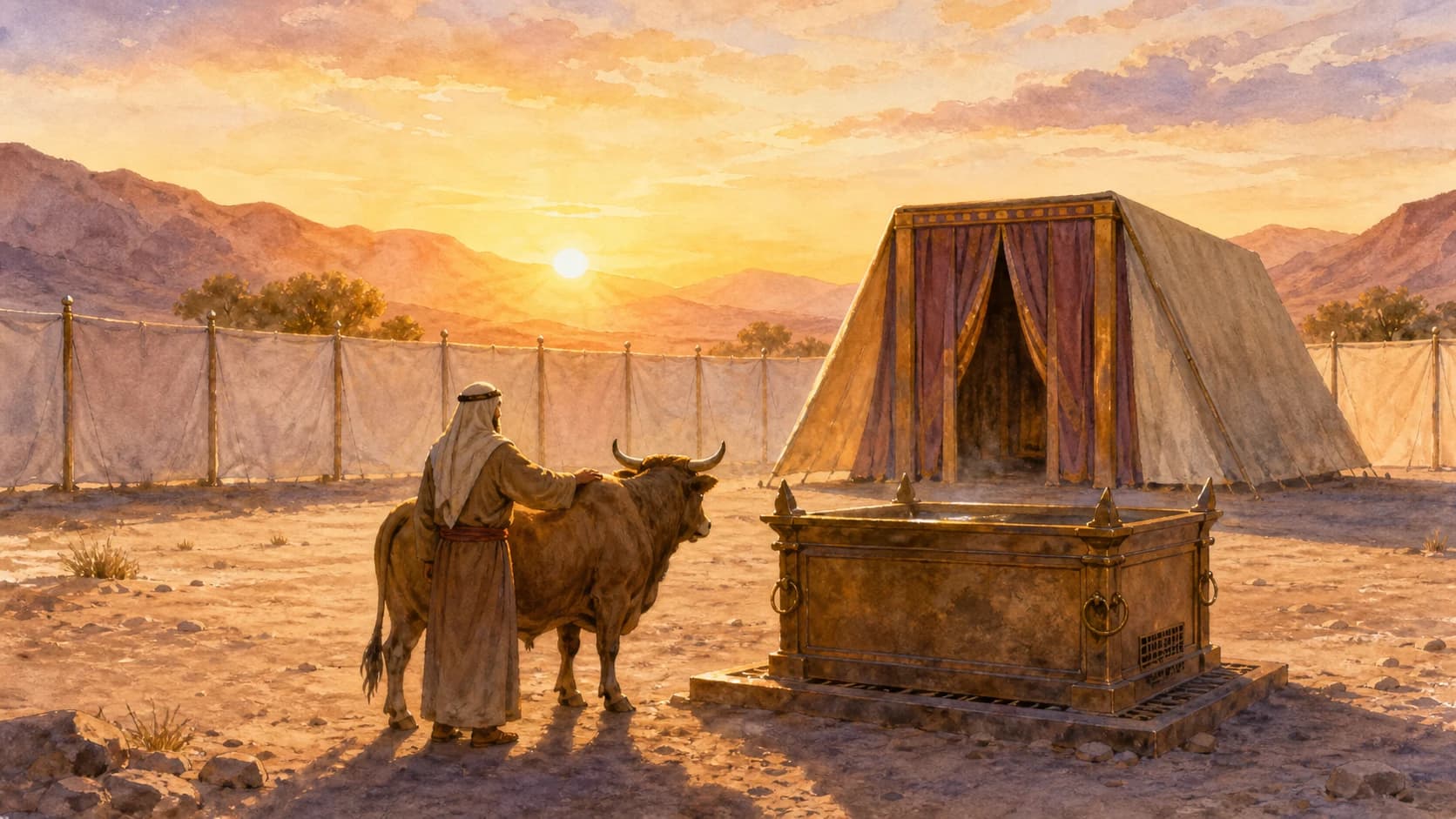
The central point of Leviticus 1 is that, although different animals could be presented as burnt offerings, each had to be offered before the LORD according to the prescribed procedure and burned on the altar. The procedures varied slightly for cattle, sheep or goats, and birds, but every offering was made by fire and became a pleasing aroma to the LORD. This pattern runs throughout Leviticus 1.
The LORD Determined the Offering and Where It Was to Be Presented
Leviticus 1 opens with the LORD calling to Moses from the tent of meeting. The LORD instructed that anyone among the Israelites who wished to bring an offering from their livestock was to present an animal from either the herd or the flock.
A burnt offering from the herd had to be a male without defect. The worshiper was to present it at the entrance to the tent of meeting so that it might be accepted before the LORD. The text says that when the worshiper laid a hand on the head of the burnt offering, it would be accepted on that person’s behalf to make atonement.
The passage does more than describe a person’s desire to offer a sacrifice. It sets out, step by step, what was to be offered and where and how it was to be presented. A burnt offering was not something worshipers could handle in their own way. The instructions the LORD gave Moses established the specific requirements for the sacrifice.
The Worshiper and the Priest Had Different Responsibilities
The person presenting an offering from the herd slaughtered the young bull before the LORD. The worshiper skinned it, cut it into pieces, and washed the internal organs and legs with water. The priests, Aaron’s sons, brought the blood and splashed it against the sides of the altar at the entrance to the tent of meeting. They prepared the fire and arranged the wood on the altar, then placed the pieces, including the head and fat, on the wood. Finally, the priest burned the entire offering on the altar.
A similar sequence is repeated for a burnt offering from the sheep or goats. The worshiper presented a male without defect and slaughtered it on the north side of the altar. The priests splashed its blood against the sides of the altar. The animal was cut into pieces and placed with its head and fat on the wood, while the internal organs and legs were washed with water. The priest then brought all of it and burned it on the altar.
Throughout these repeated instructions, the person bringing the offering and the priest had distinct responsibilities. The process did not end when the offering was brought. It continued as the priest handled the blood, arranged the offering over the fire and wood, and burned it on the altar.
The Burnt Offering of Birds Reached the Same Conclusion
When a bird was presented as a burnt offering, the offering had to be a turtledove or a young pigeon. The priest brought the bird to the altar, wrung off its head, and burned it on the altar. Its blood was drained against the side of the altar. The crop and its contents were removed and thrown to the east side of the altar, where the ashes were placed. The bird was torn open by the wings, but not divided completely.
A bird differed from cattle and sheep in size, and the procedure for handling it was not the same. Even so, the burnt offering of a bird was also burned on the wood over the fire on the altar. The instructions for cattle in verse 9, for sheep or goats in verse 13, and for birds in verse 17 all end with the same declaration: each was an offering made by fire, a pleasing aroma to the LORD.
The passage does not directly explain why these three kinds of offerings were permitted, so we should not add an explanation from outside the text. What is clear, however, is that the instructions for these different offerings repeatedly lead to the same conclusion. Each animal required different handling, but none of the burnt offerings bypassed the prescribed process, and every one was ultimately burned on the altar.
As you read Leviticus 1 again today, mark the verbs repeated in the instructions for cattle, sheep or goats, and birds. Compare side by side the sequence of slaughtering the animal, handling the blood, washing it or removing what was unclean, and placing it over the fire. This will help you see precisely where the three procedures differ and where they arrive at the same conclusion.
Related articles
Deuteronomy 22 Teaches Us Not to Ignore a Neighbor’s Loss or Danger
Deuteronomy 22 commands God’s people to return lost animals, help fallen animals, and build parapets around their roofs. It explores our responsibility not to ignore losses and dangers we can plainly see.
Deuteronomy 19 Prevents Hasty Revenge and False Judgments
Through its laws concerning cities of refuge, boundary markers, and witnesses, Deuteronomy 19 distinguishes accidental death from intentional murder and prevents hasty revenge and false judgments.
Why Deuteronomy 17 Places Both Judges and Kings Under God’s Word
Deuteronomy 17 places everything—from investigating serious charges to handling difficult cases and limiting royal authority—under God’s commands, showing how human judgment can remain impartial.
 Bible Habit
Turn this article into today’s reading habit
Keep your McCheyne plan, sequential reading, notes, and progress together so the next passage is always clear.
- Today’s passages
- Reading checklist
- Notes and highlights