

What Does Leviticus 10 Say We Must Distinguish When Approaching God?
From Nadab and Abihu’s unauthorized fire to Aaron’s explanation, explore what priests approaching God were required to distinguish and obey.
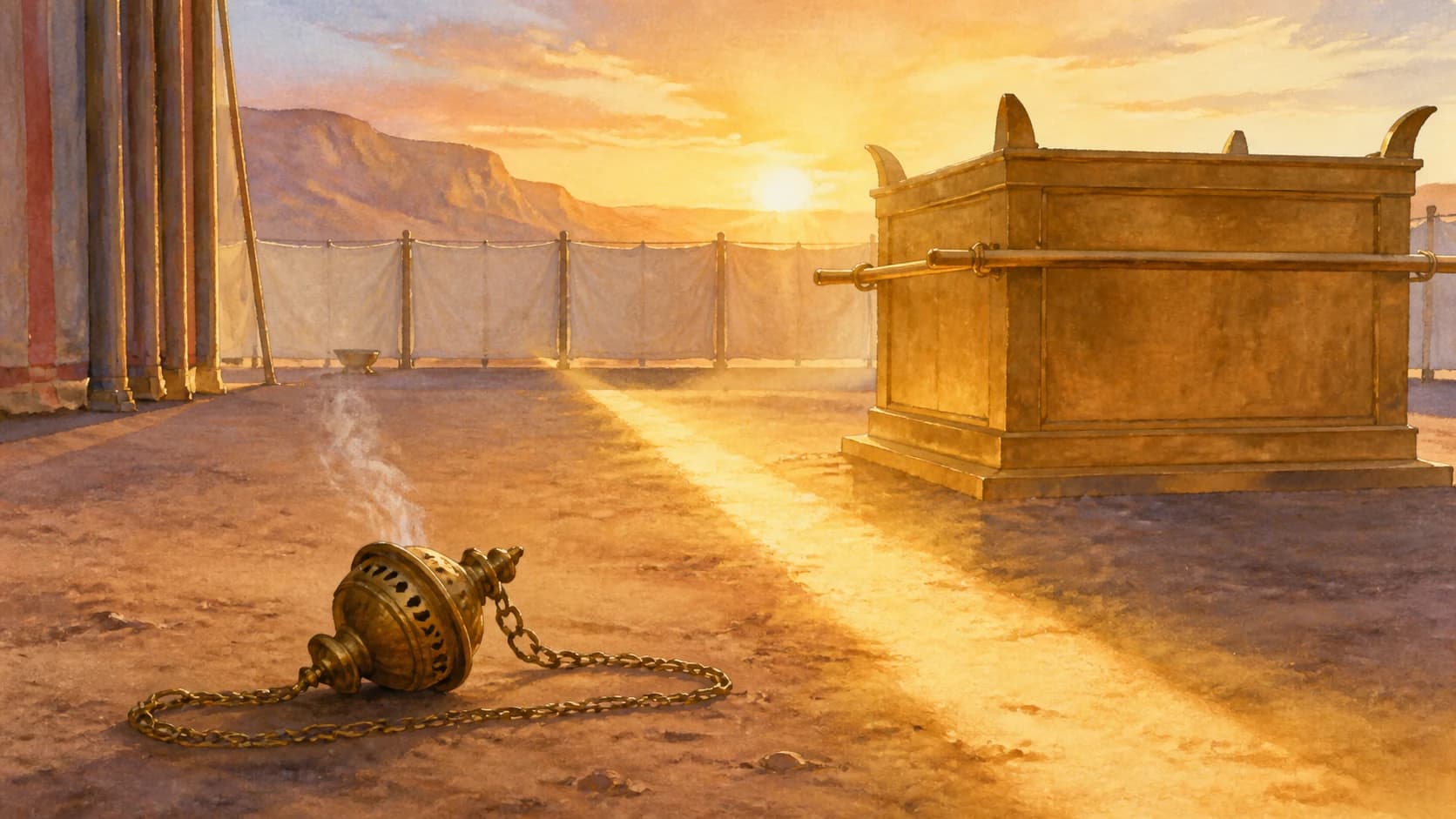
Leviticus 10 teaches that those who approach God must follow what the LORD has commanded rather than worship in their own way. The priests were required to distinguish between the holy and the common, and between the unclean and the clean. This theme runs throughout the chapter, from Nadab and Abihu’s offering of unauthorized fire to the moment when Moses accepts Aaron’s explanation.
Two Men Died After Offering Unauthorized Fire
Aaron’s sons Nadab and Abihu each took his censer, put fire in it, and offered incense before the LORD. The problem was that they offered unauthorized fire, which the LORD had not commanded. Fire came out from the presence of the LORD and consumed them, and they died before the LORD.
Moses then relayed the LORD’s words to Aaron. The LORD had declared that among those who approached him, he would show himself holy, and before all the people he would be honored. A priest who approached God could not decide for himself how to act. What was to be offered and how it was to be presented had already been set apart by the LORD’s command.
Aaron remained silent. Following Moses’ instructions, Mishael and Elzaphan carried the bodies outside the camp while they were still wearing their tunics. The contrast is clear: Nadab and Abihu offered fire that had not been commanded, while Mishael and Elzaphan removed their bodies exactly as Moses directed.
The Remaining Priests Had to Remain at Their Posts
Moses told Aaron, Eleazar, and Ithamar not to let their hair become unkempt or tear their clothes. He also told them not to leave the entrance of the tent of meeting because the LORD’s anointing oil was upon them. The whole house of Israel could mourn the destruction caused by the LORD’s fire, but the anointed priests had to continue carrying out their duties at the tent of meeting.
They did as Moses commanded. Earlier in the same chapter, stepping outside God’s command had ended in death. Now, even amid a devastating loss, the remaining priests obeyed the instructions they had received. Holiness was not merely a matter of emotion; it was demonstrated by faithfully remaining in the place appointed to them and putting God’s commands into practice.
The Priests Had to Discern and Then Teach the People
The LORD told Aaron that neither he nor his descendants were to drink wine or other fermented drink when entering the tent of meeting, so that they would not die. This command was tied to a clear responsibility. The priests had to distinguish between the holy and the common, and between the unclean and the clean. They were also to teach the Israelites all the decrees the LORD had given through Moses.
A priest who lacked discernment would compromise more than his own conduct. He would also be unable to teach the people properly what must be kept distinct. That is why the prohibition against drinking, the duty to distinguish between these categories, and the responsibility to teach the LORD’s decrees all belong to the same train of thought.
Moses then reminded them who was to eat the remainder of the grain offering, the breast of the wave offering, and the thigh of the contribution, as well as where they were to eat them. Even the priests’ portions of the sacrifices were not theirs to handle however they wished. The proper place and recipients had to be distinguished according to the LORD’s command.
Moses Also Listened to Aaron’s Explanation
When Moses discovered that the goat of the sin offering had already been burned, he became angry with Eleazar and Ithamar. The offering was most holy, and because its blood had not been brought into the sanctuary, the priests were supposed to eat it in a holy place.
Aaron explained that although they had offered the sin offering and the burnt offering that day, such terrible events had befallen him. He asked whether the LORD would have approved if he had eaten the sin offering under those circumstances. When Moses heard Aaron’s explanation, he was satisfied.
This final scene does not diminish the seriousness of the deaths earlier in the chapter. At the same time, it shows that after stating the regulation, Moses genuinely listened to Aaron’s explanation. The discernment required in Leviticus 10 involves both knowing God’s commands accurately and carefully examining the actions taking place before us.
Read Leviticus 10 again in today’s Bible reading, and mark one sentence corresponding to each of these ideas: “the LORD commanded,” “they did as commanded,” and “distinguish.” Placing the commands alongside the actions will help you see more clearly, within the flow of the passage, the distinctions this chapter calls God’s people to make.
Related articles
Numbers 20: Water Came from the Rock, So Why Were Moses and Aaron Barred from Entering?
Explore how water came from the rock in Numbers 20, what God commanded, why Moses and Aaron could not enter the Promised Land, and how Aaron’s priestly role passed to Eleazar.
Numbers 18: How Were the Duties and Portions of the Tabernacle Divided?
Numbers 18 defines the distinct duties of the priests and Levites, assigns offerings and tithes as their portions, and commands the Levites to present the best part of the tithes they receive.
Numbers 16: Why Did Aaron Stand Between the Dead and the Living?
Explore the events of Numbers 16—from Korah’s rebellion and the judgment involving the censers to the renewed plague—and discover why Aaron stood between the dead and the living.
 Bible Habit
Turn this article into today’s reading habit
Keep your McCheyne plan, sequential reading, notes, and progress together so the next passage is always clear.
- Today’s passages
- Reading checklist
- Notes and highlights