

How Did the Two Goats in Leviticus 16 Deal with Sin?
On the Day of Atonement in Leviticus 16, one goat’s blood was sprinkled, while another goat carried the people’s sins into the wilderness. Follow the rituals of the two goats to understand the heart of the Day of Atonement.
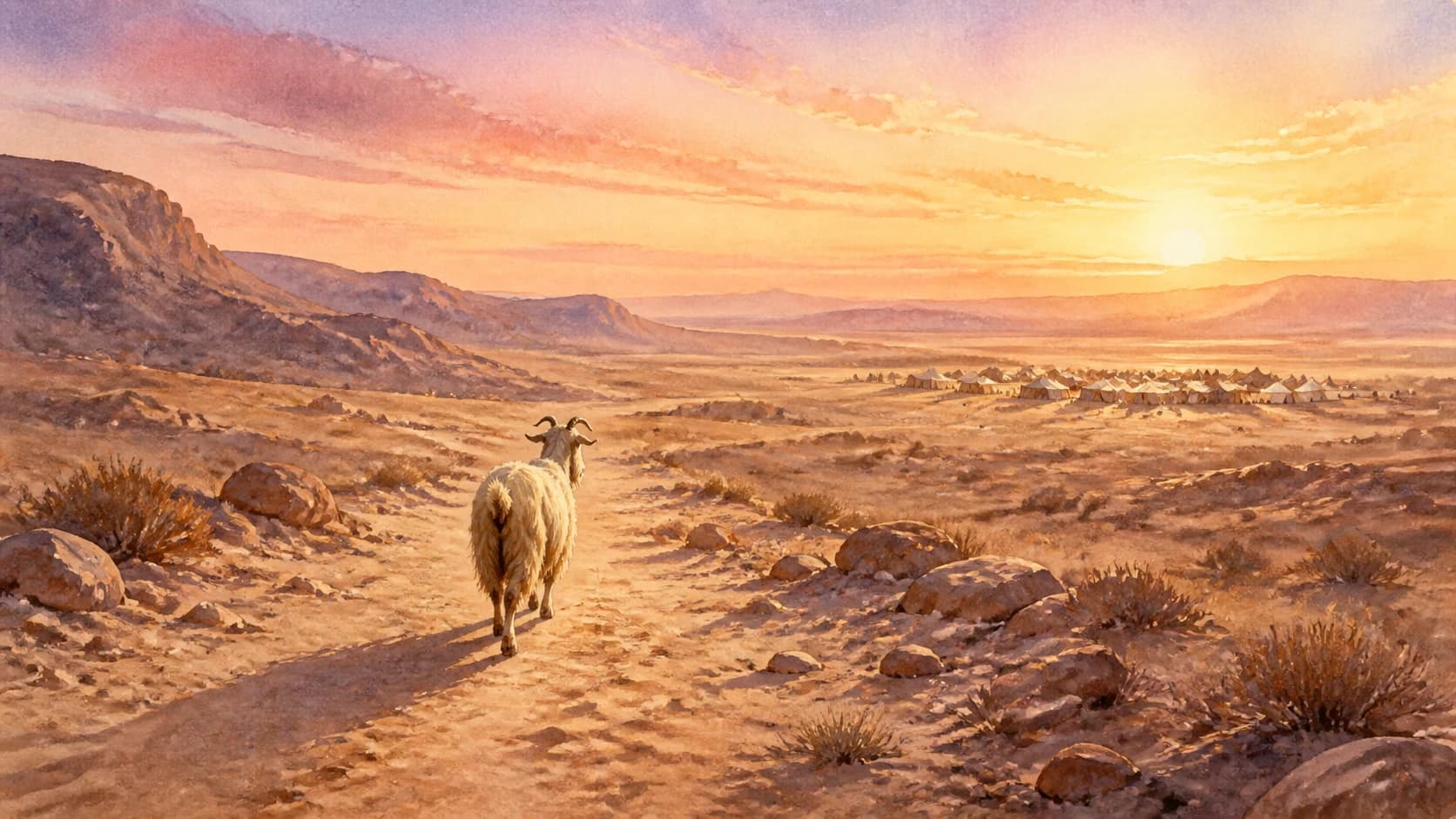
The two goats in Leviticus 16 were used in rituals that atoned for Israel’s sins and carried those sins outside the camp. One goat was offered as a sin offering, while the other was sent into the wilderness bearing all the people’s sins. Let us trace the flow of Leviticus 16 through these two rituals.
Aaron Entered the Sanctuary According to a Prescribed Ritual
Leviticus 16 begins with instructions given after two of Aaron’s sons died when they approached the LORD. God commanded Aaron not to enter whenever he wished into the Most Holy Place before the mercy seat above the ark. Entering that place at the wrong time could result in death.
Before entering the sanctuary, Aaron had to prepare a young bull for a sin offering and a ram for a burnt offering. He also had to bathe himself with water before putting on the sacred linen garments. He was to take a censer filled with burning coals from the altar before the LORD, along with finely ground fragrant incense. Behind the curtain, he had to burn the incense so that its cloud covered the mercy seat, shielding him from death.
These commands make it clear that Aaron could not enter the Most Holy Place in his own way or whenever he chose. The time of entry, his clothing, his washing, the sacrifices, the incense, and the handling of the blood all followed a prescribed order.
Aaron First Made Atonement for Himself and His Household
Before beginning the ritual for the people, Aaron offered the bull for himself. The passage twice states that he made atonement for himself and his household. He sprinkled some of the bull’s blood on the east side of the mercy seat and then sprinkled it seven times before the mercy seat.
Only afterward did he slaughter the goat chosen as the people’s sin offering. Aaron carried its blood behind the curtain and sprinkled it on and before the mercy seat, just as he had done with the bull’s blood. Because the priest himself also needed atonement, he first had to complete the ritual for himself and his household.
Atonement extended beyond the people. Because of the Israelites’ uncleanness and all their sins, atonement also had to be made for the Most Holy Place and the tent of meeting. Aaron applied blood from the bull and the goat to the horns of the altar, then sprinkled blood on it seven times to cleanse and consecrate it. The process repeatedly purified the Most Holy Place, the tent of meeting, and the altar that stood among the people.
The Two Goats Underwent Different Rituals
The two goats received from the congregation were first presented before the LORD at the entrance to the tent of meeting. Lots were cast: one goat was designated as a sin offering for the LORD, and the other was designated for Azazel.
The goat chosen for the LORD was slaughtered. Its blood was carried behind the curtain and sprinkled on and before the mercy seat. Through this blood, atonement was made for the Most Holy Place because of the people’s uncleanness and all the sins they had committed.
The other goat was kept alive. After completing the atonement for the Most Holy Place, the tent of meeting, and the altar, Aaron placed both hands on the goat’s head. He confessed over it all the wickedness and sins of the Israelites, placing those sins on the goat’s head. A man appointed for the task led the goat into the wilderness, where it carried all the people’s wickedness to a remote place.
The blood of one goat was used to make atonement within the sanctuary. The living goat carried the confessed sins away from the camp where the people lived. Sin was not merely named and then left unresolved. The sprinkling of blood and the removal of sin were both enacted in a prescribed order.
The Whole Community Ceased from Work on the Day of Atonement
This ordinance was to be observed on the tenth day of the seventh month. Both native-born Israelites and foreigners residing among them were to humble themselves and do no work. It was a Sabbath of solemn rest.
The priest made atonement for the Most Holy Place, the tent of meeting, the altar, the other priests, and the entire congregation. This ritual for all the sins of the Israelites was performed once a year. Aaron did exactly as the LORD had commanded Moses.
Today, as you read all of Leviticus 16, mark each object of atonement. Aaron and his household, the people, the Most Holy Place, the tent of meeting, and the altar appear one after another. Following this repetition shows in concrete terms that the Day of Atonement was not merely an observance concerned with one person’s sin. It was a day for cleansing the priest, the congregation, and the holy places amid the sin and uncleanness of the people.
Related articles
Numbers 20: Water Came from the Rock, So Why Were Moses and Aaron Barred from Entering?
Explore how water came from the rock in Numbers 20, what God commanded, why Moses and Aaron could not enter the Promised Land, and how Aaron’s priestly role passed to Eleazar.
Numbers 18: How Were the Duties and Portions of the Tabernacle Divided?
Numbers 18 defines the distinct duties of the priests and Levites, assigns offerings and tithes as their portions, and commands the Levites to present the best part of the tithes they receive.
Numbers 16: Why Did Aaron Stand Between the Dead and the Living?
Explore the events of Numbers 16—from Korah’s rebellion and the judgment involving the censers to the renewed plague—and discover why Aaron stood between the dead and the living.
 Bible Habit
Turn this article into today’s reading habit
Keep your McCheyne plan, sequential reading, notes, and progress together so the next passage is always clear.
- Today’s passages
- Reading checklist
- Notes and highlights