

What Did the Grain Offering in Leviticus 2 Set Apart?
The grain offering in Leviticus 2 was presented with fine flour, oil, frankincense, and salt according to specific instructions. Explore how the chapter distinguishes the portion to be burned from the portion to be kept, and what was to be included or excluded.
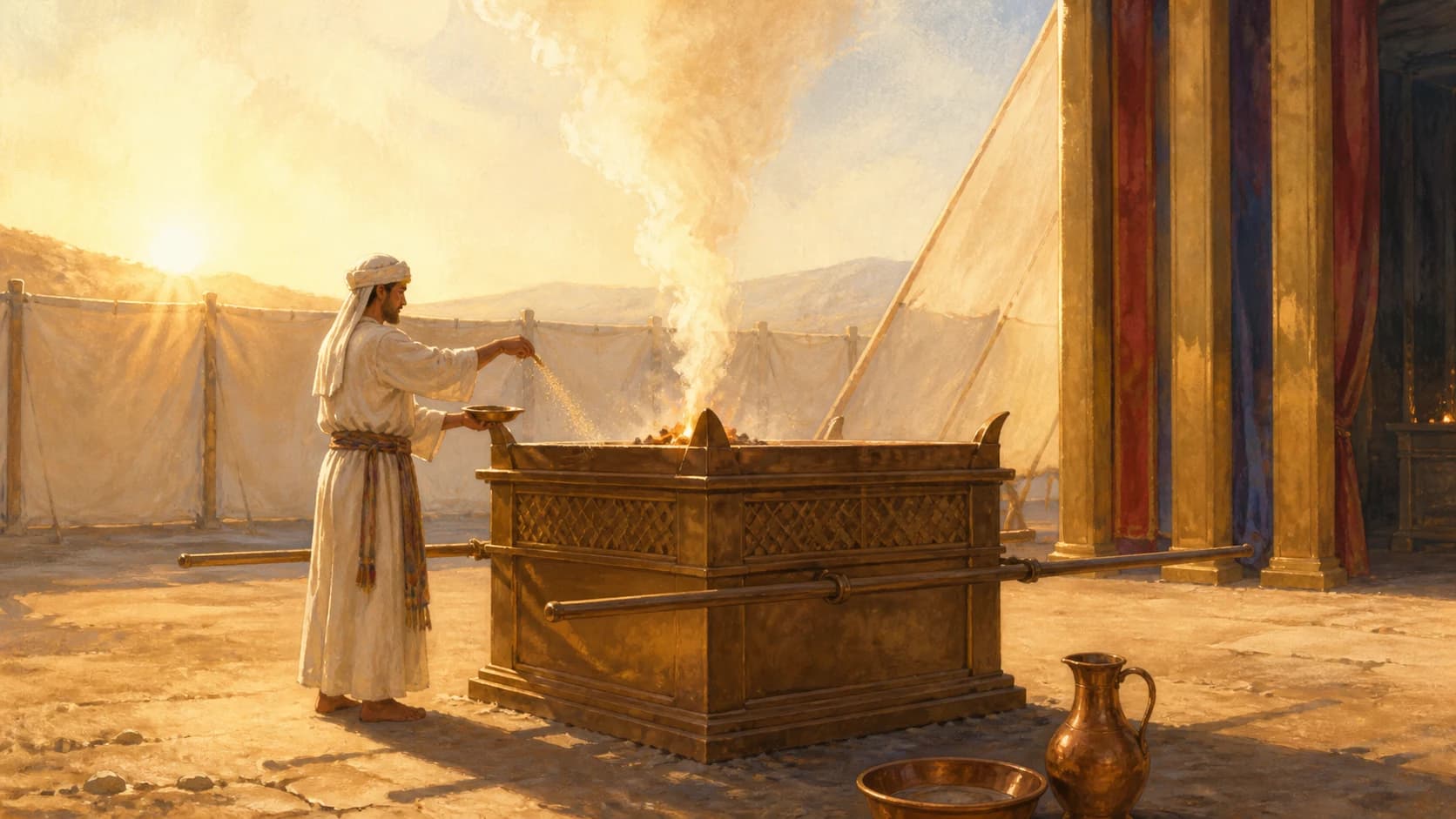
The grain offering in Leviticus 2 was not an offering of grain presented in just any manner. The worshiper prepared fine flour, oil, and frankincense, and the priest burned the memorial portion on the altar. Throughout the chapter, clear distinctions are repeatedly made between the portion to be burned and the portion to be kept, as well as between what was to be included and what was to be excluded.
Grain Offerings Were Prepared from Fine Flour in Several Ways
The person presenting a grain offering poured oil on the fine flour and placed frankincense on it. The priest then took a handful of the fine flour and oil, together with all the frankincense, and burned it on the altar. The passage calls this the memorial portion and describes it as a food offering with a pleasing aroma to the LORD.
The grain offering did not come in only one form. It could be presented as unleavened loaves or unleavened wafers baked in an oven. An offering prepared on a griddle was broken into pieces, and oil was poured over it. An offering cooked in a pan was also made by combining fine flour and oil. When the firstfruits were presented, the heads of grain were roasted and crushed, then offered with oil and frankincense.
Although the preparation methods varied, they followed the same basic order. The worshiper prepared the offering with the prescribed ingredients and brought it to the priest. The priest carried it to the altar, took out the memorial portion, and burned it. Whatever form the grain took, it remained an offering presented to the LORD according to the appointed ingredients and procedure.
A Portion Was Set Apart Instead of the Entire Offering Being Burned
In the first instructions for the grain offering, the priest burns a handful of the fine flour and oil, along with all the frankincense. The remainder belongs to Aaron and his sons. The same distinction appears again after the offerings baked in an oven or prepared on a griddle or in a pan are described. The priest burns the memorial portion on the altar, while the remainder goes to Aaron and his sons.
This repetition makes it clear that the entire grain offering was not handled in the same way. It was divided into the memorial portion to be burned on the altar and the remainder assigned to the priests. Even the remainder is not described as ordinary food. Twice, the passage declares it to be most holy among the food offerings presented to the LORD. The portion not placed on the fire did not cease to be part of the offering; it remained a portion set apart as holy.
The Ingredients to Include and Exclude Were Also Specified
The passage commands that no grain offering be made with yeast. Neither yeast nor honey could be burned as a food offering to the LORD. They could be presented as an offering of firstfruits, but they were not to be offered on the altar as a pleasing aroma. Something permitted as an offering was not necessarily permitted to be burned on the altar.
Salt, by contrast, had to be included in every grain offering. The passage commands the worshiper not to leave the salt of God's covenant out of the grain offering and repeats that salt must accompany every offering. The contrast is unmistakable: yeast and honey were not to be burned as a food offering, while salt was never to be omitted. The grain offering was prepared according to the distinctions established in the passage, not according to the worshiper's personal preference.
The Grain Offering Centered on Honoring the Prescribed Distinctions
Leviticus 2 explains in detail the different ways fine flour could be prepared, yet it never loses sight of the requirements shared by every form of the offering. Oil was used, frankincense was added where required, and the memorial portion was burned on the altar. The remainder belonged to the priests but was treated as most holy. Yeast and honey were not burned as food offerings, while salt was never omitted from any offering.
The heart of the grain offering, then, was not simply that grain was presented. It also lay in honoring the prescribed distinctions: what to include and what to leave out, what portion to burn and what portion to keep. As you read all of Leviticus 2 today, mark each sentence containing the expressions “memorial portion,” “the remainder,” and “every grain offering.” Following these repeated phrases will help you see how the various instructions preserve the same distinctions throughout the chapter.
 Bible Habit
Turn this article into today’s reading habit
Keep your McCheyne plan, sequential reading, notes, and progress together so the next passage is always clear.
- Today’s passages
- Reading checklist
- Notes and highlights