

What Were the Severe Penalties in Leviticus 20 Meant to Protect?
Following the severe penalties and repeated commands to remain distinct in Leviticus 20, we explore why God required Israel to uphold holiness through the conduct of the whole community.
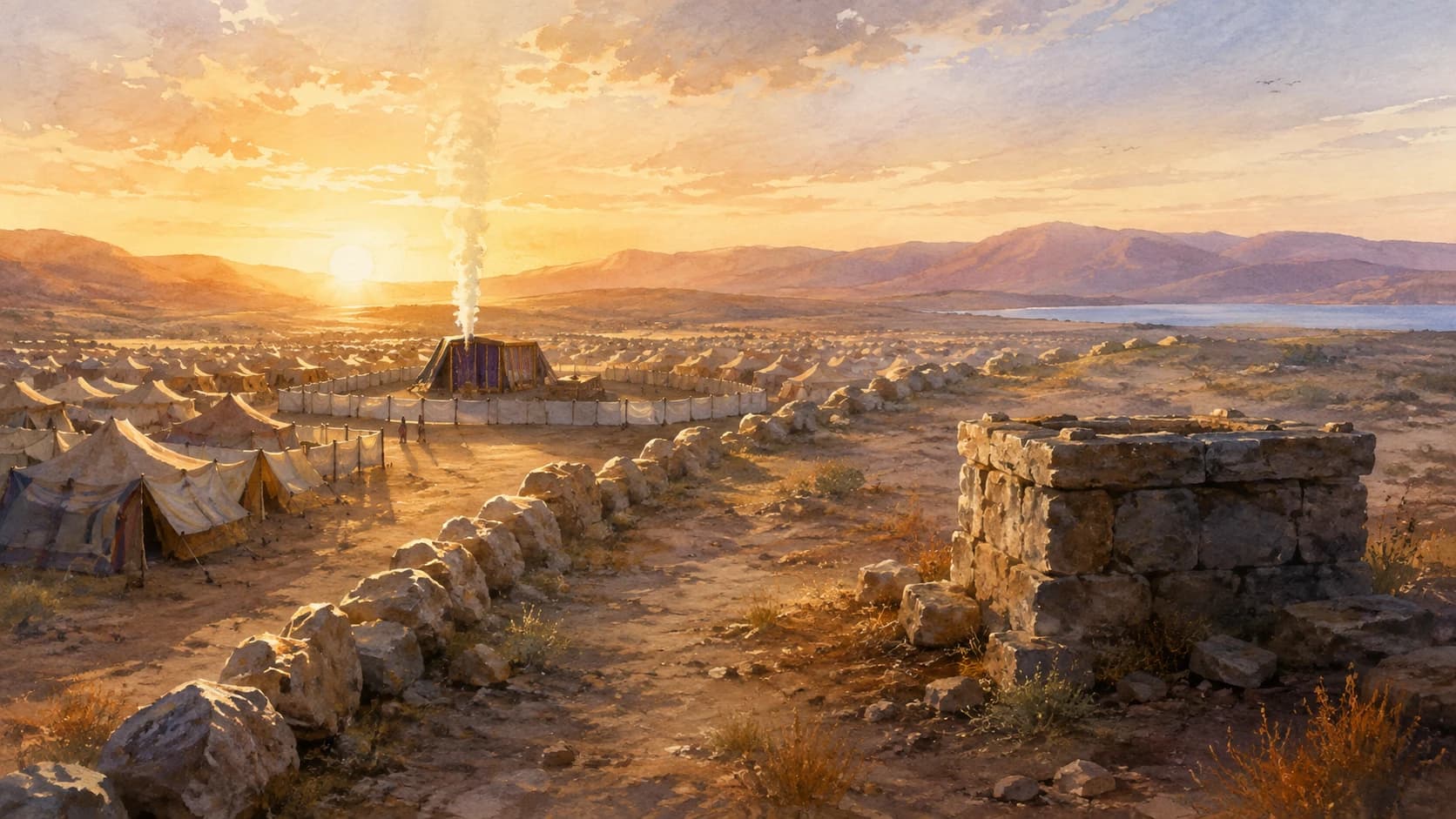
The severe penalties in Leviticus 20 clearly defined the boundaries Israel was to observe as a people belonging to God. The chapter prohibits sacrificing children to Molek, turning to mediums and spiritists, cursing one’s parents, and various sexual offenses. It then repeatedly commands the people to obey God’s statutes. Following this progression reveals that holiness was not a vague state of mind. It was a way of life expressed through refusing the customs of other nations and actively honoring the distinctions God had established.
The Community Could Not Look Away When Children Were Given to Molek
The first command requires that anyone who gave a child to Molek be put to death. This applied not only to Israelites but also to foreigners residing among them. God declared that such an act defiled his sanctuary and profaned his holy name.
The matter did not end if the people of the land saw what happened and chose to look the other way. God said he would cut off from the people the person who gave a child to Molek, that person’s family, and all who followed their example by worshiping Molek. The offender’s actions are mentioned alongside the actions of those who condoned or imitated them. This prohibition, therefore, was not merely a private responsibility. The community was also forbidden to ignore what God had condemned.
Similar language is used for anyone who turned to mediums and spiritists. God said he would set his face against that person and cut them off from the people. At the end of the chapter, he again commands that any man or woman who was a medium or spiritist be put to death by stoning. By placing this prohibition at both the beginning and the end, the chapter shows that Israel’s conduct revealed whom they followed and to whom they belonged.
Actions That Destroy Relationships Had Consequences
Verses 7 and 8 command, “Consecrate yourselves and be holy,” immediately followed by the instruction to keep and obey God’s statutes. The chapter then lists cursing one’s parents, committing adultery with a neighbor’s wife, violating the boundaries of close family relationships, and having sexual relations with animals.
The passage does not treat these acts as merely poor choices. It calls them “detestable,” “wicked,” “shameful,” and “defiling,” and specifies consequences such as death or being cut off from the people. Several laws repeat the statement, “Their blood will be on their own heads.” The person who committed the act was held responsible for its consequences.
This list is not simply a collection of unrelated prohibitions. It clearly defines the boundaries governing relationships with parents, neighbors, spouses, and relatives, and declares that violations of those boundaries could not be allowed to remain unchecked within the community. The command to be holy was given together with concrete instructions about what the people must not do in their actual relationships.
Obeying God’s Statutes Was Also Connected to the Land
Beginning in verse 22, the command to keep and obey all God’s statutes and laws appears again. God said that if Israel did so, the land where they would live would not vomit them out. The nations that had previously inhabited the land had practiced the acts listed in the chapter, and God commanded Israel not to follow their customs.
Israel was not to become a people who simply continued the practices of those nations. God promised to give them the land as an inheritance and declared that he was the God who had set Israel apart from all other peoples. He then commanded them to distinguish between clean and unclean animals and between clean and unclean birds. God’s declaration that Israel was a distinct people appears alongside the everyday practice of making distinctions.
Finally, God commands, “You are to be holy to me.” The reason is also given in the passage: the Lord is holy, and he had set Israel apart from the nations to be his own. The penalties in Leviticus 20, therefore, do more than emphasize the severity of punishment. They required the community to decisively remove conduct that defiled God’s sanctuary and name, violated relational boundaries, or followed the customs of other nations.
Today, you might read all of Leviticus 20 again and write down two recurring statements: “Keep my statutes and follow them” and “I have set you apart.” Then make separate lists of the actions the passage prohibits and those it commands. This can help you see more clearly that holiness in this chapter is not presented as an abstract feeling, but as the visible life of a people who belong to God—distinguishing the boundaries he established and living according to his statutes.
Related articles
Deuteronomy 23 Sets Clear Boundaries for Holiness
Deuteronomy 23 establishes clear boundaries concerning the assembly, the camp, money, vows, and a neighbor’s property, safeguarding the community’s order and holiness.
Deuteronomy 22 Teaches Us Not to Ignore a Neighbor’s Loss or Danger
Deuteronomy 22 commands God’s people to return lost animals, help fallen animals, and build parapets around their roofs. It explores our responsibility not to ignore losses and dangers we can plainly see.
Deuteronomy 19 Prevents Hasty Revenge and False Judgments
Through its laws concerning cities of refuge, boundary markers, and witnesses, Deuteronomy 19 distinguishes accidental death from intentional murder and prevents hasty revenge and false judgments.
 Bible Habit
Turn this article into today’s reading habit
Keep your McCheyne plan, sequential reading, notes, and progress together so the next passage is always clear.
- Today’s passages
- Reading checklist
- Notes and highlights