

The Festivals in Leviticus 23 Set Apart Times for Work and Rest
Leviticus 23 establishes the Sabbath and several festivals, setting apart times for work and rest, offerings, harvest, and remembrance. This article explores the focus of these festivals through the chapter’s repeated commands.
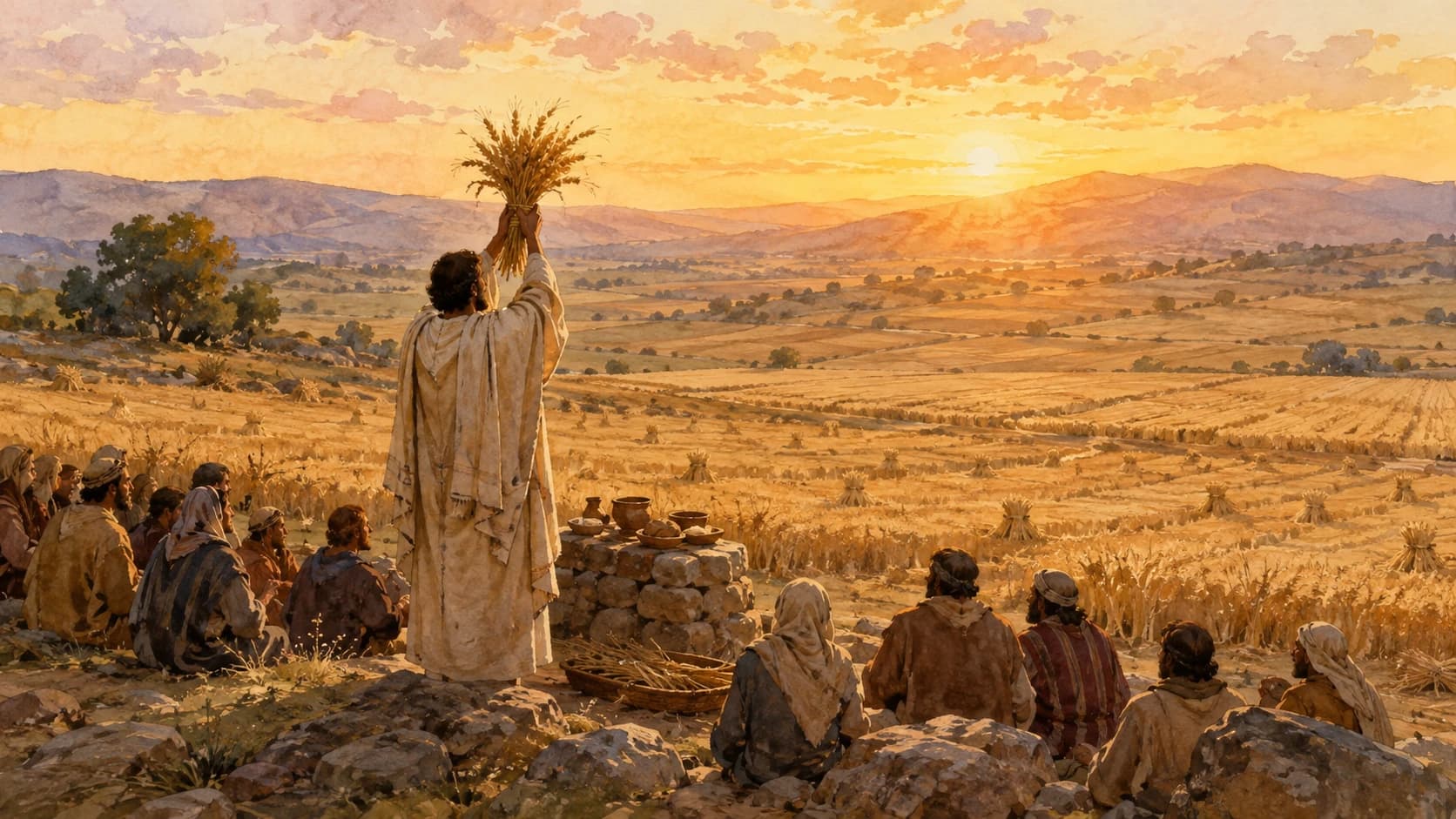
The festivals in Leviticus 23 required the Israelites to stop working at appointed times, gather for sacred assemblies, and present offerings to the LORD. Rather than describing a single grand event, this chapter reveals a rhythm of time repeated week after week and year after year. From the Sabbath and Passover to the Festival of Tabernacles, its commands show how work and rest, harvest and offerings, daily life and the memory of past deliverance were woven into the year.
On the seventh day, they stopped working and gathered for a sacred assembly
The first observance mentioned is not an annual festival but the weekly Sabbath. The people were to work for six days and rest on the seventh. It was a day of sacred assembly, and they were not to do any work wherever they lived.
This command establishes the basic pattern for the festivals that follow. When an appointed day arrived, ordinary labor did not simply continue as usual. The command to stop working was given together with the command to gather for a sacred assembly. A festival was not merely a day remembered inwardly; it set apart time in the people’s actual lives.
The same pattern appears in the Festival of Unleavened Bread. Passover began on the evening of the fourteenth day of the first month, and the Festival of Unleavened Bread began on the fifteenth and lasted seven days. During those seven days, the people ate bread made without yeast and presented food offerings to the LORD. They gathered for sacred assemblies on the first and seventh days and did no regular work. The festival’s beginning and end were thus set apart by assembly and rest.
The beginning and end of the harvest also had a prescribed order
When the people entered the land God was giving them and harvested its grain, they were to bring the priest a sheaf of the first grain they gathered. On the day after the Sabbath, the priest waved the sheaf before the LORD. Until they had brought this offering to God, the people were not to eat bread, roasted grain, or fresh grain.
They did not begin eating as soon as they gathered the first produce. They first brought the initial sheaf and presented the prescribed offerings. Even the beginning of the harvest followed an established order.
From the day they presented the first sheaf, they counted seven full weeks and then fifty days. On that day, they presented a new grain offering along with several other offerings, proclaimed a sacred assembly, and did no regular work. By requiring them to count the days from the presentation of the first sheaf to the new grain offering, the command set apart the entire harvest according to appointed times.
Immediately afterward comes the command not to reap to the very edges of the field or gather what had fallen during the harvest. The grain left behind belonged to the poor and the foreigner. Observing the harvest as a festival involved more than presenting offerings. It also meant that landowners did not gather every bit of produce for themselves but left a portion for others.
The festivals of the seventh month required different responses
On the first day of the seventh month, the people commemorated the day with trumpet blasts and gathered for a sacred assembly. They stopped working and presented a food offering. On the tenth day, the Day of Atonement, they were to deny themselves and do no work. The passage even records severe consequences for anyone who failed to obey, showing that rest on the Day of Atonement was not an optional recommendation.
Beginning on the fifteenth day, they observed the Festival of Tabernacles for seven days. They did no regular work on the first and eighth days. Taking fruit from splendid trees and various branches, they rejoiced before the LORD for seven days. Everyone native-born in Israel was also required to live in temporary shelters for seven days.
The passage directly explains why they lived in these shelters: future generations were to know that God had made the Israelites live in shelters when he brought them out of Egypt. The joy of completing the harvest was joined to the experience of living in temporary shelters. Even after gathering an abundant harvest, the people stayed in shelters and remembered the time of their deliverance from Egypt.
The recurring festivals set apart the year
Throughout Leviticus 23, commands such as “hold a sacred assembly,” “do no regular work,” and “present an offering to the LORD” recur across several festivals. Yet each festival did not require exactly the same response. There were days for eating unleavened bread, bringing the first sheaf, sounding trumpets, denying oneself, and living in shelters while rejoicing.
The chapter’s focus, then, is not simply a list of festival names. At each appointed time, the people stopped their ordinary work and carried out the actions commanded for that particular festival. From the weekly Sabbath to the beginning and end of the harvest, the Day of Atonement, and the Festival of Tabernacles, the year was set apart through specific commands.
For one practical step today, set aside a time to read Leviticus 23 again. Mark each verse where “sacred assembly” and “do no regular work” are repeated, and you will be able to trace clearly how these festivals reshaped the people’s actual schedules and actions.
Related articles
Deuteronomy 16 Commands Remembrance, Joy, and Justice
Explore how Deuteronomy 16 connects the three annual festivals and the command to appoint judges, showing how remembering the exodus from Egypt leads to shared joy and impartial justice.
How the Ten Commandments Transformed the Lives of a Formerly Enslaved People
Deuteronomy 5 teaches that Israel, once enslaved in Egypt, was to hear God’s covenant and live in a way that protected rest, life, and the property of others.
How Numbers 29 Distinguished the Festivals of the Seventh Month
Numbers 29 commands Israel to hold sacred assemblies, refrain from regular work, and offer the prescribed sacrifices on each appointed day of the seventh month. This article explores how repeated commands and changing numbers of offerings distinguish the progression of the festivals.
 Bible Habit
Turn this article into today’s reading habit
Keep your McCheyne plan, sequential reading, notes, and progress together so the next passage is always clear.
- Today’s passages
- Reading checklist
- Notes and highlights