

The Fellowship Offering Followed the Same Order Regardless of the Animal
Leviticus 3 repeats the procedures for presenting fellowship offerings from the herd or flock. Explore the prescribed order and the regulations concerning fat and blood.
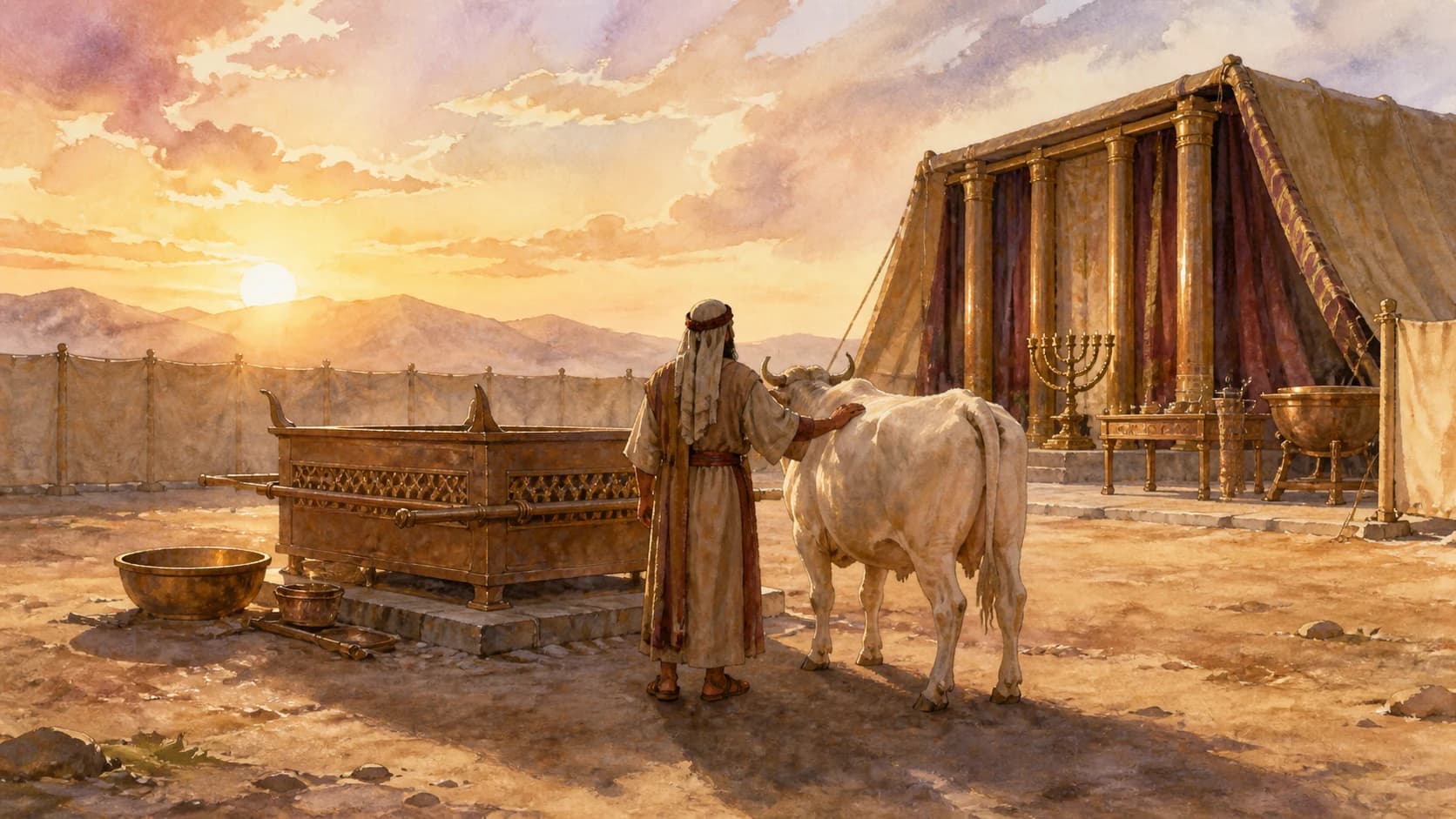
The fellowship offerings in Leviticus 3 followed the same order even when different kinds of animals were presented. Although cattle, sheep, and goats each involved distinct details, the same basic procedure appears repeatedly: an animal without defect was brought before the LORD, the offerer laid a hand on its head, and then slaughtered it. Each time, the priest splashed the blood against every side of the altar and burned the prescribed portions of fat.
The prescribed order for offering cattle
Anyone presenting cattle as a fellowship offering had to choose a male or female without defect and offer it before the LORD. The offerer laid a hand on the animal’s head and slaughtered it at the entrance to the tent of meeting. Then Aaron’s sons, the priests, splashed its blood against every side of the altar.
The portions to be burned were also specified in detail. These included the fat covering the internal organs, all the fat connected to them, both kidneys with the fat on them, and the long lobe of the liver. Aaron’s sons burned these portions on the altar, on top of the burnt offering laid over the burning wood.
The fellowship offering therefore involved both the actions of the person who brought and slaughtered the animal and those of the priest who handled the blood and burned the fat. Its order was not left to individual preference. The offering had to be presented by the designated people and according to the procedure prescribed in the passage.
The same procedure was repeated for sheep and goats
A sheep offered as a fellowship offering also had to be a male or female without defect. The offerer brought the lamb before the LORD, laid a hand on its head, and slaughtered it in front of the tent of meeting. The priests then splashed its blood against every side of the altar. The fat around the internal organs, both kidneys with the fat on them, and the long lobe of the liver were burned on the altar.
In the case of a sheep, the list of portions presented as a food offering also included the entire fat tail, cut off close to the backbone. The overall procedure remained the same as for cattle, but the passage described more specifically which part of the sheep had to be removed.
A goat was likewise brought before the LORD, and the offerer laid a hand on its head before slaughtering it in front of the tent of meeting. Once again, the blood was splashed against every side of the altar. The fat covering or connected to the internal organs, both kidneys with the fat on them, and the long lobe of the liver were removed and burned on the altar.
Although cattle, sheep, and goats are addressed separately, the same structure is repeated three times, from bringing the animal to handling its blood and fat. Regardless of the kind of animal, none of the essential steps was omitted: choosing an animal without defect, laying a hand on its head and slaughtering it, splashing its blood against the altar, and burning the designated fat.
The fat and blood were set apart
After describing the procedures for all three animals, the passage declares, “All the fat is the LORD’s.” This rule clearly explains why the fat around the internal organs, kidneys, and liver was repeatedly selected and burned on the altar. The fat was not a portion the offerer could take at will. It was to be presented to the LORD as a food offering.
The final verse commands the Israelites not to eat either fat or blood. This command was not limited to one particular kind of offering. It was given as a lasting ordinance for generations to come, wherever they lived. The repeated acts of splashing the blood against the altar and burning the fat in all three offerings reinforce this closing prohibition. Blood and fat were not to be eaten but handled in the prescribed way.
One practical step you can take today is to read Leviticus 3 again and mark the procedures repeated for cattle, sheep, and goats. Look in order for “an animal without defect,” “laying a hand on its head,” “slaughtering it in front of the tent of meeting,” “splashing the blood against every side of the altar,” and “burning the fat.” Doing so will help you see the central pattern of the fellowship offering more clearly.
Related articles
Where Deuteronomy 24 Tells the Powerful to Stop
Deuteronomy 24 places limits on creditors, employers, and landowners. This article follows the chapter’s flow to explore why the poor must be allowed to keep their bedding, receive their wages, and have food to eat.
Deuteronomy 21 Sets Limits on the Use of Power and Emotion
Deuteronomy 21 requires matters—from an unsolved death to a captive woman, the rights of the firstborn, and the burial of an executed person—to be handled according to established procedures and limits.
How the Daughters of Zelophehad Preserved Their Father’s Inheritance
Numbers 36 records how the daughters of Zelophehad, after inheriting their father’s property, obeyed God’s command so that the land would not pass to another tribe.
 Bible Habit
Turn this article into today’s reading habit
Keep your McCheyne plan, sequential reading, notes, and progress together so the next passage is always clear.
- Today’s passages
- Reading checklist
- Notes and highlights