

Leviticus 8: The Ordination Followed Everything the Lord Commanded
In Leviticus 8, the ordination of the priests—from washing and clothing them to offering sacrifices and observing the seven-day command—was carried out exactly as the Lord commanded.
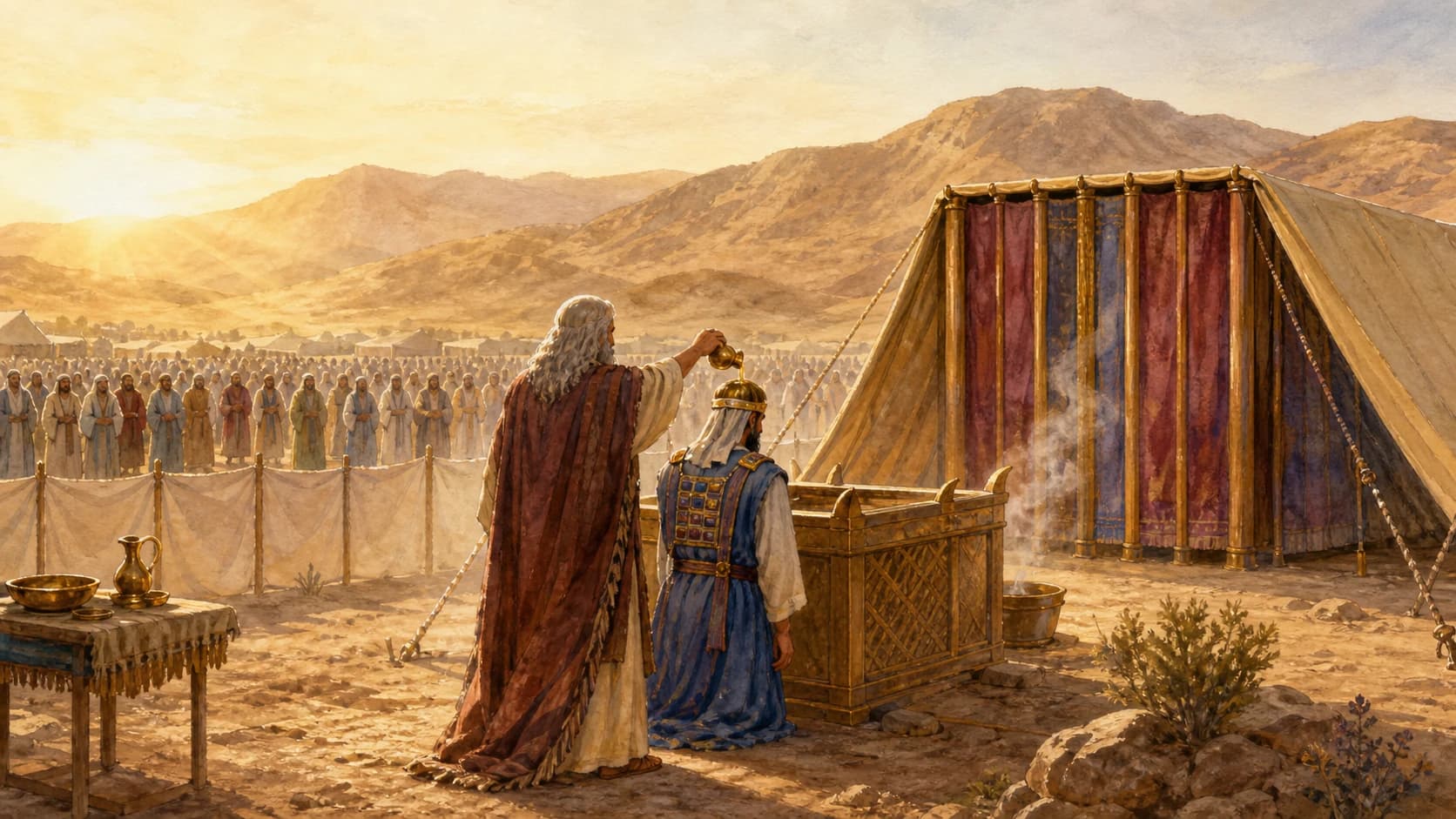
At the heart of Leviticus 8 is the ordination ceremony in which Aaron and his sons were set apart as priests according to the procedures commanded by the Lord. Moses washed and clothed them, offered the sacrifices, and instructed them to remain at the entrance to the tent of meeting for seven days. Throughout the chapter, the text repeatedly affirms that everything was done “as the Lord commanded Moses.”
Moses Began with the Preparations He Had Been Commanded to Make
The Lord told Moses to bring Aaron and his sons, the priestly garments, the anointing oil, the bull for the sin offering, two rams, and a basket of unleavened bread. He was also to gather the entire assembly at the entrance to the tent of meeting. When Moses carried out these instructions and the assembly gathered, he explained that what they were about to witness was what the Lord had commanded.
The ordination did not begin with a method devised by Moses or a procedure chosen by Aaron. The people, objects, place, and order required for the ceremony had all been established by command. Because those instructions were carried out before the whole assembly, Aaron and his sons were visibly set apart in the presence of the community.
They Were Washed, Clothed, and Anointed to Make Them Holy
Moses first washed Aaron and his sons with water. He dressed Aaron in the tunic, robe, and ephod, fastening them with the sash, and placed the Urim and Thummim in the breastpiece. He set the turban on Aaron’s head and attached the sacred gold plate to its front. He also clothed Aaron’s sons in tunics, fastened sashes around them, and placed caps on their heads.
Moses applied the anointing oil to the tabernacle and everything in it. He sprinkled the altar seven times and anointed the altar, its utensils, the basin, and its stand. He also poured some of the oil on Aaron’s head. Not only were the priests themselves set apart, but the tabernacle and the objects they would use in their service were also consecrated.
After Aaron was clothed and again after his sons were given their caps, the text states that these things were done as the Lord had commanded. More than the splendor of the priestly garments, the chapter repeatedly emphasizes the complete agreement between the Lord’s command and its fulfillment.
The Three Offerings Unfolded in Distinct Ways
First came the bull for the sin offering. Aaron and his sons laid their hands on its head, and Moses slaughtered it. He put some of the blood on the horns of the altar and poured the rest at its base, purifying and consecrating the altar. Certain portions were burned on the altar, while the hide, flesh, and intestines were burned outside the camp.
Next, the ram for the burnt offering was presented. Aaron and his sons laid their hands on the ram’s head, and Moses sprinkled its blood against all sides of the altar. After washing the internal organs and legs with water, he burned the entire ram on the altar. The text identifies it as a burnt offering presented to the Lord.
Finally, the ram for the ordination was offered. Moses put some of its blood on the lobes of Aaron’s and his sons’ right ears, on the thumbs of their right hands, and on the big toes of their right feet. He placed the unleavened bread, the loaf, the wafer, the fat, and the right thigh in their hands so they could wave them before the Lord. He then sprinkled the anointing oil and blood from the altar on Aaron and his sons as well as on their garments, consecrating them together.
The three sacrifices were not repetitions of the same scene. The sin offering purified the altar and made atonement for it, while the burnt offering was consumed entirely on the altar. During the ordination offering, blood was applied to the ears, hands, and feet of Aaron and his sons, and portions of the offering were placed in their hands. Their ordination did not end with washing and clothing them; it continued through sacrifice, blood, and anointing oil.
They Did Not Leave the Entrance to the Tent of Meeting for Seven Days
The ordination continued even after the sacrifices were completed. Aaron and his sons were to eat the meat and bread at the entrance to the tent of meeting and burn whatever remained. Until the days of their ordination were complete, they were not to leave the entrance for seven days. They were commanded to remain there day and night and keep the Lord’s charge so that they would not die.
The final verse records that Aaron and his sons did everything the Lord had commanded through Moses. The same theme runs from the opening preparations to the final instruction to remain there for seven days. The heart of the ordination was not a single sacrifice or set of garments, but faithfully following every part of the process established by the Lord.
As you read all of Leviticus 8 today, mark each occurrence of “as the Lord commanded” and “consecrated.” By tracing what the Lord commanded and how Moses and Aaron’s family carried it out, you can see more clearly why the lengthy ordination ceremony is recorded as one continuous process.
Related articles
Deuteronomy 22 Teaches Us Not to Ignore a Neighbor’s Loss or Danger
Deuteronomy 22 commands God’s people to return lost animals, help fallen animals, and build parapets around their roofs. It explores our responsibility not to ignore losses and dangers we can plainly see.
Deuteronomy 19 Prevents Hasty Revenge and False Judgments
Through its laws concerning cities of refuge, boundary markers, and witnesses, Deuteronomy 19 distinguishes accidental death from intentional murder and prevents hasty revenge and false judgments.
Why Deuteronomy 17 Places Both Judges and Kings Under God’s Word
Deuteronomy 17 places everything—from investigating serious charges to handling difficult cases and limiting royal authority—under God’s commands, showing how human judgment can remain impartial.
 Bible Habit
Turn this article into today’s reading habit
Keep your McCheyne plan, sequential reading, notes, and progress together so the next passage is always clear.
- Today’s passages
- Reading checklist
- Notes and highlights