

The Story of Melchizedek: A Shadow of Christ Seen as King and Priest
Melchizedek is a crucial figure bridging Genesis, Psalms, and Hebrews. His royal and priestly roles reflect Christ’s eternal priesthood, clearly showing us the source of righteousness, peace, and salvation assurance.
The Story of Melchizedek: A Shadow of Christ Seen as King and Priest
Melchizedek appears only briefly in the Bible, yet his significance runs remarkably deep. He seems like a fleeting figure, suddenly appearing in Genesis 14 and then disappearing, but he is revisited and illuminated in Psalms 110 and Hebrews chapters 5 and 7, serving as a key to understanding God's salvation story. Thus, when reading about Melchizedek, it’s important not to stop at viewing him as merely a "mysterious figure," but to consider why the whole of Scripture is calling him back again.
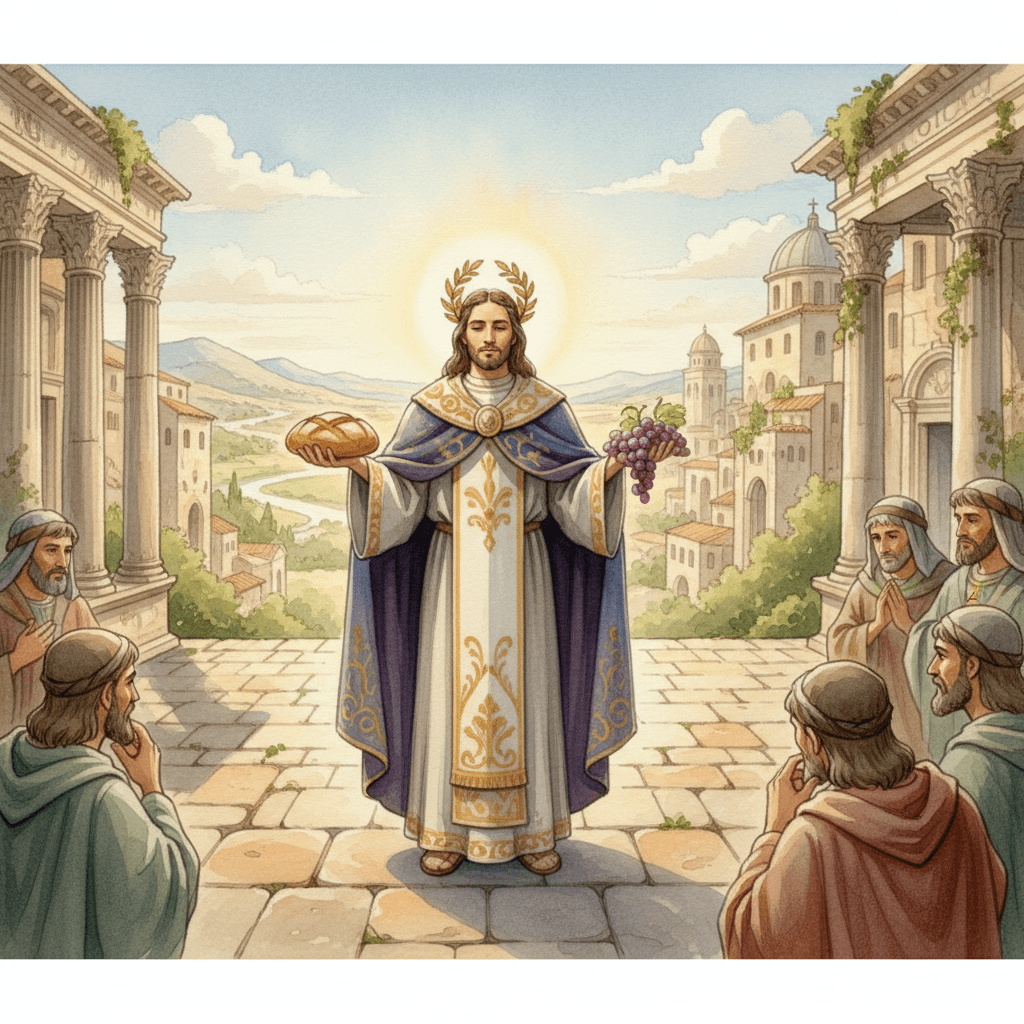
The first appearance of Melchizedek is in Genesis 14. After Abram rescues his nephew Lot in battle, it is recorded: "Melchizedek king of Salem brought out bread and wine. He was a priest of God Most High" (Genesis 14:18). He then blesses Abram, saying, "Blessed be Abram by God Most High, Creator of heaven and earth," and declares, "Blessed be God Most High, who delivered your enemies into your hand" (Genesis 14:19-20). Here, Melchizedek is both king and priest. While in the Old Testament, these roles are usually distinct, Melchizedek uniquely combines them.
His name also carries significance. Hebrews 7:2 interprets Melchizedek as "king of righteousness and also king of Salem (peace)." His name signifies righteousness, and Salem (meaning "peace") relates to the city. Righteousness and peace are hallmark traits of God's kingdom. God is a righteous God who does not lightly dismiss sin, and true peace is grounded on His righteousness. In this way, Melchizedek foreshadows the fullness of Christ, who fully reveals these qualities.
Another notable aspect is Abram’s response. Genesis 14:20 states that Abram tithed a tenth of all he had to Melchizedek. This act isn’t mere politeness; it recognizes Melchizedek’s divine authority as high priest. Abram, victorious in battle, does not boast that his strength caused his success. Instead, through Melchizedek’s blessing, he acknowledges that the victory came from God. True believers understand that after accomplishing great deeds, they do not elevate themselves but humble themselves before God.
Psalm 110:4 revisits Melchizedek, connecting him with a more profound promise: "The Lord has sworn and will not change his mind, 'You are a priest forever after the order of Melchizedek.'" This verse reveals that the coming Messiah’s priesthood is not based on the Levitical system but is of a different order—an eternal priesthood established by God’s own oath. It shows that Jesus’ priesthood is not temporary or supplementary but central to God's plan of salvation—complete and everlasting.
Hebrews provides the clearest explanation. Hebrews 7:3 states that Melchizedek "without father or mother, without genealogy, without beginning of days or end of life, resembling the Son of God, he remains a priest forever." This isn’t meant to suggest Melchizedek is literally a divine being from heaven, but rather that his lack of mentioned genealogy in Genesis prefigures Christ, who is eternal and does not have a beginning or end as human genealogies would suggest. Hebrews emphasizes that Melchizedek’s role points beyond himself, illustrating how much greater Jesus is.
Most notably, Hebrews explains that Jesus, though descended from Judah and not Levi, qualifies as the true High Priest. His priesthood isn’t based on biological descent but on divine appointment. Unlike the priestly system under the Law, which involved repeated sacrifices and could not avoid death, Jesus, who is sinless, offered Himself once and for all for eternal atonement. Hence, Melchizedek’s priesthood is not merely a distinctive form but a vital framework that reveals Christ’s perfect and everlasting ministry.
Thus, contemplating Melchizedek naturally focuses our gaze on Jesus. He is the King of Righteousness and Peace, and He is also the true High Priest who offered Himself once for all. Hebrews 7:25 affirms, "Consequently, he is able to save completely those who come to God through him, because he always lives to intercede for them." This underscores that He is living forever to intercede for us, enabling believers not to rely on their own achievements but to approach God confidently through the perfect priesthood of Christ.
The practical lessons for today’s Christians are clear. First, we must not credit our victories to ourselves, but always recognize God's blessing. When things go smoothly, when there is fruit in our service, or when our families are stable, we tend to show off ourselves. But like Abram, those who raise God first are true believers. Second, genuine peace does not come apart from righteousness. Covering sin with comfort only lasts temporarily. Peace built on repentance and obedience—what the Bible calls peace—is what truly sustains us. Third, our confidence isn’t rooted in feelings or resolve but in the eternal priesthood of Jesus. When faith wavers, instead of focusing solely on our state, we need to cling again to Christ's perfect priesthood.
To read more about Melchizedek, a helpful approach is to compare Genesis 14 and Hebrews 7 side by side at Bible Reading. Seeing how these texts connect as one message makes Scripture come alive in new dimensions. Also, when encountering unfamiliar figures or themes, leveraging AI Bible Search to explore related passages makes it easier to understand why Melchizedek is revisited in Psalms 110 and Hebrews. Such interconnected reading involves training yourself to see both parts and hole, as explained in Bible Reading Through.
Although Melchizedek appears briefly, this brevity strongly invites us toward Christ. The Bible sometimes reveals profound truths not through lengthy explanations but through the placement and relationship of characters. As you read today, consider these questions: Am I giving God the honor of His blessings first, rather than boasting about my accomplishments? Am I resting in the peace that righteousness provides? And every day, am I returning to Christ, my eternal High Priest?
Reflecting honestly on these questions will nurture a quiet but deep growth in faith.
Related articles
 Bible Habit
Turn this article into today’s reading habit
Keep your McCheyne plan, sequential reading, notes, and progress together so the next passage is always clear.
- Today’s passages
- Reading checklist
- Notes and highlights