

Who Is the Anointed One? The Identity of the Messiah Testified Throughout the Bible
Following the meaning of the Messiah, the promises of the Old Testament, and the fulfillment in the New Testament, we examine the identity of Jesus Christ. In Him—our true King, Priest, and Savior—we reaffirm the core of the entire Bible and our faith today.
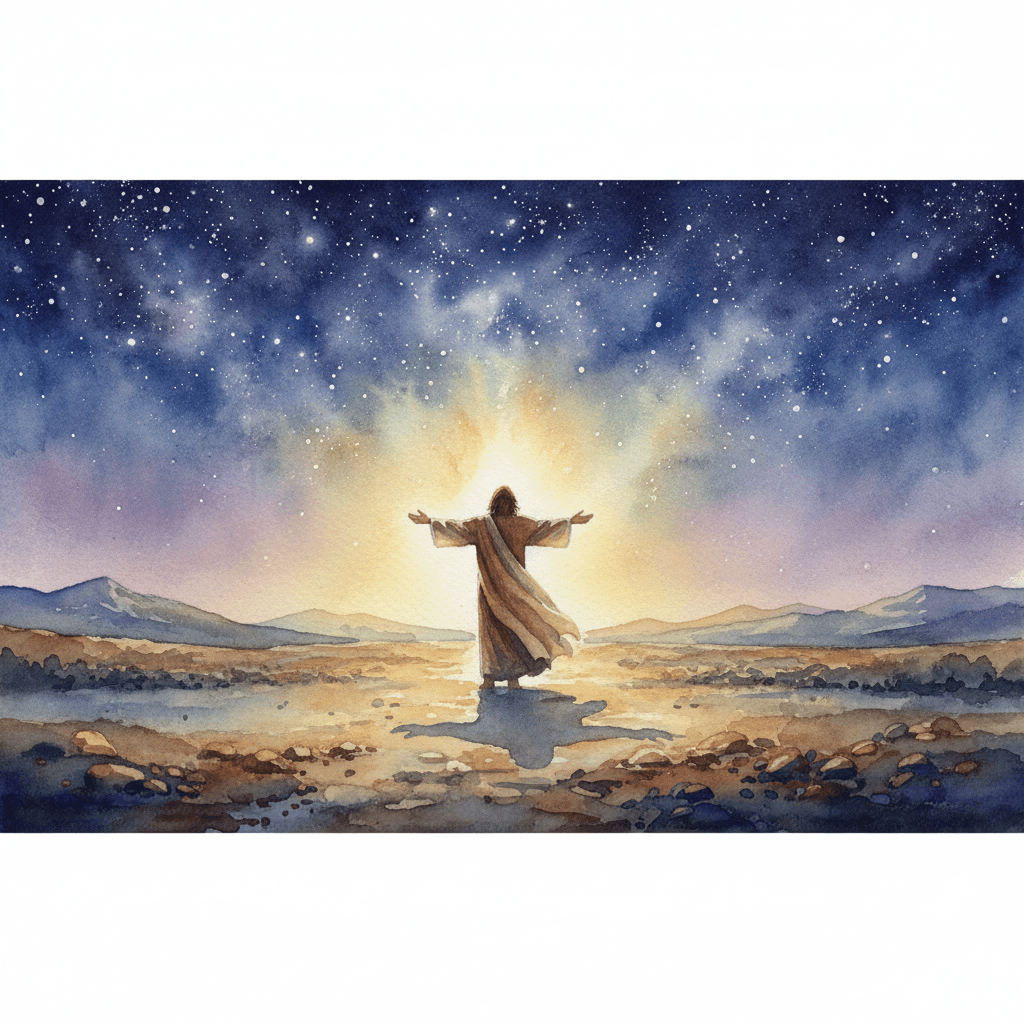
Who Is the Anointed One? The Identity of the Messiah Testified Throughout the Bible
The word 'Messiah' is familiar, yet when you try to explain it, it can feel vague. Some view it as a special Savior, others as a revolutionary leader capable of changing the times. However, the Bible’s depiction of the Messiah is far from just a hero. The term 'Messiah' comes from Hebrew, meaning the anointed one, and is translated into Greek as Christ, carrying the same meaning. Therefore, the phrase “Jesus Christ” is not merely a name but a declaration of faith—that Jesus is the Messiah appointed by God.
In the Old Testament, anointing was not something given to just anyone. Kings, priests, and sometimes prophets were specially anointed by God to signify that their office and mission belonged to Him. This was not a mere ritual but a sign that their responsibilities were divinely appointed. In this background, the Messiah is depicted as the ideal ruler the people longed for and simultaneously the true intercessor connecting God and His people. Human kings failed, priests repeatedly offered sacrifices, and prophets proclaimed God's word, but none could fundamentally transform the hearts of the people. This historical flow in the Old Testament leads to a clearer question: Who is the anointed one who will truly save us?
The Bible provides multiple promises in response to this question. In 2 Samuel 7:12-13, God promises David that He will establish his throne forever, through his descendants. While this covenant initially points to Solomon, it doesn’t conclude there. Human dynasties faltered, and eventually, Judah was defeated, prompting the anticipation of a greater, eternal fulfillment. Psalm 2 presents God's King established over the nations, and Psalm 110:1 records the remarkable scene where David calls his descendant “My Lord.” Isaiah 9:6-7 speaks of a child's birth whose reign and peace will never end, and Isaiah 53 reveals that the path of the Messiah involves not only glory but also suffering and atonement. Micah 5:2 prophesies that a ruler will come from Bethlehem Ephrathah, who will lead Israel. From these prophecies, we see that the Messiah is not merely a political figure but progressively becomes clearer as the King who will solve sin and establish God's kingdom.
This understanding is even clearer when we consider the historical context of Jewish society at the time. Many under Roman rule eagerly awaited a powerful deliverer—one like David—who would defeat their enemies and restore their nation. Such longing is understandable. Naturally, in the face of oppression and injustice, their hope was for salvation. Yet, the problem was that their expectations often centered around outward political change. While they longed to break free from earthly captivity, the Bible first speaks of a deeper bondage—the power of sin and death. Even if they speak of freedom outwardly, true liberation only comes when the heart is restored to God. The reason why God’s promises of the Messiah are greater and deeper than mere political restoration is this.
The New Testament testifies that these ancient promises are fulfilled in Jesus Christ. In John 1:41, Andrew tells Simon, “We have found the Messiah.” The author explains that this means “which is translated, the Christ.” In Luke 4:18-21, Jesus reads from Isaiah and declares that today this scripture has been fulfilled in your hearing. Jesus heals the sick, casts out demons, and proclaims the kingdom of God. But His ministry does not end with miracles alone. The core of Jesus’ role as the Messiah is His death on the cross and His resurrection. As Isaiah 53:5 states, “He was wounded for our transgressions, he was bruised for our iniquities.” Jesus is not merely one who offers comfort but the Lord who accomplished salvation by dying in our place and rising again.
At this point, the Christian understanding of the Messiah becomes clear. He is more than a good teacher or a great religious founder. He is true God and true man, who fulfilled the law perfectly through sinless obedience, achieved atonement through the cross, and demonstrated the certainty of salvation through His resurrection. We cannot stand before God based on our deeds; only through faith in Christ are we justified. The faith in the Messiah ultimately is a shared confession—who Jesus is and how we are saved.
This truth is deeply relevant in everyday life. Knowing the Messiah is not simply a religious term but a transformation of life’s focus. We often find ourselves relying on human approval and outcomes when making important decisions. But trusting in the Messiah means not trying to help God accomplish our plans but surrendering our schemes before the King, our Lord. It also applies to when we face unfair treatment at work. The urge to retaliate or to prove ourselves may surface, but the Messiah, who triumphed through the cross, shows us a different way. Those who follow Him do not forsake truth and holiness, even in weakness.
Sometimes, guilt may feel overwhelming. The shame of repeating the same mistakes, worries that overshadow prayer, or indifference in moments when love is needed can weigh heavily on us. Yet, even in these moments, our confession of Christ as the Messiah becomes clearer. Jesus is not just a role model; He is the Savior who came for sinners. We do not build our righteousness and then approach God, but we come to Christ, who has already paved the way through the cross. Repentance is thus not a language of despair but a door of hope. Because the King, the Messiah, is also the Savior who gave Himself up for us.
As we read the Bible, the promises and their fulfillment become increasingly unmistakable. The promises of kings, the suffering servant, the true priest, the son of David, and the glory of God’s Son all find their fulfillment in Jesus. Therefore, the Messiah is not just a theme but the central thread that ties the entire biblical narrative together. Reading only part of the Bible can make the Messiah seem vague or religious; but when viewed in the context of the whole story, we see God's faithfulness. God has never forgotten His promises; at the appointed time, He fulfills them. In this sense, reading the entire Bible in order greatly enhances our understanding of the Messiah. Using resources like Bible Reading or 365-Day Reading Plan can help us trace the connection between promises and their fulfillments more clearly.
Furthermore, understanding the Messiah correctly involves not merely reading isolated verses but viewing the Bible as a unified revelation. The prophecies and symbols of the Old Testament are not disconnected from the fulfillment seen in the New. Exploring what Bible in One Year entails or why it is vital to read the whole Bible will deepen our perspective. The more we read, the more clearly we see Jesus Christ at the core of all Scripture.
Ultimately, knowing the Messiah is not about vague future expectations but living today with the Christ who has already come. While the world may tremble and we seek new saviors, the confession we hold to in the church remains unchanged. Only Jesus Christ is the true King, the true Priest, and the true Savior. Therefore, whether starting a new day with a busy mind, experiencing setbacks at work, or feeling limited in relationships, we continually return to this confession: Jesus is the Christ. This declaration is not merely words but directs our way of life. When it becomes more than words—a true guiding principle—faith moves from an idea to reality. And on this confession, we can walk faithfully amid a trembling world, trusting in Him who keeps His promises.
Related articles
 Bible Habit
Turn this article into today’s reading habit
Keep your McCheyne plan, sequential reading, notes, and progress together so the next passage is always clear.
- Today’s passages
- Reading checklist
- Notes and highlights