

Reading One Bible Chapter: Reconnecting a Broken Habit
There is no need to lose heart when Bible reading is often interrupted. A steady direction matters more than an excessive plan. This article organizes practical habits and meditation methods that help us return to the Word.
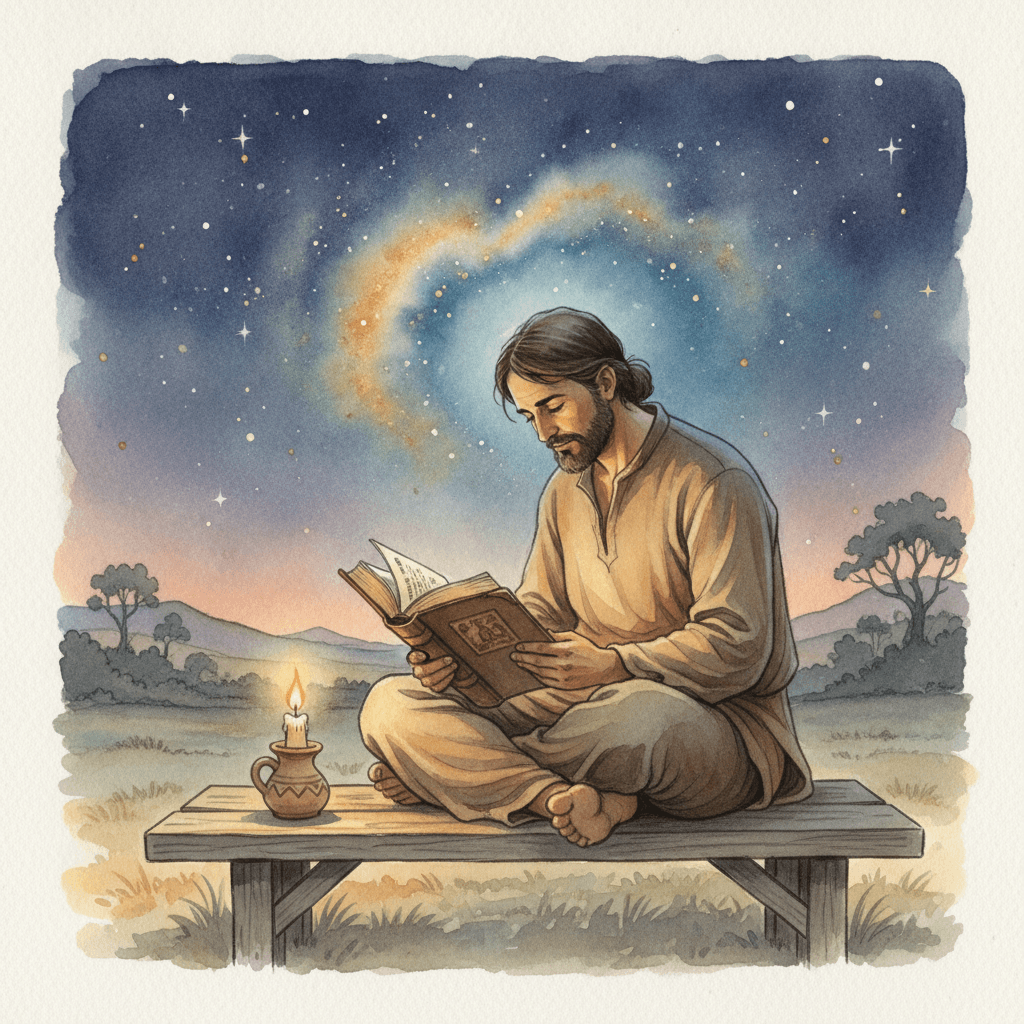
When Bible Reading Keeps Breaking Off: A Word Habit That Resumes Without Strain
Many people want to read the Bible, but continuing consistently in daily life is not easy. We may begin enthusiastically for several days, then become disordered when a busy schedule overlaps, and after missing once feel so heavy that even opening the Bible becomes difficult. Many people blame themselves at this point. But the reason Bible reading does not last is not necessarily weak faith. Often the way we began was simply too heavy. A large plan stimulates determination, but it can be too much to carry through ordinary life every day.
That is why direction matters more than speed when rebuilding Bible reading. Standing consistently before the Word comes before reading a lot. Psalm 1:2 describes the blessed person as one who delights in the law of the LORD and meditates on it day and night. The emphasis here is not a single burst of effort but continuing nearness. A person who keeps the Word close to the center of life develops a different texture of thought, a different standard for judgment, and eventually a different path.
Rather than trying to make a Bible reading habit perfect from the beginning, it is more helpful to hold on to simple principles that can last, such as Seven Bible Reading Habits. What matters is not a remarkable start but returning to the Word again today.
Bible Reading Is, Before Building Knowledge, Remaining Before God
We often think of Bible reading as acquiring information. We first remember how many chapters we read, how far we progressed, and how much we understood. Of course, the effort to understand the Bible rightly is important. But before that, we must remember that the Bible is God’s true Word and his infallible revelation. The Word examines, corrects, comforts, rebukes, and above all helps us see Christ more clearly. The goal of Bible reading is therefore not merely to become someone who knows a lot, but to place ourselves under the Word.
For example, when we read the Gospels slowly, Jesus’ way of looking at people often remains in our hearts. People judged by outward appearance and conditions, but Jesus did not turn away from the sick, the excluded, or those weighed down by guilt. After reading such a scene, we naturally ask: Whom did I judge too easily today? Did I treat people as the Lord did? When the Word begins to illuminate our day in this way, Bible reading is no longer a formal religious habit but a channel that changes real life.
It is also important to understand what reading through the Bible is, because the goal of reading through the Bible is not to leave a record. It is to learn God’s history of salvation in its broad movement and set ourselves before that Word.
Where Should I Start? At First, Choose a Passage Whose Path Is Clear
One of the most common questions when starting to read the Bible again is, “Where should I begin?” If we begin with the desire to understand the whole Bible perfectly from the start, the burden grows. At the beginning, it is good to choose a passage whose context is relatively clear and whose central message appears plainly.
Mark can be a good starting point. Its movement is quick, and Jesus’ authority and ministry stand out powerfully. We see clearly who Jesus is, why he came to earth, and how his words shake people’s lives. The Psalms open a way to approach God with the language of emotion. Joy, fear, injustice, gratitude, and repentance are included honestly, making the Psalms useful for reflecting our hearts truthfully. Proverbs deals directly with daily matters such as words, anger, laziness, and honesty, so its points of application are clear.
On the other hand, meeting a difficult passage does not mean that you have failed. The Prophets and the Law often become more understandable when we know a little background. The Prophets are not simply books predicting distant events; they contain God’s warning to a people who broke the covenant and his promise of restoration. They repeatedly reveal that God does not treat sin lightly, while also showing that he does not abandon his people. When we know this movement, even difficult passages slowly begin to come alive.
If you are beginning again, reading a passage calmly in Bible Reading or using a manageable structure such as the 365-day reading schedule can help.
Knowing the Historical Background Brings the Passage Closer to Life
When the Bible feels distant, looking at a little background can help. The Psalms, for example, did not come only from a quiet study; they burst forth from real crises. David passed through nights as a fugitive, carried heavy responsibilities as a king, and bowed before God in deep repentance after sinning. The laments in the Psalms are therefore not polished religious sentences, but close to the breath of people clinging to God in order to live.
The Gospels are the same. Jewish society in Jesus’ time lived under Roman rule, and many people expected a political savior who would overturn their immediate circumstances. But Jesus did not come simply to satisfy those expectations. He called sinners, proclaimed the kingdom of God, and finally accomplished salvation through the cross and resurrection. The atoning death and resurrection of Jesus Christ are the center of the gospel, and our salvation is given not by works but through faith. Knowing this background makes clearer why Jesus’ ministry brought joy to some and became a stumbling block to others. The Bible is not a vague moral textbook, but God’s story of salvation accomplished in real history.
When the background or meaning of a passage is difficult to understand, you can use AI Bible Search to find related verses or consult how to search the Bible with AI to explore the context more broadly. But more important than any tool is the attitude of reading the passage itself slowly.
A Lasting Bible Reading Habit Needs a Simple Structure, Not a Grand Plan
Habits that last are usually simple. Bible reading is the same. Creating too many rules makes it harder to continue. A truly helpful method is more modest than we expect.
First, set a time. Choose a repeatable moment such as ten minutes after waking, a brief time before work, or a quiet time before bed so that your heart is less easily shaken. Choosing a place also helps. When there is a place for reading the Word—a corner of the dining table, a chair at the desk, or a small place beside the bed—the body becomes familiar with it first. Keep the sequence simple. Briefly settle your heart, read one passage, mark one verse that remains with you, and write one thing to apply today. That is enough.
What matters is not trying to make up for a missed day in an exaggerated way. If you suddenly read a large amount because you missed several days, Bible reading becomes a burden again. Faithfulness does not begin by finishing all the delayed pages at once. It begins by opening the Bible again today.
For those who need a plan, Today’s McCheyne Reading Chart or the complete McCheyne guide may help. If you want to check how much you have read, you can also consult the Progress Calculator and continue the flow without strain.
Meditation Questions That Keep Reading from Ending at the Page
When you feel that nothing remains after reading the Bible, questions are helpful. There is no need to make what meditation is complicated. These three questions can help connect the passage to life:
- What does this passage show about what kind of God he is?
- What does this passage reveal about my heart and actions?
- What is one thing I can obey immediately today?
For example, reading Matthew 6 shows that God is the Father who knows our needs. At the same time, we can examine whether we are people who hold on to anxiety and try to control everything. The application need not be grand: “When anxiety rises today, I will pray briefly first and entrust it to God.” As small obedience is repeated, the Word begins to change the texture of life.
Here is a short example. Someone always resolved to read the Bible for thirty minutes at dawn, but the habit did not last. After repeated failure, the person assumed that faith was lacking. But changing the method to one paragraph from a Gospel and one sentence of notes made the practice continue much longer. At first there were days with no particular feeling, but over time the words read in the morning began to come to mind when the person became irritable at work. The circumstances did not suddenly become easy, but the response changed. The Word shapes people quietly through repetition rather than changing them in an exaggerated instant.
In this regard, understanding what QT is and learning the flow of reading, meditating, and applying the Word, even briefly, is very beneficial.
Why Read Even on Days When the Emotion Is Small?
When we begin reading the Bible, everyone thinks at least once, “I do not feel anything today; what meaning does this have?” But the power of the Word does not depend on our emotional condition. Hebrews 4:12 says, “The word of God is alive and active.” The Word being alive means that even when we do not immediately receive a strong impression, God is still working through it.
On some days a passage opens unusually deeply; on other days it may feel as though we are reading only with our eyes. Yet even on those days, time spent before the Word is not wasted. One rainfall does not change all the ground at once, but as the seasons pass it leaves clear traces. In the same way, the Word slowly changes our thoughts and habits. This is why we need to lay down our impatience.
Even without a special emotional experience, holding on to one verse a day, as with Today’s Word, can be a good starting point that helps us return to the Word.
The Person Who Returns Eventually Walks with the Word
People who continue reading the Bible for a long time are not necessarily people with unusually strong willpower; they are people who know how to return. They do not give up after missing a day, close the book when they meet a passage they do not understand, or stop moving toward the Word little by little. That repetition builds the strength of faith.
Psalm 119:105 confesses, “Your word is a lamp for my feet, a light on my path.” A lamp does not show every road far away all at once. It illuminates the step that must be taken now. Bible reading is the same. One passage read today may not explain all of life immediately, but it provides enough light to correct today’s heart, words, and choices. As those illuminated days accumulate, the direction of life has changed before we know it.
The fact that Bible reading is often interrupted does not mean everything has returned to the beginning. What matters is not a perfect record but a heart that moves toward the Word again. Even if you could not read a chapter today, you can begin again with one paragraph. Even if you did not understand deeply today, you can open it again tomorrow. God steadily builds his people through the Word and makes them like Christ. Hold on to direction rather than burden, trust the faithful God rather than impatience, and stand before the Word again today.
Related articles
When Familiar Bible Phrases Confuse You: Practical Ways to Read Words Within Their Context
When encountering unfamiliar Bible expressions like reconciliation, redemption, grace, justification, and holiness, it's easy to stop at dictionary definitions. This guide arranges practical methods and meditations to read these words within their context and gospel message, beyond mere memorization.
Learning Daily Discipline through Deuteronomy 8: Remembering Grace Before Fullness
Deuteronomy 8 teaches us to remember God's grace amidst the wilderness of lack and the abundance of Canaan. Reflecting on God's humbling, supply, warnings, and grace, it offers vital perspectives on building faith in everyday life.
Shared Bible Reading: How to Keep Reading Together for the Long Term
People who continue reading the Bible over time share certain habits. When they encourage one another, remain in the passage, and continue with small obedience instead of demanding plans, the rhythm of the Word takes deep root in life.
 Bible Habit
Turn this article into today’s reading habit
Keep your McCheyne plan, sequential reading, notes, and progress together so the next passage is always clear.
- Today’s passages
- Reading checklist
- Notes and highlights