

The Prayer of the Pharisee and the Tax Collector: Who Finds Righteousness?
Following the scenes of the prayer of the Pharisee and the tax collector, we explore why Jesus declared the tax collector righteous. Reflecting on our hearts familiar with self-righteousness, this meditation connects to our prayer life today.
The Prayer of the Pharisee and the Tax Collector: Who Finds Righteousness?
Luke 18:9-14 may be a brief parable, but it sharply reveals where the focus of prayer truly lies. Jesus did not share this parable casually. It begins with, “He told this parable to some who trusted in themselves that they were righteous, and treated others with contempt.” The issue was not the quantity of prayers, but the heart’s orientation before God—being fixated only on oneself while standing before God.
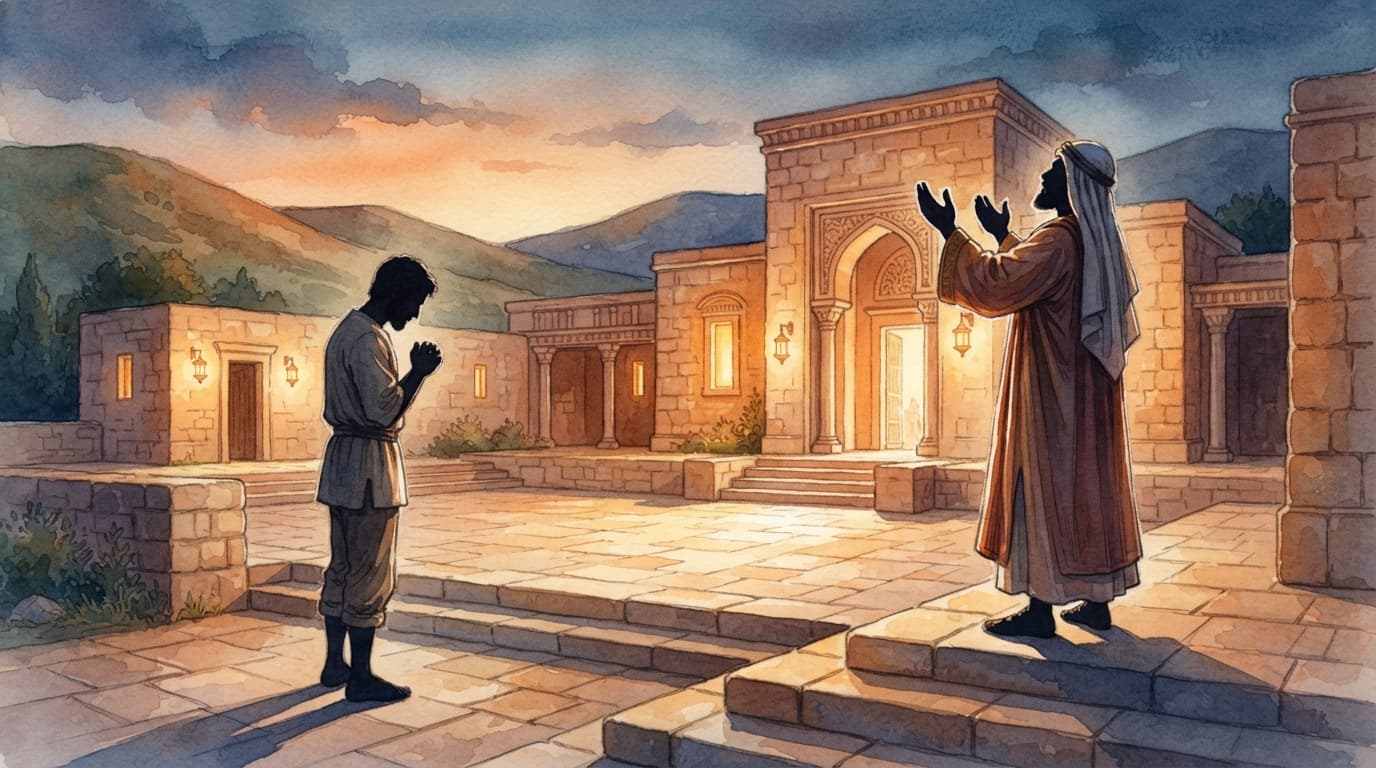
The scene is simple. Two men go up to the temple to pray: one is a Pharisee, and the other is a tax collector. The Pharisee was respected in his time for religious zeal, while the tax collector was despised as a sinner. Listeners probably assumed from the start who would pray a more acceptable prayer. But Jesus shows us not what we expect, but God's judgment.
The Pharisee’s prayer appears very devout outwardly. He says, “God, I thank You that I am not like other men—extortioners, unjust, adulterers—or even like this tax collector.” He adds, “I fast twice a week; I give tithes of all I get.” (Luke 18:11-12). Although it sounds like an expression of gratitude, its content tends more toward showcasing his religious resume rather than genuinely exalting God. His lips call on God, but his heart is busy proving himself.
In contrast, the tax collector’s posture is the opposite. Standing afar off, he dares not even lift his eyes to heaven but beats his breast and says, “God, be merciful to me, a sinner.” (Luke 18:13). There is no pride or comparison here. No religious credentials to impress God. He openly admits his sinnerhood, solely seeking mercy. When contemplating why this short prayer strikes us so deeply, it’s because only those who know their sin can sincerely cry out for grace.
Jesus clearly concludes: “I tell you, this man went down to his house justified rather than the other.” Furthermore, He affirms, “For everyone who exalts himself will be humbled, and the one who humbles himself will be exalted.” (Luke 18:14). Righteousness does not come from building religious accomplishments, but from clinging to God's mercy as sinners. The gospel’s core remains unwavering. We cannot stand on our own righteousness but must live by His merciful provision.
This parable resonates even more with those who have been in church for a long time. As we attend worship, read Scripture, and serve, it’s easy for gratitude to shift toward comparison. The thought, “I am better than that person,” might not be spoken aloud but subtly seep into prayers. When we hear of someone’s failure, pride can surface more quickly than compassion. When we talk about our faith practices, achievement sometimes feels greater than grace. At those moments, we are very close to the position of the Pharisee ascending the temple.
Therefore, when reading this passage, it’s vital to examine our own prayers rather than merely thinking of others. Today, in Bible Reading, take time to slowly re-read Luke 18:9-14. Underline the Pharisee’s words and make note of the tax collector’s. Though it’s a short parable, it clearly shows where hearts can falter. When familiar with the highlighting techniques, even seemingly insignificant words become more meaningful.
The tax collector’s prayer isn’t just about guilt. Without faith in God's mercy, those words wouldn’t arise. He didn’t mask his true self nor push God away. His prayer isn’t despairing but open to grace. On days when we stumble, when our hearts waver, and prayer seems distant, it’s better to start with this simple plea: “God, have mercy on me. I am a person in need of Your mercy.”
If you wish to explore related passages, try searching with words like “humble,” “repentance,” or “self” in AI Bible Search. When connected with Psalms of David or scenes of Jesus reaching out to sinners and tax collectors, you'll see this parable is not a one-time lesson but a thread woven throughout the entire Bible—an echo of the gospel.
The essential question for us today is this: What are we standing before God with? Is it Christ’s mercy, or a list of our own religious achievements? The prayer of the Pharisee and the tax collector teach us that before God, lowering ourselves opens the door to grace. To sum it up: before God, a prayer that confesses sin and seeks mercy brings us closer to being justified than one that merely tries to prove ourselves.
Related articles
 Bible Habit
Turn this article into today’s reading habit
Keep your McCheyne plan, sequential reading, notes, and progress together so the next passage is always clear.
- Today’s passages
- Reading checklist
- Notes and highlights