

Meditation on the Parable of the Prodigal Son: Revealing the Heart of the Father on the Return Journey
Reflecting on Luke 15's Parable of the Prodigal Son scene by scene, exploring the themes of sin, repentance, grace, and the danger of self-righteousness through the eyes of the returning younger son and the angry elder son. Reaffirm the joy of the Gospel within the compassion of the Father.
Reflection on the Scenes of the Parable of the Prodigal Son: The Heart of the Father Revealed on the Way Back
The Parable of the Prodigal Son in Luke 15 is so familiar that its sharpness can sometimes be overlooked. However, by carefully examining each scene, we see that this story is not merely a tale of a reckless son's failure but also exposes God's grace extended to sinners and the danger of self-righteousness lurking within. Jesus told this parable in a setting where tax collectors and sinners drew near, and Pharisees and scribes grumbled (Luke 15:1-3). Therefore, this story speaks not only to the younger son who left home but also to the elder son who remained within but distanced himself from the Father's heart.
Scene 1: The Younger Son's Request
The story begins with the younger son demanding his inheritance early. In the cultural context, this was almost akin to disrespectfully considering his father as dead. Yet, the father divides his estate and gives the younger son his share. He then travels to a distant land and squanders everything in reckless living. Luke 15:13 records that "he spent everything in reckless living." Sin often appears to be a form of freedom, but it ultimately ends in waste. At first, it might seem like living according to one's desires, but eventually, all that remains is emptiness and deprivation. Autonomy without God is never truly safe independence. Scripture does not diminish sin to mere mistakes or immaturity; rather, it describes sin as rebellion—rejecting God and establishing one’s own will as king. The prodigal's departure was not just leaving the house but was a deliberate act of pushing away the relationship with the father and elevating his own desires.
Scene 2: The Son's Reality on the Ground
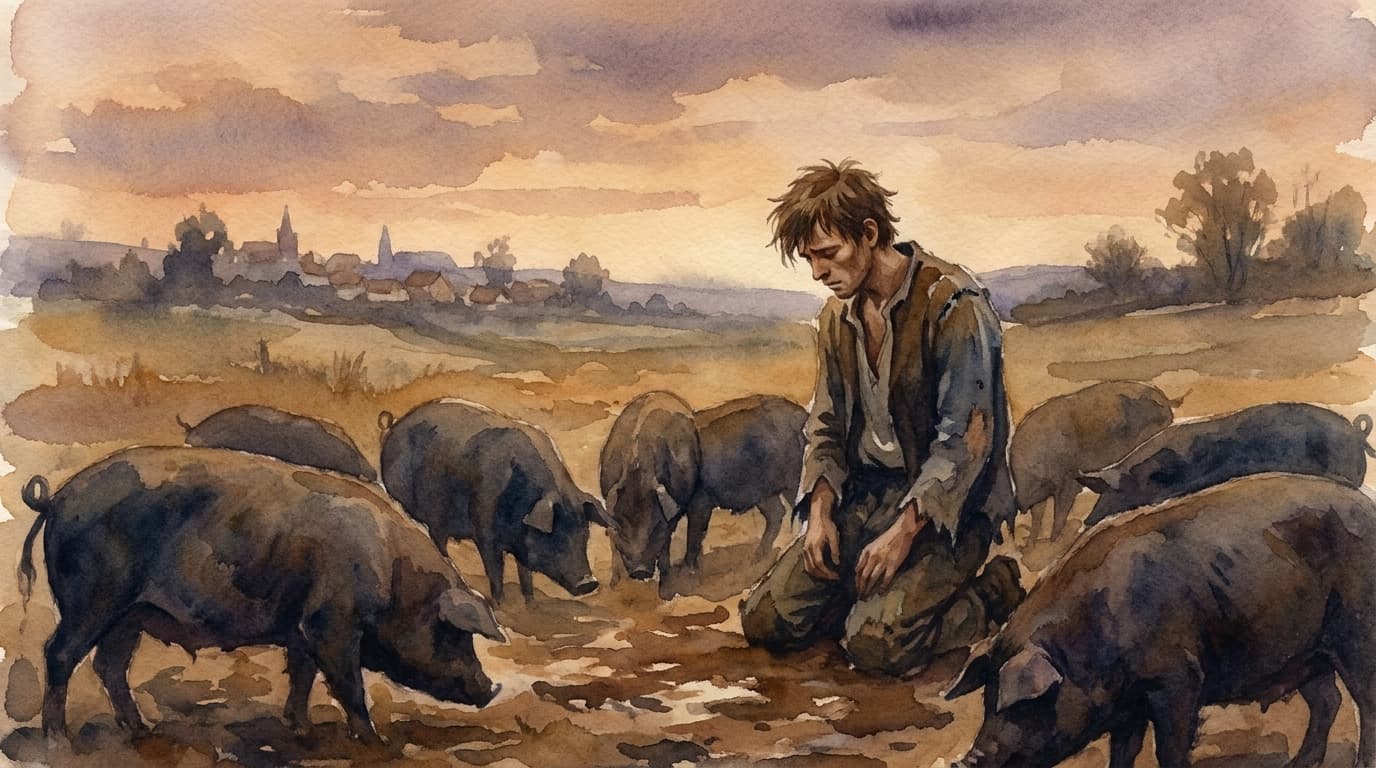
The son finds himself in dire straits amid a severe famine, feeding pigs—an unclean animal for Jews—which symbolizes deep misery beyond poverty. He longs to fill his stomach with the pods that pigs eat but has no one to give him anything. The promise of sin may seem glamorous at first, but in the end, no one bears responsibility for the consequences. Here, a crucial turning point occurs: Luke 15:17 says, "When he came to himself," revealing that repentance begins with honest acknowledgment of reality. Those who refuse to recognize their own misery will never return to the father's house. As you read the Word and feel convicted, it’s essential to pause and reflect on 묵상 — the discipline of contemplative meditation. Repentance is not merely emotional regret; it is a conscious recognition of one's condition before God and a decisive turn towards Him.
Scene 3: The Son's Confession and Return
The son prepares to say, "Father, I have sinned against heaven and before you" (Luke 15:18). There are no excuses here—no blame on circumstances or others. Genuine repentance is not about preserving face or half-hearted apologies but confessing sins openly before God. Though we often regret the consequences, true repentance, as shown in Scripture, is recognizing our sins before the Father and returning to restore the relationship. His decision to go back is not just a physical return but a step toward reconciliation. Moreover, this confession teaches us about the attitude of those approaching God: the more self-justified we are, the less we see the beauty of grace. The more honestly we admit our guilt, the more vividly we experience the mercy of the Father.
The Most Beautiful Scene: The Father's Response
Luke 15:20 describes, "While he was still a long way off, his father saw him and was filled with compassion; he ran to his son, threw his arms around him, and kissed him." In Middle Eastern culture, it was highly unusual for the head of the household to abandon dignity and run—yet the Father does exactly that. Before the son can fully explain himself, the Father rushes to meet him. That is grace. Of course, this parable does not imply forgiveness without repentance. The son truly returns, and his return is rooted not in his merit but in the Father’s mercy. Our reason for turning back to God ultimately lies in His compassion, which accepts us before we even decide to return. Pausing on this scene while reading the Bible and visualizing the story can deepen your understanding; revisit 성경 읽기 to explore the full context. The Gospel is not merely a story of pushing sinners away but a message of divine grace welcoming repentant returnees in Christ.
The subsequent feast scene illustrates the joy of salvation. The fine clothing, ring, shoes, fattened calf, music, and dancing all symbolize restoration. The father proclaims, "This son of mine was dead and is alive again; he was lost and is found" (Luke 15:24). Salvation is not merely survival but a resurrection from death. God does not grudgingly accept the returning sinner; He rejoices greatly. Luke 15 continues with stories of a lost sheep, a lost coin, and a lost son, emphasizing the joy in heaven over a sinner who repents. To re-read this entire flow, starting from 오늘의 말씀, will be enriching; explore the full chapter to grasp the overarching message. The Bible shows that God's salvation is not just a legal declaration but a joyful recovery of what was lost.
But the parable doesn’t end there. The final scene centers on the elder son, who, upon hearing about the celebration, becomes angry. Outwardly, he appears faithful. Yet, his attitude reveals a heart that cares more about recompense than love. His phrase "I have served you for many years" reflects a servant’s mentality rather than a son’s joyful relationship. Despite being within the house, he doesn’t understand the father's joy. This highlights the danger of religious self-righteousness—not just the prodigal son's rebellion, but the subtle growth of disdain within those outwardly obedient. Even within the church, one can harbor ungratefulness and pride, failing to rejoice in others' restoration. The Gospel exposes not only obvious rebellion but also the pride dressed as religiosity. Therefore, this parable warns everyone: repentance is for all, regardless of whether one is a prodigal or a self-righteous respecter of appearances.
The Father also comes out to the elder son and gently invites him. This is very important: the Father's heart is not only for the younger son but also for the elder. He calls both; the disobedient and the prideful. "Son, you are always with me, and everything I have is yours" (Luke 15:31) is not merely rebuke but an invitation. Yet, the elder son remains trapped in his sense of injustice. Those who do not receive grace as grace will miss both the feast and the Father’s heart, revealing the tragedy of self-righteousness.
Ultimately, the Parable of the Prodigal Son asks us: which scene do we find ourselves in? Are we the ones exhausted and returning from a distant land, or the elder sibling who remains but misunderstands the Father’s heart? The Gospel is needed for both. Grace is essential even for open rebellion, and humility is required for those who are outwardly obedient. Jesus came to call sinners and also to expose the masks of righteousness we wear. Our application is clear: do not justify sin but return to God; do not judge those who have returned but rejoice with them. The Father's house is a place of grace, not a competition of merits.
Summary: The Parable of the Prodigal Son shows that both the wandering sinner and the proud within the house must return before the grace of the Father. Reflect quietly on this parable today. Are you taking steps toward returning to the Father, or are you still clinging to your own righteousness within His house? Slowly re-read the text, meditating on the repentance of the younger son, the anger of the elder son, and the heart of the Father who compassionately approaches both. In that reflection, we learn again that our standing before God depends not on our efforts but on His grace.
Related articles
Biblical Verses on Repentance: The Beginning of Turning Back
This article explores repentance not as heavy guilt but as a path back to God, reflecting on Psalm 51, 1 John 1:9, Proverbs 28:13, and 2 Corinthians 7:10 to understand its biblical meaning and application today.
Meditation on Zephaniah Chapter 3: God Singing After the Day of Judgment
Zephaniah 3 reveals Jerusalem’s sins and the corruption of its leaders, yet proclaims God's salvation and joy for the remnant who turn back to Him. Reflect on a Word shining with justice and mercy.
Meditation on Ezekiel 34: The Promise of the True Shepherd Revealed Among the Scattered Flock
Ezekiel 34 rebukes false shepherds who care only for themselves and proclaims God's mercy and justice in personally searching out and caring for His scattered sheep. This promise shines brightly in Jesus Christ, the Good Shepherd. Even in the midst of broken realities, this passage offers unwavering comfort.
 Bible Habit
Turn this article into today’s reading habit
Keep your McCheyne plan, sequential reading, notes, and progress together so the next passage is always clear.
- Today’s passages
- Reading checklist
- Notes and highlights