

Psalm 3 Commentary: Morning Trust in the Night of Fear
Psalm 3, through David's prayer amid Absalom's rebellion, reveals that even during fearful nights, God is our shield and will lift us again in the morning. Reflect on trusting the Lord, who is greater than our enemies.
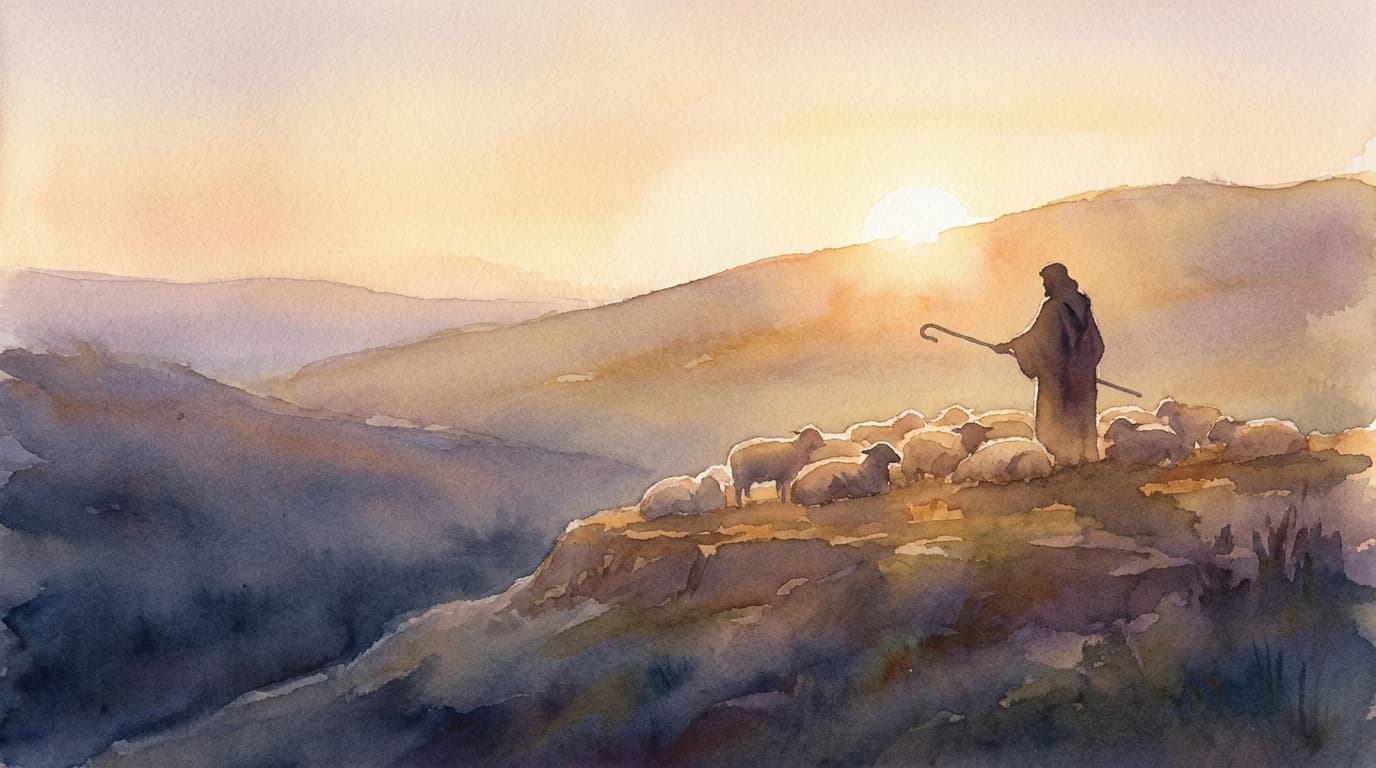
Psalm 3 Commentary: Morning Trust in the Night of Fear
Psalm 3 immediately draws the reader into the heart of the text from its heading: “A Psalm of David, when he fled from Absalom his son.” This indicates that this psalm is not just a vague spiritual reflection but a genuine prayer born out of real hardship in history. David, once a king, now finds himself on the run and bears deep wounds from close relationships. Therefore, Psalm 3 is less a hymn of calm praise and more a desperate cry for help in moments when the soul feels fragile. It’s precisely this aspect that makes this psalm very relevant to us today.
The initial flow of Psalm 3 clearly emphasizes “increase.” David laments, “O Lord, how many are my foes! Many are rising against me” (Ps 3:1). Then, people mock him, saying, “He will not be able to save himself in God” (Ps 3:2). Here, David’s pain isn’t simply due to a multitude of enemies. What hurts more are the words that threaten to dismantle his faith. During trials, what often shakes the heart more intensely than the event itself are discouraging words that interpret and distort the situation. Similarly, when problems arise, the reality might be overwhelming, but thoughts like “This is the end” or “Nothing will change” push us further into despair. Psalm 3 does not hide these inner tremors.
However, David does not remain in despair but turns his gaze toward God. The core confession of Psalm 3 is found in verse 3: “But you, O Lord, are a shield around me, my glory, and the lifter of my head” (Ps 3:3). Here, “shield” does not mean the danger has disappeared. The attack may still be ongoing, but even in the midst of it, God is truly protecting. The phrase “my glory” signifies that God Himself restores the fallen honor and dignity that are lost. When shame and discouragement have made it hard to lift your head before people, the true glory of the believer rests not in worldly praise but in God. The words “the lifter of my head” are not just comforting but a covenantal affirmation that God recognizes His people’s shame and will lift them up again.
Following this confession, a major turning point occurs in Psalm 3. David proclaims, “I cry aloud to the Lord, and he answers me from his holy hill” (Ps 3:4), and then, “I lay down and sleep; I wake again, because the Lord sustains me” (Ps 3:5). Sleeping in a crisis is not merely a physical act but a fruit of trust for those who entrust themselves to God. The situation is not yet over, nor are the problems fully solved, but David passes through the night trusting that God sustains him. Therefore, Psalm 3 is a night psalm but also a morning psalm. God has caused his servant to sleep and wakened him again. Within this brief confession is a steadfast belief that life’s sovereignty belongs to God.

This scene is especially relevant today. We don’t need to spend every night in worry just because a problem remains unresolved. The Bible does not tell us to deny the reality, but rather to look to God first, even before confronting it. Instead of dwelling on thoughts that shake our hearts before sleep, we should train ourselves to realign our thinking with His Word. If a verse from the psalm particularly burdens your heart, you might find it helpful to record your reflections briefly under meditation. Emotions are easily disturbed, but the truth held onto through His Word endures. While acknowledging the reality of “many enemies,” the greater truth—“The Lord sustains me”—must be held onto by faith.
David continues with a confident declaration: “Though many surround me, I will not fear” (Ps 3:6). This is not reckless optimism or self-hypnosis. It’s a confession from someone who has already cried out to God and knows that He answers. Faith is not about minimizing risks but about courage rooted in a proper knowledge of God. Fear disappears not because we become fearless, but because we understand who God is—His character removes fear. Therefore, the courage in Psalm 3 originates not from personality strength but from relationship with God.
In verse 7, David again pleads, “Arise, O Lord! Save me, O my God!” and continues to trust in God’s help. His prayer shows that faith and prayer are not opposites. Knowing that God will save does not eliminate the need to pray. Instead, it compels us to pray more earnestly, trusting in His sovereignty. The prayer of the believer is not an attempt to control outcomes but a trust that entrusts oneself fully to God.
Finally, David proclaims, “Salvation belongs to the Lord” (Ps 3:8). This is the conclusion of Psalm 3. The ultimate authority over salvation does not lie with humans but belongs solely to God. As the entire Bible testifies, salvation is not dependent on human effort or ability but on God’s grace. This declaration is not merely about escaping an immediate crisis; it recognizes that true salvation from sin and death belongs only to the Lord. Thus, Psalm 3 touches not only on daily anxieties but also teaches us about the nature of God—He does not abandon His people, keeps them until the end, and ultimately accomplishes salvation.
If you want to read the Word more slowly, consider repeatedly reading Psalm 3 from Bible Reading. Repeating the same passage at morning and evening may reveal new depths of meaning. Paying attention to words such as “shield,” “sustains,” and “salvation” can make the flow of the text clearer. If needed, review the Highlights to mark significant expressions. The more you read, the more clearly you will see that the God who is greater than David’s situation is also your God.
Psalm 3 does not promise a life free of problems. Instead, it shows that even amidst difficulties, God causes us to sleep, wakes us up, and helps us lift our heads. Our current reality can feel as tangled and painful as David’s night. Relationships may be wounded, pressures may threaten our work, anxieties about the future may unsettle our hearts, and tensions within family may shake us. Yet, faith affirms without denying reality: enemies may multiply, but God’s protection does not diminish. The night may be long, but to those whom God sustains, morning will come again.
As you meditate on this psalm, consider asking yourself:
- What is the “many foes” that shakes my heart most right now? Is it the situation itself or the discouraging words it whispers?
- Am I only seeking God as a solution to my problems, or am I trusting Him as the shield that sustains me even tonight?
- Where in my life should I most practically hold onto the confession that “salvation belongs to the Lord” this week?
Psalm 3 is not the song of someone without fear but the song of one who flees to God even in fear. And from that very point, the hope of the believer begins. God does not turn away from His people’s night nor ignore their cries. Therefore, our faith today also grows—not because the fear completely disappears, but because we increasingly know and trust in the God who is greater than our fears.
Related articles
 Bible Habit
Turn this article into today’s reading habit
Keep your McCheyne plan, sequential reading, notes, and progress together so the next passage is always clear.
- Today’s passages
- Reading checklist
- Notes and highlights