

Meditation on Psalm 6: How to Hold on to Grace in the Night of Tears
Psalm 6 invites us to cling to God's grace and compassion even amidst guilt, suffering, and tears. Follow David's prayer from lament to certainty and transform today's sorrow into a faithful plea.
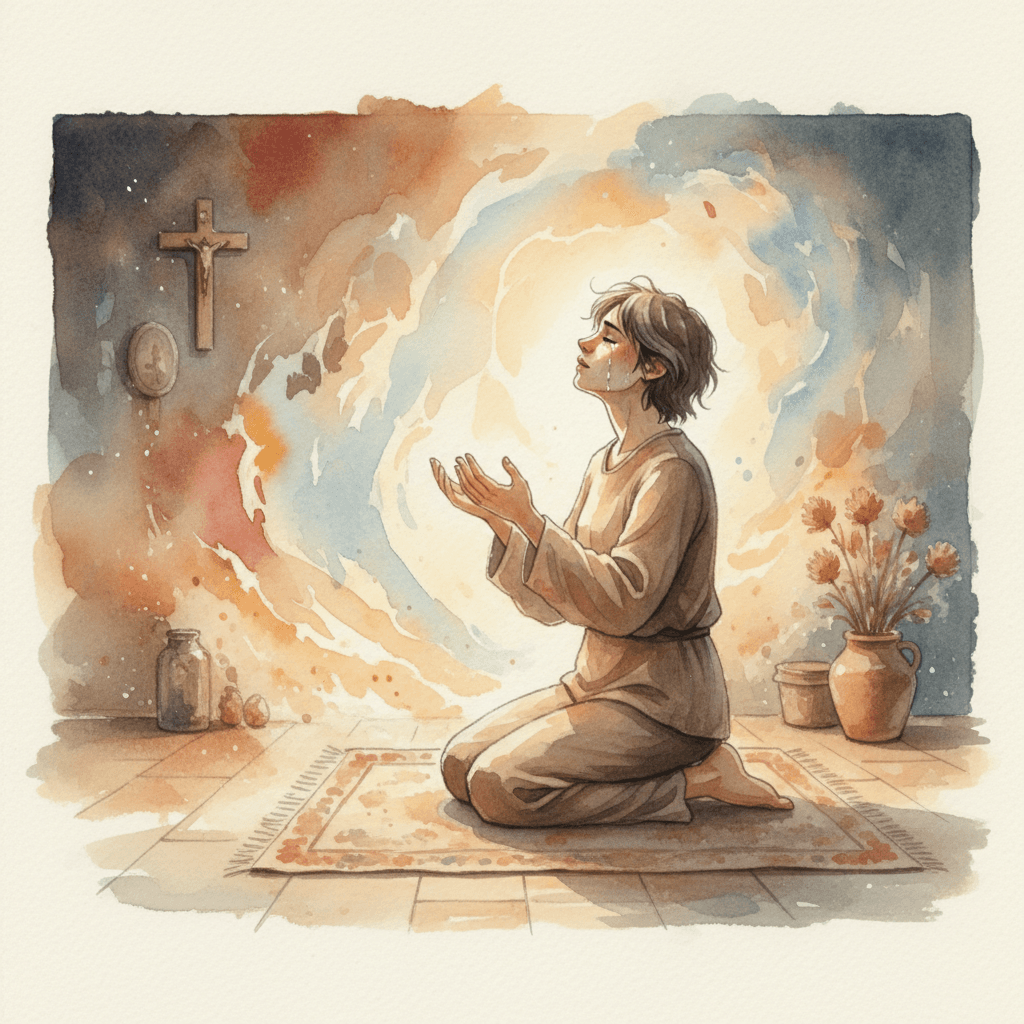
Meditation on Psalm 6: How to Hold on to Grace in the Night of Tears
Psalm 6 is one of the most honest prayers offerings in the midst of suffering. The psalmist approaches God with words on the verge of collapse. Externally oppressed by enemies, internally trembling to the point of bones and soul shaking. Yet, this psalm does not end as merely a record of sorrow. It shows the path of faith that begins with lament, moves through pleading, and advances toward assurance. Thus, Psalm 6 teaches us how to speak before God on days when it’s hard to pretend everything's okay.
At the start of Psalm 6, David says, “O Lord, do not rebuke me in Your anger or discipline me in Your wrath” (Psalm 6:1). What stands out here are the words “anger,” “wrath,” and the following “grace.” David doesn’t see his circumstances as just bad luck or tangled by others. He first reflects himself before God. Yet, he does not slip into despair but pleads, “O Lord, I am worn out; be gracious to me” (Psalm 6:2). For someone aware of their sin, what is needed is not self-defense but God’s grace.
This is very practical for our lives as well. When our hearts collapse, we tend to swing between two extremes: blaming others for all problems, or condemning everything. Psalm 6 shows us the right way between these. It is to examine oneself before God but ultimately cling to grace. Biblical repentance is not about feelings of distancing from God but a turn towards Him. It’s a path of not taking sin lightly while also trusting more in God’s mercy — that is the way of faith.
Secondly, the recurring core is “trembling” and the lament, “How long, O Lord?” “My soul is greatly troubled; how long, O Lord?” (Psalm 6:3). This confession illustrates how exhausting the length of suffering can be (Psalm 6:3). Trials are hard, but more so when the end seems invisible. David does not hide his emotions like a pious person might. His long-standing anxiety, relationship pressures, and unhealing physical weakness reveal his difficulty in enduring time. Faith does not diminish the period of suffering but stays with questions and persistence in God even amid that time.
Third, the central plea of Psalm 6 is “Turn to me,” “Save me,” and “Deliver me.” Particularly, the phrase “Save me by Your steadfast love” (Psalm 6:4) is significant. The word translated “love” here refers to God’s benevolence, specifically His covenantal love. David does not rely on his righteousness or achievements but depends solely on God’s character. This aligns with the core of the Gospel. Sinners live not by their deeds but by God's mercy, and the only ground for standing before God is His grace. Therefore, even in moments of collapse, believers must hold onto God’s faithfulness, not their achievements.
Next, the word “tears” stands out. The confession, “I am weary with my cries; night after night I drench my bed with tears; I melt my pillow with weeping” (Psalm 6:6), is intense. Nighttime is when thoughts intensify. During the day, the heart may endure, but at night, it can break. Psalm 6 does not ignore these nights. Tears are not the place for those without faith but for those who have words to pour out to God. On days when meditation feels difficult, it can be more fruitful to hold onto a short passage like 오늘의 말씀 than to force oneself to read a long portion. Remembering 묵상이란 and practicing honest presence before the Word can also help deepen such reflections.
The remarkable transformation in Psalm 6 begins at verse 8: “Depart from me, all you evil-doers, for the Lord has heard my loud crying.” The situation isn’t fully resolved here, and there’s no record of enemies vanishing instantly. Yet, David’s focus has clearly shifted. The key is that God’s response outweighs the immediate change of circumstances. The following verse declares, “The Lord has heard my plea; the Lord accepts my prayer” (Psalm 6:9). The place of prayer shifts from lament to certainty. It’s not because tears have disappeared but because God heard those tears that believers find strength to carry on.
This point is crucial in faith life. We often judge God’s answer solely by visible results. But Psalm 6 makes us look first at God who hears. He is not indifferent but listens to His people’s crying and pleading. So, the believer’s certainty doesn’t only come after circumstances change. When we grasp who God is through His Word, even remaining problems do not shake our hearts. Repeating Psalm readings slowly [through 성경 읽기] can deepen this confidence.
How can we apply this practically? First, when guilt and discouragement come together, distinguish between them. The Spirit’s conviction leads us to repentance, but vague condemnation causes us to hide from God. Examine whether the thoughts weighing on your heart today lead you back to God or cause you to flee. Sorrow that draws us closer to God is good. But condemnation that makes us doubt grace is unnecessary to hold onto.
Second, don’t just count the hours of suffering but turn them into prayer sentences. Even asking, “How long, O Lord?” can be a faithful prayer. God delights in honest cries more than curated words. Slowly re-read Psalm 6, underline words that resonate with your situation, such as “worn out,” “how long,” “your steadfast love,” “tears,” “heard,” etc. These expressions reflect different spiritual states. This approach also helps understand and practice 하이라이트란.
Furthermore, Psalm 6 teaches us that lament is not the opposite of faith. The problem isn’t tears but holding onto those tears without God. Tears we bring to God can become the language of faith. Thus, on difficult days, maintaining the habit of not letting go of the Word is vital. If a whole day feels overwhelming, consider short passages from 365일 읽기 일정 or 오늘의 맥체인 읽기표 as manageable ways to keep moving forward. What matters most is not reading a large volume but staying constantly before God.
Finally, Psalm 6 asks us: Are we honest with God on tough days, or are we just pretending everything’s fine? David did not hide his trembling and tears but also clung to God’s grace and mercy. That is the faith path shown in Psalm 6. As you read today’s psalm, lay down your trembling, long sighs, and nights of unseen tears before the Lord. Remember that God hears. By continuously reading and holding onto meaningful verses, even in small portions, your laments can gradually turn into firm assurance. In this way, even in the night of tears, we can hold onto grace.
Related articles
Meditating on Psalm 13: Crossing from Feeling Forgotten to Praise
Psalm 13 shows the path of faith from lament and petition to trust and praise in suffering with no end in sight. Following David's confession, this article reflects on holding to God's love and salvation.
Psalm 12 Commentary: Faith in an Age Full of Falsehoods
Psalm 12 shows us what to cling to in a time overflowing with lies and flattery. Even when people's words crumble, God's pure Word remains unshaken, providing discernment and comfort for believers amidst a collapsing speech culture.
Psalm 10 Meditation: The Confession We Must Hold On To Even When God Seems Hidden
Psalm 10 helps us hold on to the truth that God sees and remains King forever even amid the apparent prosperity of the wicked and the reality that looks like God’s silence. This article explores the language of faith that moves from lament to trust.
 Bible Habit
Turn this article into today’s reading habit
Keep your McCheyne plan, sequential reading, notes, and progress together so the next passage is always clear.
- Today’s passages
- Reading checklist
- Notes and highlights