

Meditation on the Rich Man and Lazarus: Lives Divided at the Doorstep
Following the scene from Luke 16 through meditation on the story of the rich man and Lazarus, we patiently examine through scripture how to read the person in front of our door today and assess the condition of our hearts.
Meditation on the Rich Man and Lazarus: Lives Divided at the Doorstep
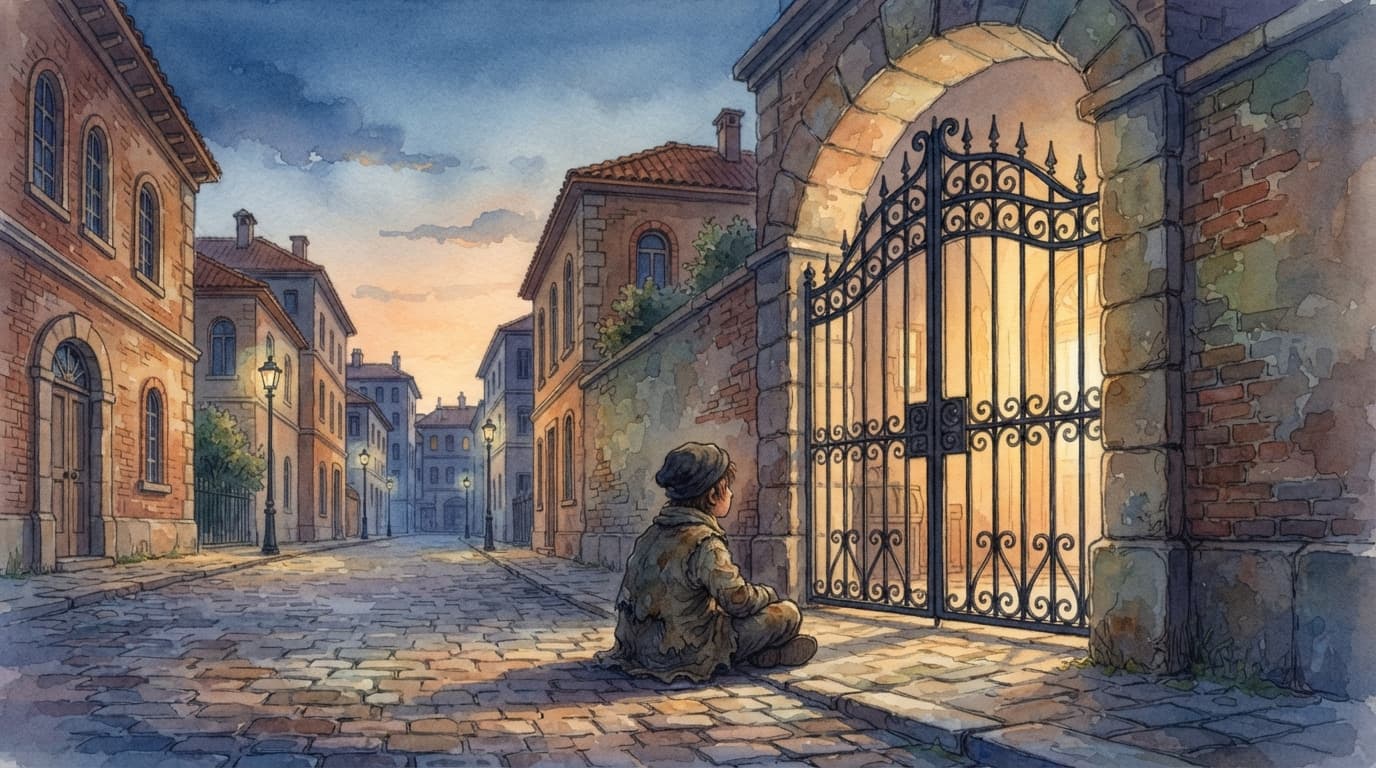
The story of the rich man and Lazarus in Luke 16:19-31 is brief but leaves a lasting impression. The scene is vivid: One person, dressed in purple and fine linen, enjoys luxury every day. The other, Lazarus, is lying at the gate, covered in sores. He longs to eat what falls from the rich man’s table, and dogs come to lick his sores. Jesus isn’t telling a distant story; He’s describing what happens right in the same neighborhood, at the same doorstep.
When reading this parable, there are a few things to approach carefully. This passage doesn’t mean that having money automatically condemns someone, or poverty automatically saves. The core issue is the heart of the rich man. He must have seen Lazarus every day at his door but still lived as if he hadn’t seen him at all. The Law and the Prophets have long urged us to care for the poor and the weak. Yet, even though the rich man’s table was abundant, his heart was closed.
Jesus then shows what happens after death. Lazarus dies and is carried by angels into Abraham’s bosom, while the rich man also dies and is buried. From Hades, in torment, he looks up and sees Abraham and Lazarus afar off. While alive, the rich man appeared to be above and Lazarus below; but in the light of eternity, everything is turned upside down. This scene reveals how shallow our human perspective can be when judging others.
The moment the rich man calls Abraham “Father Abraham,” it sticks with us. He knew the language of faith and was familiar with his lineage. Yet, knowing does not save. Abraham explains that a great chasm has been fixed between them, preventing crossing over—meaning there’s no opportunity to change one’s direction after death. This quiet but strong warning reminds us how weighty today’s “postponed obedience” can be.
What is even more striking is the final request. The rich man asks Abraham to send Lazarus back to warn his brothers. Abraham responds, “They have Moses and the Prophets; let them hear them” (Luke 16:29). When the rich man protests, “If someone should rise from the dead, they will repent,” Abraham replies, “If they do not hear Moses and the Prophets, neither will they be convinced if someone should rise from the dead” (Luke 16:31). It is not a stronger miracle that saves, but the Word of God already given.
This is where our daily lives connect. We often think, “If only something decisive happened, I’d change.” We wait for a greater miracle, a clearer sign, a more extraordinary experience. But the Lord has already provided enough—His Word. Today, Bible Reading, open Luke 16 slowly and note who is in front of the door. Sometimes, as you read, a passage suddenly enters your daily reality.
So, who might Lazarro be in front of your door today? There’s no need for grand questions. It could be a family member’s ongoing difficult story that you keep postponing. It might be your consistently expressionless colleague, secretly exhausted. It could be someone who sent signals they need help but you ignored out of inconvenience. The tragedy of the rich man wasn’t in evil planning but in being so accustomed to comfort that he turned a blind eye to suffering right before him.
Another crucial point is Lazarus’ name. In the parable, the poor man’s name is recorded, but the rich man’s is not. People tend to remember the names of the wealthy, but the Lord sees the small, weak, overlooked in this world. He knows the hidden tears and unsaid hunger, the long days endured. This story shows both the justice of God toward the poor and the stubbornness of an unrepenant heart.
If you feel stuck in meditation, you can begin by holding onto a short Today’s Word. Reflect on: “Who did I not see today? How did I overlook the needs at my door?” Meditation isn’t just about vaguely thinking nice thoughts; it’s about fixing your gaze before His Word. Revisit What is Meditation? to understand why this passage is so painfully relevant.
The story of the rich man and Lazarus isn’t given to scare us, but as a compassionate warning to awaken our dormant hearts. Today still exists, His Word can still be heard, and there’s still opportunity to turn back. Even if your heart feels dull, it’s not too late. It’s about examining your table, schedule, consumption, interests, speech, and silence, and how they direct toward others—all before the Lord. Don’t ignore the person at your door today. Your small act of obedience can reopen your eyes to eternity.
 Bible Habit
Turn this article into today’s reading habit
Keep your McCheyne plan, sequential reading, notes, and progress together so the next passage is always clear.
- Today’s passages
- Reading checklist
- Notes and highlights