

The Judgment of Sodom and Gomorrah: The Boundary Between Judgment and Salvation
Following Genesis 18–19, this article considers the judgment of Sodom and Gomorrah, Abraham's intercession, and God's mercy toward Lot, reflecting on the weight of sin and covenant grace today.
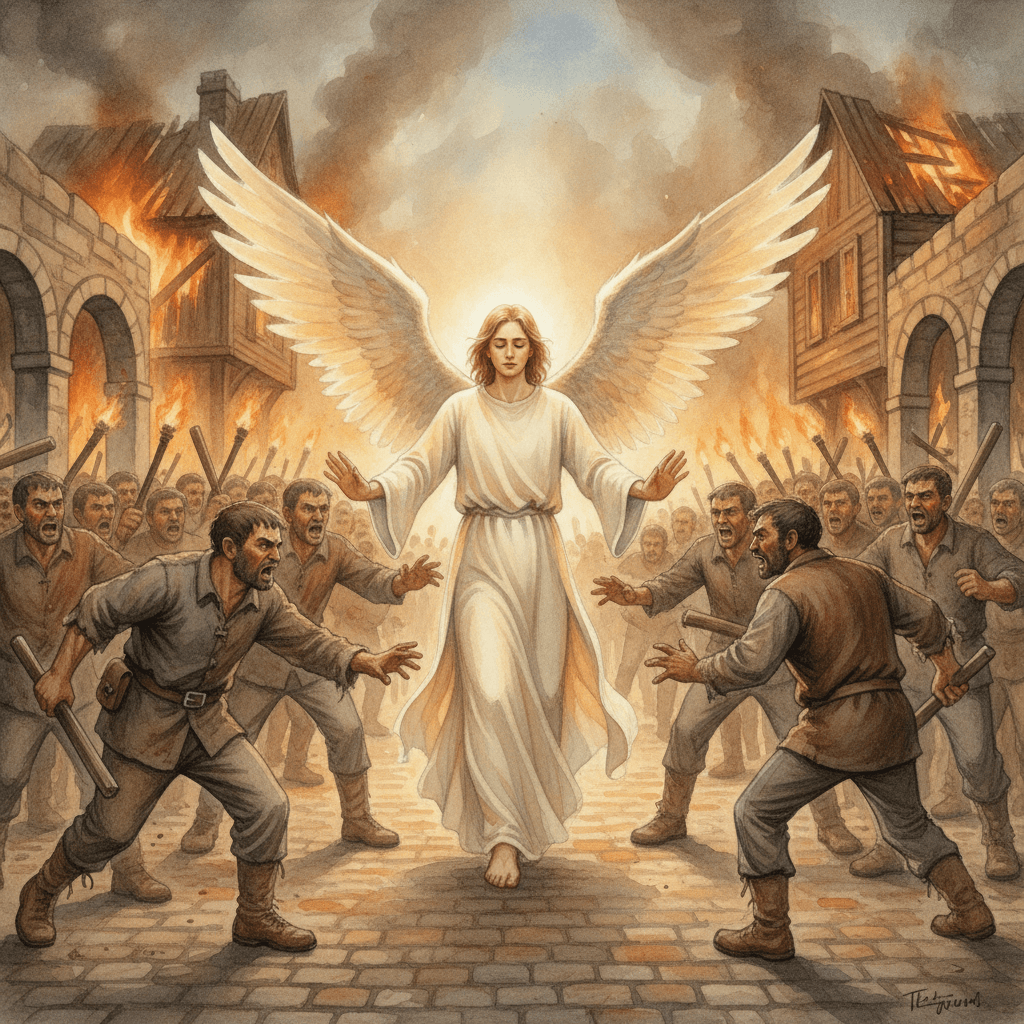
The Face of a City Revealed at Lot's Door: Judgment and Salvation in Genesis 18–19
The story of Sodom and Gomorrah leaves a strong impression even on someone reading the Bible for the first time. The scene of sulfur and fire falling from heaven and a flourishing city collapsing in a moment is fearful and heavy. Yet if we begin to read this passage only as a sensational disaster story, we miss its center. Genesis 18 and 19 do not merely record the tragedy of one city. Together they show God's holiness, the stubbornness of human sin, and the mercy with which God remembers his own people even in judgment.
The door to this event actually opens in chapter 18, not chapter 19. God tells Abraham that the outcry against Sodom and Gomorrah is great and that their sin is very grievous. What follows is Abraham's intercession. He begins with fifty righteous people and continues asking until he reaches ten. Here we see that God is not one who judges impulsively. God is righteous, and his judgment is always exact. At the same time, Abraham's prayer shows the faith of standing before God and interceding for others. He does not remain silent while looking at a city on the edge of destruction; he prays while holding on to God's justice and mercy.
In chapter 19, two angels arrive at Sodom in the evening. Lot is sitting at the city gate, welcomes them, and brings them into his house. In the culture of the ancient Near East, protecting and welcoming guests was a serious responsibility. Yet rather than showing hospitality to the strangers, the men of Sodom surround the house and reveal violence. This scene shows that the city's sin was not merely a private lapse but open rebellion spread through the community. When sin accumulates for a long time, conscience grows dull, shame disappears, and evil becomes the accepted atmosphere. Scripture shows that point with frightening clarity.
If we hold on to only one element when speaking about Sodom's sin, we read the passage too narrowly. Ezekiel 16:49 explains Sodom's sin this way: “Now this was the sin of your sister Sodom: She and her daughters were arrogant, overfed and unconcerned; they did not help the poor and needy.” Sodom's evil therefore included not only conspicuous corrupt acts, but also pride in abundance, indifference toward the weak, and complacency without God. People often think that sins they do not display are harmless, but Scripture says that a lifted-up heart and coldness toward one's neighbor are also heavy sins before God.
Genesis 19:24 says, “Then the LORD rained down burning sulfur on Sodom and Gomorrah—from the LORD out of the heavens.” Verse 25 records that he overthrew those cities, the entire plain, and all the inhabitants. Scripture does not explain this only as a natural event; it witnesses to it as God's righteous judgment. This may feel uncomfortable. But if we speak of God's love while erasing his holiness and justice, the gospel becomes shallow. Salvation is precious because we truly stood under judgment. The gospel is not vague comfort but real news of salvation for sinners under wrath.
Yet this passage does not leave only fear behind. Astonishing mercy also clearly runs through it. The angels urge Lot not to delay but to leave. Lot hesitates, and the angels take him, his wife, and his two daughters by the hand and lead them out. Genesis 19:16 says, “The LORD was merciful to them.” This expression matters greatly. It means Lot was not saved because he was perfect. He hesitated, and his judgment was clouded. Even so, God drew him out by mercy. We are the same. Salvation depends first on God's compassion, not on human quickness or merit.
Genesis 19:29 confirms the same truth: “So when God destroyed the cities of the plain, he remembered Abraham, and he brought Lot out of the catastrophe.” God is the one who remembers his covenant. The promise made with Abraham and the grace given within that promise are connected to Lot's rescue. This is why we should read each event not in isolation but within the larger flow of God's covenant and salvation. In this sense, reading the whole Bible helps us see each passage not as a scattered story but as one movement in God's history of redemption.
Another unforgettable scene is Lot's wife. The angel clearly told them not to look back, but she did, and she became a pillar of salt. This is not merely a matter of curiosity. Her body was leaving the city, but her heart was still attached to it. Leaving sin does not end with changing locations. We must also cut off attachment and longing. Even if we seem to walk the path of faith outwardly, we may already be looking back if, deep inside, we still regret the world's values and sin's pleasures. The Lord's words in Luke 17:32, “Remember Lot's wife,” make this warning sharper.
When we apply this passage to life today, it comes closer than we might expect. Someone may live diligently without any obvious major wrongdoing while comparison and superiority quietly accumulate in the heart. Someone else may know that a neighbor needs help but keep postponing action amid a comfortable life. Another person may know something is sin yet grow numb because the spirit of the age permits it. Sodom is not only the name of an ancient city; it shows the structure of a human heart that hardens without God.
The New Testament also remembers this event strongly. Jude 7 says that Sodom and Gomorrah “serve as an example of those who suffer the punishment of eternal fire.” Second Peter 2:6 likewise testifies that God made those cities an example of what will happen to the ungodly. In Scripture, Sodom and Gomorrah are not merely past place names; they warn where a life without repentance leads. At the same time, the warning reminds us how seriously God's word must be received. If we treat the Word lightly, we treat sin lightly, and if we treat sin lightly, we eventually treat judgment lightly as well.
But warning is not the end. Every warning in Scripture is given not to drive people to despair but to turn them back to God. As we read about Sodom's destruction, there are two things to hold on to. One is discernment that calls sin sin; the other is faith that holds on to the way of escape God provides. In the gospel that way is clearer still. Because Jesus Christ bore judgment in the place of sinners, the one who believes in him passes from condemnation to life. The response this passage calls for is neither vague terror nor detached criticism. It is acknowledging our own pride and numbness before God and turning back by relying on grace.
When we slowly reread Genesis 18 and 19, Abraham's intercession, Lot's hesitation, the angels' urgency, and God's mercy form one continuous movement. Such passages grow deeper as we meditate on them repeatedly in Bible reading, and what devotion means helps us examine the direction of our lives before the Word. A habit of briefly recalling the Word, as in Today's Word, also keeps the warning of judgment and the promise of grace present in daily life.
Within this movement we are led to ask: What have I come to regard as normal? Have I lost reverence amid abundance? At the place where God tells me to leave, am I still turning back? The story of Sodom and Gomorrah is not a passage that lets us look at the ruins of a distant city; it is a mirror quietly revealing the direction of our hearts today. It teaches not only the weight of judgment but also the holiness of God who hates sin and the covenant faithfulness of God who does not lose his people. Holding on to this truth teaches us again why we must stand rightly before God through repentance and faith rather than remain trapped in fear.
Related articles
 Bible Habit
Turn this article into today’s reading habit
Keep your McCheyne plan, sequential reading, notes, and progress together so the next passage is always clear.
- Today’s passages
- Reading checklist
- Notes and highlights