

The Tabernacle Was Prepared with Willing Offerings and Entrusted Skills
Exodus 35 shows how willing people contributed materials and skilled people used their abilities to prepare the tabernacle within the boundaries of the Sabbath.
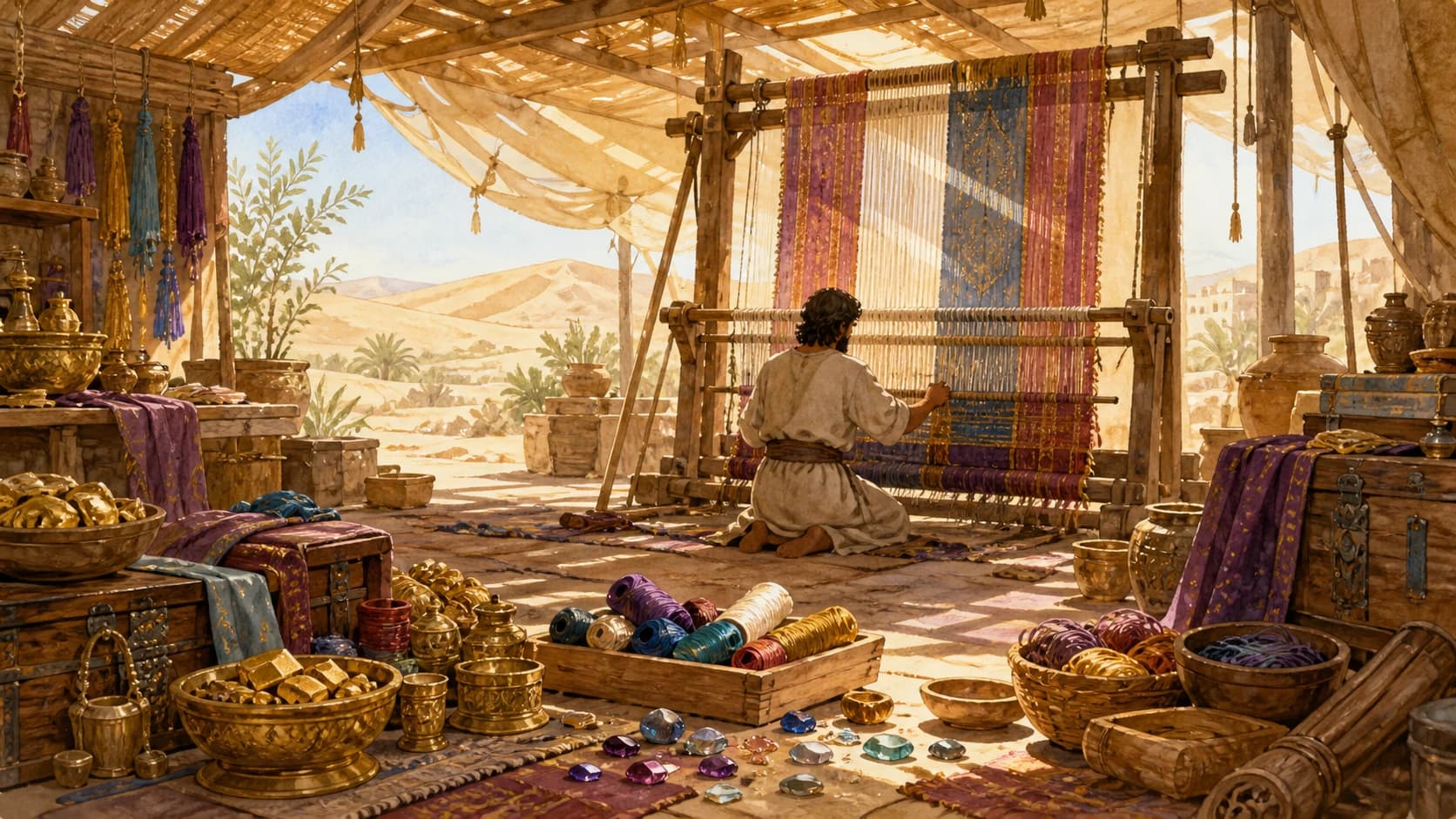
In Exodus 35, the tabernacle was prepared with materials brought by willing people and the abilities entrusted to skilled workers. Yet before any materials or furnishings were listed, the Israelites were commanded to stop working on the seventh day and observe the Sabbath. This order shows that preparing the tabernacle was not a project to be driven forward by zeal alone. It was a shared responsibility carried out by many people within the boundaries and according to the manner God had commanded.
The Sabbath Had to Be Observed Before the Tabernacle Was Built
Moses gathered the whole congregation and told them that work was to be done for six days, but the seventh day was to be kept as a holy Sabbath to the Lord. They were not even to kindle a fire in any of their dwellings on the Sabbath. Only after this did he announce which materials were to be brought and which furnishings were to be made for the tabernacle.
This order makes it clear that even the work of building the tabernacle could not take place outside the command concerning the Sabbath. The tabernacle required many materials and meticulous craftsmanship, but its importance did not override the rest commanded for the seventh day. The people began preparing the tabernacle with the instruction to work for six days and stop on the seventh.
Those with Willing Hearts Brought Materials
Moses told the people to set aside an offering to the Lord from what they possessed. Those who brought it were described as everyone with a willing heart. The requested items were specific: not only gold, silver, and bronze, but also various colored yarns, hides, acacia wood, oil for the lamps, spices, and precious stones.
After the congregation left Moses, they acted on the command. Everyone whose heart was stirred and whose spirit was willing brought offerings for the tabernacle, its furnishings, and the sacred garments. Men and women brought gold jewelry, while those who possessed the necessary yarns and hides offered them. Some gave silver and bronze, and others brought acacia wood. The leaders contributed precious stones, oil, and spices.
The phrase “everyone who is willing” in verse 5 appears repeatedly as “everyone who was willing” in verse 21, “all the men and women who were willing” in verse 22, and “all the Israelite men and women who were willing” in verse 29. The materials for the tabernacle did not come all at once from a single person. They were gathered as people gladly brought what was needed from among their possessions.
The Work of Skilled Hands Was Needed Alongside the Materials
Preparing the tabernacle involved more than contributing materials. Skilled women spun yarn with their own hands and brought what they had spun. Women whose hearts stirred them with wisdom spun the goat hair. Moses also called upon everyone who was skilled to make all that the Lord had commanded.
The passage names Bezalel and Oholiab as well. Bezalel was filled with wisdom, understanding, and knowledge so that he could work with gold, silver, and bronze, cut and set stones, and carve wood. Oholiab was also equipped to teach others. Together, they undertook many kinds of work, including engraving, embroidering, and weaving.
Two recurring patterns stand out. Willing people brought the necessary materials, and skilled people used those materials to make what God had commanded. Not everyone contributed the same materials or possessed the same abilities. Each person’s resources and skills were used for different parts of the tabernacle.
Preparing the Tabernacle Brought Together Command, Willingness, and Skill
Exodus 35 records three things in order: the boundary of the Sabbath, materials given willingly, and craftsmanship entrusted according to wisdom. The people’s zeal did not overstep the rest of the seventh day. The offerings came from willing hearts, and the work was carried out by those entrusted with the necessary skills. The tabernacle was not prepared through only one kind of participation. Different actions were all needed: resting when it was time to rest, bringing what one possessed, and using one’s entrusted abilities to make what was required.
Today, as you read Exodus 35 again, you might write down one possession or ability that you can willingly offer. Rather than looking for something identical to what someone else can give, choose something specific in light of how the people in this passage participated with the materials and skills they already had.
Related articles
How the Ten Commandments Transformed the Lives of a Formerly Enslaved People
Deuteronomy 5 teaches that Israel, once enslaved in Egypt, was to hear God’s covenant and live in a way that protected rest, life, and the property of others.
Why Does Numbers 28 Repeat the Offerings Appointed for Specific Times?
Numbers 28 begins with the regular burnt offerings presented each morning and at twilight, then adds offerings for the Sabbath, New Moon, and appointed festivals. Explore how these repeated commands ordered Israel’s days, months, and sacred seasons.
Numbers 19: Why Were the Ashes of the Red Heifer Necessary?
Numbers 19 explains how uncleanness caused by contact with a dead body could spread and how a person could be cleansed by following the prescribed ritual with water made from the ashes of a red heifer.
 Bible Habit
Turn this article into today’s reading habit
Keep your McCheyne plan, sequential reading, notes, and progress together so the next passage is always clear.
- Today’s passages
- Reading checklist
- Notes and highlights