

The Trinity in Jesus' Baptism Scene: The Depth of the Gospel Encapsulated in a Single Moment
Jesus' baptism scene is a prime example where the Father, Son, and Holy Spirit are revealed together. Following Matthew 3, we calmly explore the biblical foundation of the Trinity, its gospel significance, and the comfort it offers in worship and daily life.
Learning About the Trinity from Jesus' Baptism: The Profound Gospel in a Single Scene
The doctrine of the Trinity can feel difficult and distant for many Christians. The term itself isn't part of everyday language, and attempts to explain it often sound increasingly complicated. However, the Trinity shown in Scripture is not a cold conceptual scheme but the living core of the gospel. It reveals who we worship, why Jesus Christ's salvation is perfect, and why the help of the Holy Spirit is more than just feelings or atmosphere. Understanding the Trinity is therefore not just academic; it is fundamental to knowing correctly, loving rightly, and worshiping properly.
Christian faith clearly confesses that there is one God. This confession runs throughout the entire Bible. At the same time, Scripture distinctly testifies to the Father, the Son, and the Holy Spirit. The Father is God, the Son is God, and the Holy Spirit is God. However, this doesn't mean God is three. These are not three separate beings but one God in one essence. This truth is not a human-made compromise but an inevitable confession when faithfully following Scripture’s testimony.
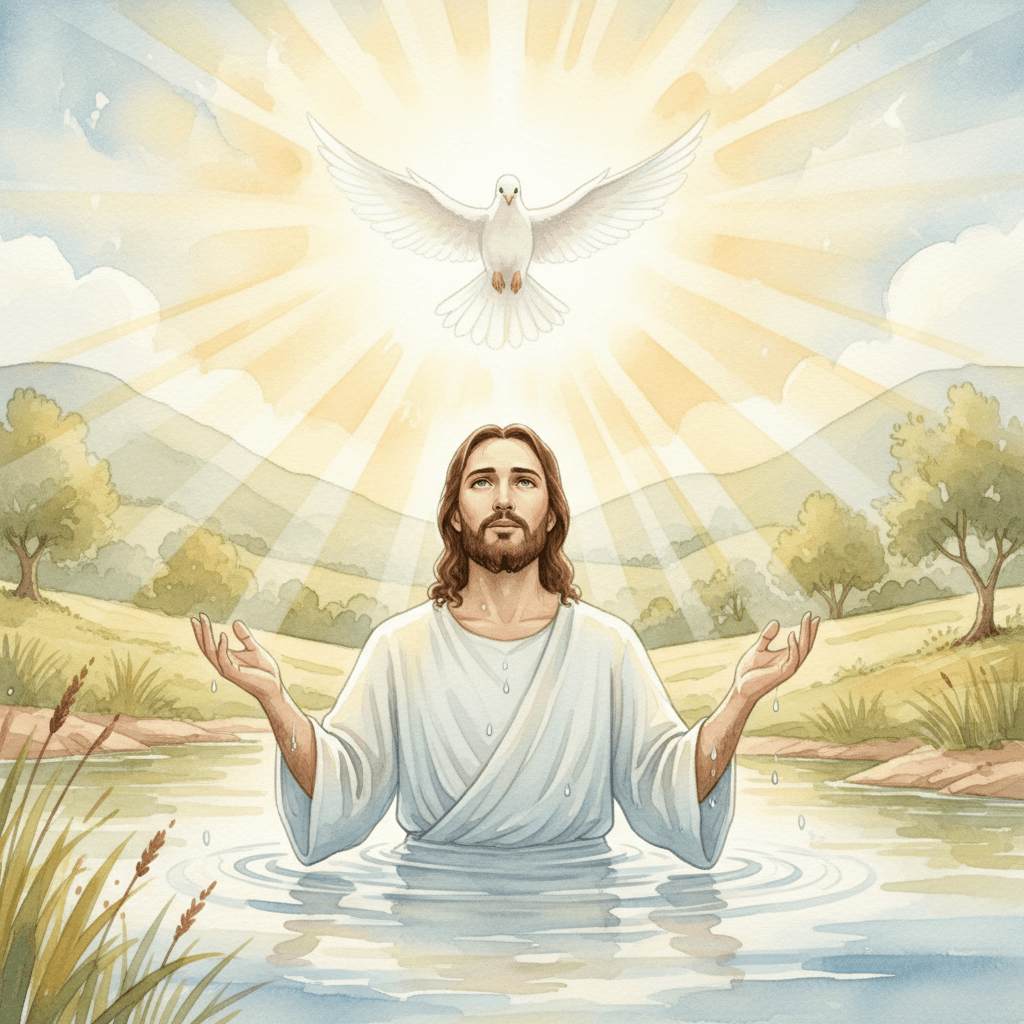
A scene where this truth clearly emerges is Jesus’ baptism. Matthew 3:16-17 testifies: "As soon as Jesus was baptized, he went up out of the water. At that moment heaven was opened, and he saw the Spirit of God descending like a dove and alighting on him. And a voice from heaven said, ‘This is my beloved Son, in whom I am well pleased.’" In this brief scene, the biblical outline of the Trinity is remarkably clear. The Son standing by the water, the Spirit descending from above, and the Father speaking from heaven all appear simultaneously. Though one God, the persons are distinctly marked.
This scene is important because it prevents the misconception that the Trinity was a later addition by the church. God’s self-revelation is present from the beginning of Scripture. The church simply confessed more precisely according to this revelation. If Jesus were merely a great teacher or honored creation, the declaration from heaven would not carry such weight. Likewise, if the Spirit were just an expression of God’s power or a symbol, there would be no reason for Him to appear personally and distinctly at the start of Jesus’ public ministry. Scripture shows that while the Father, Son, and Spirit are not confused, they work together within the one salvation history.
Understanding Jesus’ baptism more deeply enriches our grasp of the background. John’s baptism was one of repentance. But why did Jesus, who was sinless, need to stand there? Matthew 3:15 records Jesus saying, “Let it be so now; it is proper for us to do this to fulfill all righteousness.” Though Jesus was without sin, He did not hesitate to stand in the place of sinners. From the very first scene of His public ministry, He revealed the path of a Savior who would substitute for us. In this moment, the Father delights in the Son, and the Spirit descends upon His work. Our salvation is not a chance event but the perfect divine work in which the Son obeys and the Spirit empowers within the divine will.
This truth also sheds light on our understanding of worship. We are not reaching out vaguely to some divine being. We come to the Father through Jesus Christ, and call on God’s name in the help of the Holy Spirit. Prayer is not an empty monologue. The Word is not merely religious literature but the Lord’s message revealing the Father’s will, testifying to the Son, and understood through the illumination of the Spirit. Consistent Bible reading and meditation are ultimately connected to this reality. Knowing the Trinity clarifies who we worship and the pathway of our worship.
Even in everyday life, the doctrine of the Trinity is not a distant topic but a practical truth that sustains faith. When starting the day feeling overwhelmed, remembering the sovereignty of the creator Father reminds us that the world is not left to chance. When burdened by yesterday’s failures, fixating on the cross of the Son reinforces that salvation rests not on our mood or performance but on Christ’s perfect obedience and atonement. When dryness clouds prayer or spiritual longing, the Spirit’s help and renewal through the Word brings comfort. Thus, the Trinity is not just an abstract definition but an essential framework that carries us through daily life.
Let's consider this more concretely. Imagine a worker makes a mistake at an important meeting and keeps replaying it late into the night, berating themselves. Trying to approach God feels embarrassing, and prayer becomes difficult. In such moments, the doctrine of the Trinity lifts the believer: the Father does not reject His children in Christ, the Son has fulfilled perfect righteousness for even the failing, and the Spirit softens hardened hearts back to God. In this, the person can humbly confess their sins before God and choose to walk the path of obedience anew. Doctrine, in these moments, reveals life.
Another point to remember is that while the doctrine includes mystery, it does not mean we can speak vaguely about it. We cannot fully explain God because created language cannot contain the fullness of the Creator. However, we must cling to what Scripture clearly teaches: there is one God, and the Father, Son, and Holy Spirit are each true God. The Father is not the Son, the Son is not the Spirit, and the Spirit is not the Father. Yet, the three persons are one in essence. This is not a matter of preference but a safeguard for the gospel. If Jesus’ true divinity is shaken, our assurance of salvation wavering; if the Spirit’s true divinity blurs, our rebirth and sanctification weaken.
Therefore, Matthew 3’s scene of Jesus’ baptism is more than just a familiar story. It shows us in one moment who Jesus is, what God's work of salvation entails, and whom we worship. The Father delights in the Son, the Son walks the path of obedience, and the Spirit rests upon His work. Within this harmonious and complete divine work, our salvation begins and is perfected. By meditating on Scripture via today’s manna or QT, we find that the doctrine of the Trinity is not an abstract concept but the heartbeat of the gospel.
The more we meditate on the Trinity, the clearer our faith becomes, and our reverence for God deepens. Ultimately, we don’t cling to abstract ideas but stand before the one God who reveals Himself as Father, Son, and Spirit. Therefore, when reading the scene of Jesus’ baptism, we should not settle for just seeing a beautiful symbol. Instead, we must look to see how God reveals Himself and grasp anew the fullness of salvation He accomplishes. In doing so, our worship becomes more focused, gratitude runs deeper, and our daily obedience grows stronger.
Related articles
 Bible Habit
Turn this article into today’s reading habit
Keep your McCheyne plan, sequential reading, notes, and progress together so the next passage is always clear.
- Today’s passages
- Reading checklist
- Notes and highlights