

What Should We Pass On When We Cannot Know What Lies Ahead?
Explore the meaning of Genesis 48, where Jacob, nearing death, recalls God’s promises and faithful care as he blesses Joseph’s two sons—and consider how we can put its message into practice today.
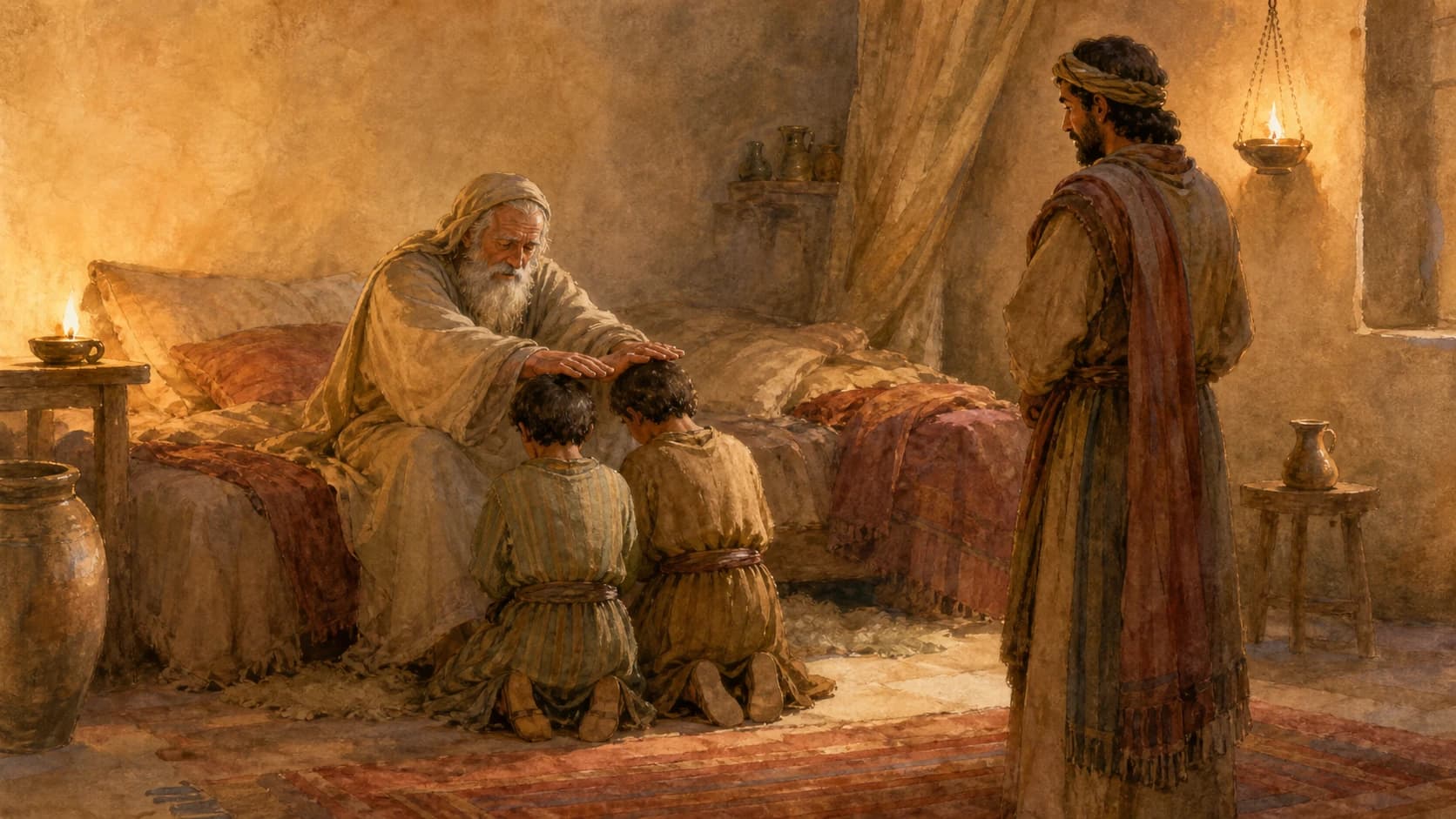
When we cannot know what lies ahead, what should we pass on to our family and those closest to us? In Genesis 48, Jacob spoke of the promises and care he had received from God and blessed the next generation. Even if we cannot explain everything the future holds, we can tell others about the God who has been with us and bless the road ahead of them.
What Jacob Spoke About First in His Illness
When Joseph heard that Jacob was ill, he went to see him with his two sons, Manasseh and Ephraim. Jacob gathered his strength and sat up in bed. He began by recalling how God had appeared to him at Luz in the land of Canaan and promised to bless him.
That promise included making Jacob fruitful and increasing his descendants until they became a great community of peoples. God had also promised to give that land to his descendants as an everlasting possession. Even in his illness, Jacob did not focus only on his own condition. He looked back on the promises God had given him.
Welcoming His Two Grandsons as His Own Sons
Jacob told Joseph that Ephraim and Manasseh, who had been born to him in Egypt, would be counted as Jacob’s own sons, just like Reuben and Simeon. He then called the boys close, kissed them, and embraced them. Jacob confessed that although he had never expected to see Joseph’s face again, God had allowed him to see Joseph’s children as well.
Jacob understood this unexpected reunion as an expression of God’s care. He spoke of God as the one whom his grandfather Abraham and his father Isaac had served. He also described God as the one who had shepherded him all his life and delivered him from every trouble.
A Blessing Given in an Unexpected Order
Joseph positioned his sons so that Manasseh, the firstborn, would be beneath Jacob’s right hand. But Jacob crossed his arms and placed his right hand on the head of the younger son, Ephraim. When Joseph tried to move his hand, Jacob replied that he knew what he was doing.
Jacob said that Manasseh would also become a great people, but Ephraim would become greater, and his descendants would grow into a multitude of nations. He then blessed the two boys, placing Ephraim ahead of Manasseh. The passage shows that the order of blessing did not unfold as Joseph had expected.
One Sentence to Share Today
Jacob said that although he was about to die, God would remain with Joseph’s family and bring them back to the land of their ancestors. He did not hide the reality of his death, yet he assured them that God’s presence would continue.
Today, tell someone close to you in one sentence how God has cared for you until now. Then tell them that you hope God will also be with them in the days ahead. Begin by reading Genesis 48 again, and choose one thing to share from the promises, care, or blessing Jacob remembered.
Related articles
What Did God Promise Jacob in Genesis 28?
God told Jacob, who was leaving for Haran, that He would be with him, protect him, and bring him back. In Genesis 28, we look at that promise and Jacob’s response.
Genesis 26: How Did Isaac Gain a Well Amid Conflict?
In Genesis 26, we look at how Isaac stayed in the land God told him to remain in and made peace after famine, fear, and disputes over wells.
How Does Genesis 18 Show God's Promise and Justice?
In Genesis 18, we look at God’s reaffirmed promise to Sarah and His answer to Abraham’s plea for Sodom.
 Bible Habit
Turn this article into today’s reading habit
Keep your McCheyne plan, sequential reading, notes, and progress together so the next passage is always clear.
- Today’s passages
- Reading checklist
- Notes and highlights