

Why God Called Moses in Exodus 3
In Exodus 3, we look at why God saw the suffering of Israel and called Moses, along with the work He entrusted to him, following the text closely.
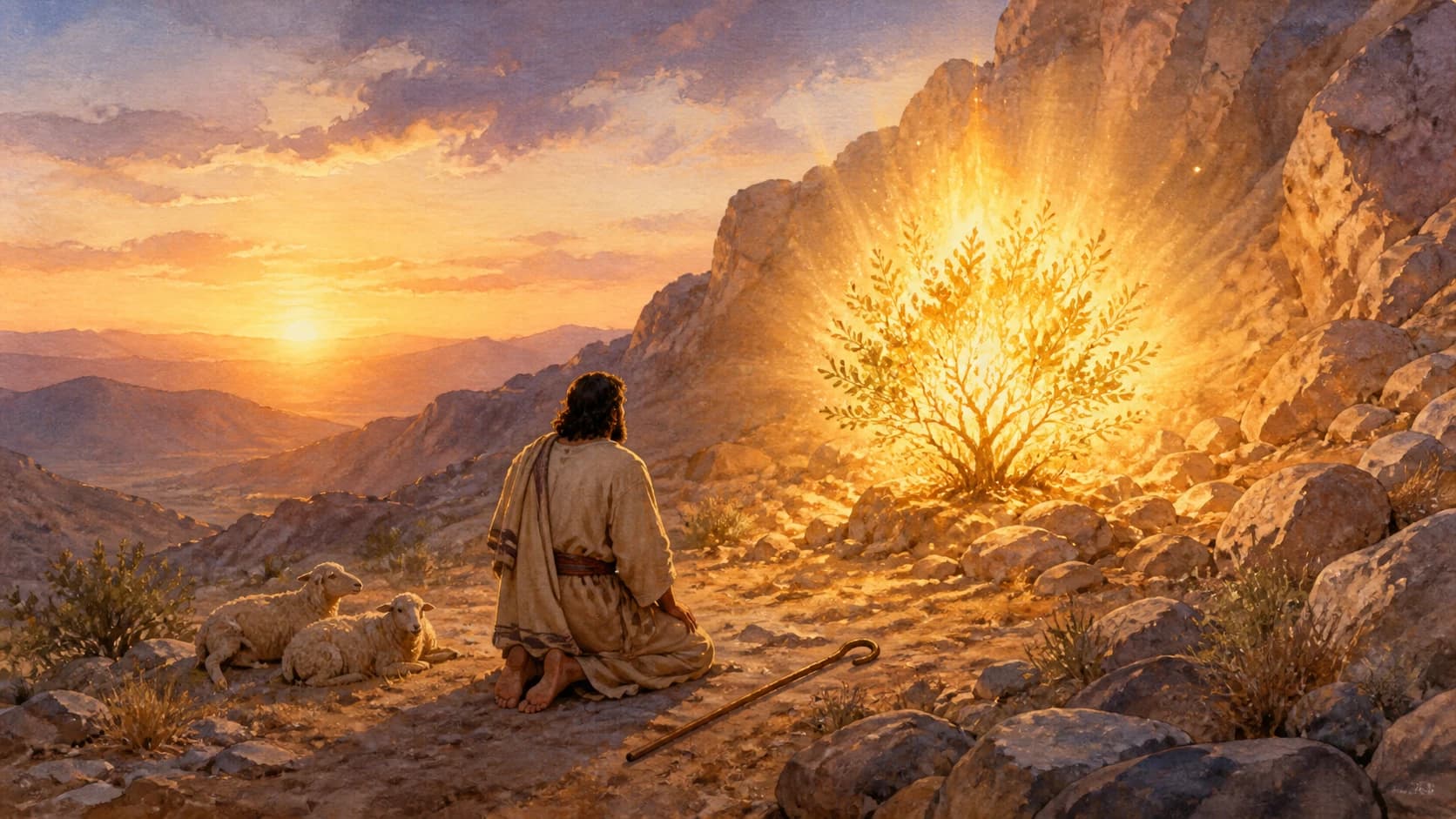
God saw and heard Israel’s suffering and cries, and then called Moses to bring them out of Egypt. Exodus 3 shows God appearing to Moses, revealing who He is, and telling him what he must do. It also records how God promised to be with Moses when Moses spoke of his own inadequacy.
Why Was Moses Called by God?
Moses was tending the flock of his father-in-law Jethro when he came to Horeb, the mountain of God. There he saw a bush that was on fire but not burning up. When Moses went closer to see the sight, God called his name twice from within the bush.
God told Moses not to come any closer and to take off his sandals, because the place where he was standing was holy ground. Then God revealed Himself as the God of Abraham, the God of Isaac, and the God of Jacob. Moses hid his face because he was afraid to look at God.
The reason God called Moses was not the astonishing sight itself. The reason is made clear in the verses that follow. God was going to send Moses to deliver the people of Israel who were suffering in Egypt.
God Saw and Heard Israel’s Suffering
God said that He had clearly seen the suffering of His people in Egypt. He had heard their cries because of the overseers, and He knew the pain they were enduring. The cry of the Israelites had reached God, and He had seen the oppression the Egyptians were inflicting on them.
God said that He would rescue His people from the hand of the Egyptians. He also revealed His plan to bring them out of Egypt and lead them to a good and spacious land. In Exodus 3, salvation does not begin with Moses’ idea. It begins with God seeing and hearing the situation of His people and saying that He will deliver them.
God Sent Moses and Promised to Be with Him
God said that He would send Moses to Pharaoh so that he would bring the Israelites out of Egypt. Moses asked who he was that he should go to Pharaoh and bring the people out. He did not treat the task given to him lightly.
God’s answer was not a description of Moses’ ability. God said, “I will certainly be with you.” He also told Moses that after bringing the people out, they would worship God on that mountain.
When Moses asked what name he should tell the Israelites, God revealed Himself as “I AM WHO I AM.” He also told him to say that the LORD, the God of Abraham, the God of Isaac, and the God of Jacob, had sent him. God gave Moses specific words to deliver and also told him what to say to the elders.
Record One Sentence from God’s Word Today
Exodus 3 does not say that Moses was called after he had finished all his preparation. The passage shows that when Moses asked who he was, God answered that He would be with him. One thing to do today is to read Exodus 3:7-12 and write down in one sentence what God saw and what He promised Moses.
You could write, “God saw the suffering of His people, sent Moses, and promised to be with him.” This one sentence helps us remember both why God called Moses and the promise He gave with that calling.
Scripture Basis
- Exodus 3:1-6
- Exodus 3:7-12
- Exodus 3:13-18
- Exodus 3:19-22
Related articles
Why Israel Could Not Claim to Have Gained the Land by Its Own Righteousness
Deuteronomy 9 explains that Israel did not receive the land of Canaan because of its own righteousness, pointing to the nation’s repeated rebellion in the wilderness and Moses’ intercession.
What Should a Small Nation Remember in Deuteronomy 7?
Deuteronomy 7 explains why Israel, though small in number, was to remember God’s deliverance from Egypt, reject other gods, and obey His commands when facing stronger nations.
Why Does Deuteronomy 4 Tell Us to Remember and Obey?
Deuteronomy 4 explains why Israel must remember what they personally saw and heard God do, refuse to make idols, and obey his word without adding to it or taking away from it.
 Bible Habit
Turn this article into today’s reading habit
Keep your McCheyne plan, sequential reading, notes, and progress together so the next passage is always clear.
- Today’s passages
- Reading checklist
- Notes and highlights