

Why the Golden Calf Became Such a Grave Sin for Israel
Explore how the people made the golden calf in Exodus 32 and credited it with God's work, along with Moses' intercession and the responsibility that remained.
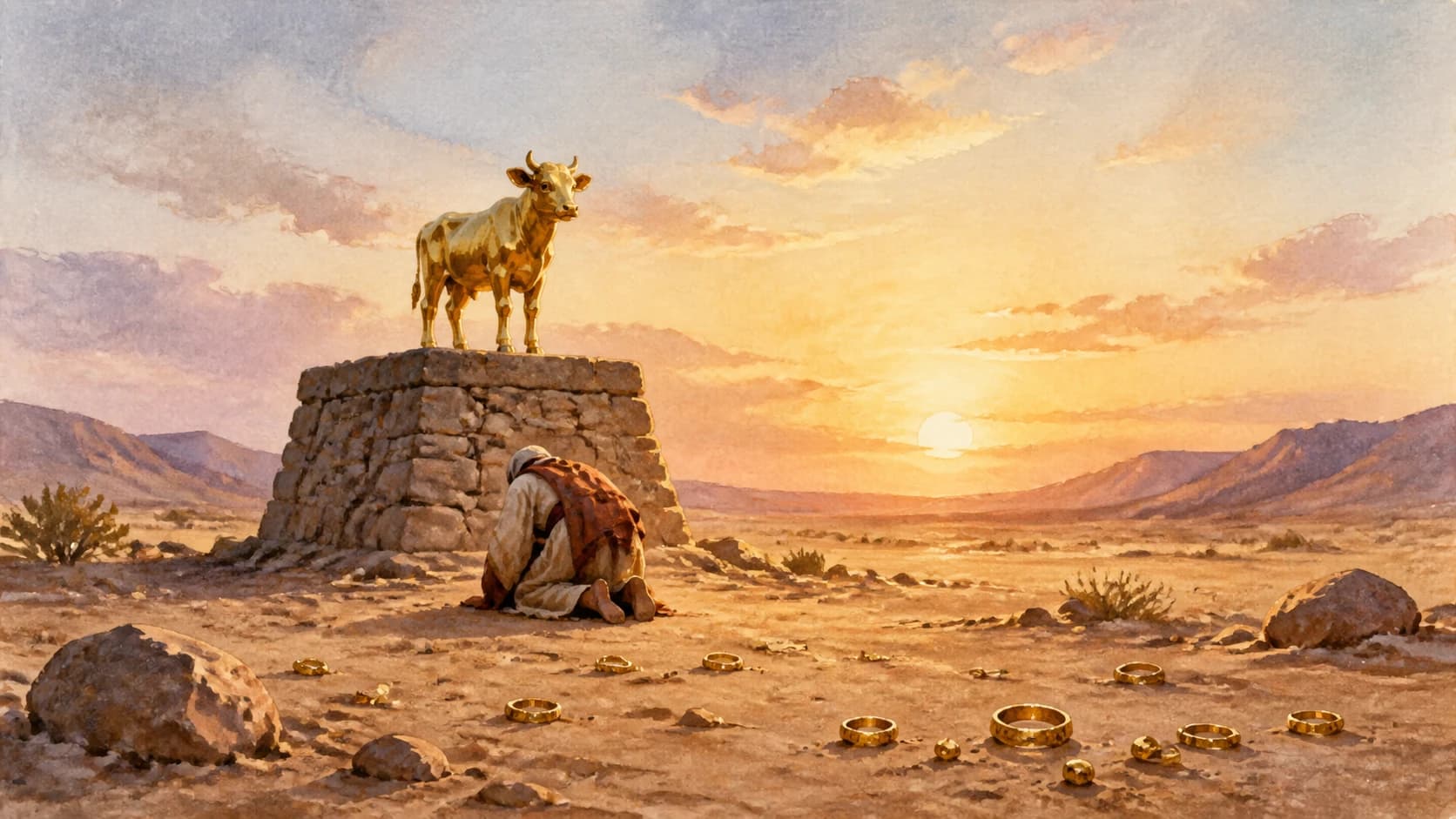
The incident of the golden calf became such a grave sin because the people turned away from the path God had commanded and credited an image of their own making with what God had done. Exodus 32 shows how their unwillingness to wait led from a demand to the making and worship of an idol. It also records that although Moses' intercession spared them from immediate destruction, those who sinned were still held responsible.
The people refused to wait and demanded a god they could see
The people felt that Moses was taking too long to come down from the mountain. They demanded that Aaron make gods who would lead them, claiming that they did not know what had happened to Moses, the man who had brought them up out of Egypt.
Aaron did not put a stop to their demand. Instead, he told them to remove the gold earrings worn by their wives, sons, and daughters and bring them to him. When the people brought their earrings, Aaron took the gold and fashioned it into the shape of a calf.
Their demand did not end with words. They handed over their gold, Aaron made the image, and the people called it the god who had brought them up out of Egypt. Aaron built an altar in front of the calf and announced that the following day would be a festival to the LORD. The people offered burnt offerings and fellowship offerings, then sat down to eat and drink and got up to indulge in revelry.
Although they invoked the name of the LORD, they offered sacrifices before a calf they had made themselves. They credited the calf with the exodus that God had accomplished. Making the calf, bowing before it, and attributing God's work to it were all part of the same course of rebellion.
God said they had quickly turned away from the path He commanded
God said that the people had become corrupt and were stiff-necked. In particular, He pointed out that they had been quick to turn away from the path He had commanded them to follow. The problem was not merely that they had shaped gold into a particular form. They made a calf for themselves, worshiped it, and offered sacrifices to it.
As Moses came down from the mountain, he held the two tablets of the covenant law in his hands. The tablets were the work of God, and the writing on them was God's writing. Yet as Moses approached the camp, he saw the calf and the people dancing. He came down carrying tablets made and inscribed by God, only to be confronted by an image made by the people and their revelry before it.
Moses threw down the tablets and shattered them. He then burned the calf, ground it into powder, scattered the powder on the water, and made the Israelites drink it. The calf they had called a god and worshiped was broken apart and reduced to dust in Moses' hands.
Aaron's explanation did not match what he had actually done
When Moses held Aaron accountable, Aaron blamed the people's wickedness. He explained that they had demanded gods, so he took their gold and threw it into the fire—and out came the calf.
Earlier in the chapter, however, Aaron is described as taking the gold earrings, fashioning the gold with a tool, and making it into the shape of a calf. He also built the altar and proclaimed the festival. Moses concluded that Aaron had let the people run wild, making them a laughingstock to their enemies. The fact that the people had made the demand did not erase Aaron's own actions.
That day, the Levites went throughout the camp as Moses commanded, and about three thousand people died. The passage does not treat the incident of the golden calf as a minor mistake. The next day, Moses plainly told the people, “You have committed a great sin.”
Moses interceded, but responsibility for the sin remained
While still on the mountain, Moses pleaded with God not to unleash His anger against the people He had brought out of Egypt with great power and a mighty hand. He also appealed to the promises God had sworn to Abraham, Isaac, and Israel. Then the LORD relented and did not bring on His people the disaster He had threatened.
After seeing the golden calf, Moses went back up to the LORD. He did not conceal the people's sin in making a god of gold but confessed that they had committed a great sin. He asked God to forgive them and even said that if He would not, God should blot Moses' own name out of the book He had written.
God replied that He would blot out of His book whoever had sinned against Him. He told Moses to continue leading the people, but He also said that when the time came to punish, He would punish them for their sin. The chapter closes by stating that the LORD struck the people with a plague because of the calf they had made—the one Aaron had made.
Moses' intercession spared the people from immediate destruction, but it did not make their actions disappear as though they had never happened. Through the consequences of this event, Exodus 32 teaches that a long wait does not give us permission to turn away from God's commands, and that blaming someone else's demand does not erase our responsibility for what we choose to do.
If there is a decision you feel tempted to rush into today, pause before acting and ask whether it conflicts with a command of God you already know. You may also want to read Exodus 32 again and trace, step by step, the words and actions that led the people away from the path God had commanded.
Related articles
Why Israel Could Not Claim to Have Gained the Land by Its Own Righteousness
Deuteronomy 9 explains that Israel did not receive the land of Canaan because of its own righteousness, pointing to the nation’s repeated rebellion in the wilderness and Moses’ intercession.
Why Does Deuteronomy 4 Tell Us to Remember and Obey?
Deuteronomy 4 explains why Israel must remember what they personally saw and heard God do, refuse to make idols, and obey his word without adding to it or taking away from it.
Why Did Israel Disobey Both Commands?
Deuteronomy 1 contrasts Israel’s refusal to go up when commanded with their later decision to go up after being told not to.
 Bible Habit
Turn this article into today’s reading habit
Keep your McCheyne plan, sequential reading, notes, and progress together so the next passage is always clear.
- Today’s passages
- Reading checklist
- Notes and highlights