

The Significance of Mount Zion: A Different Perspective on Jerusalem
A thoughtful overview of Mount Zion's meaning through biblical and historical contexts. Exploring Jerusalem's geography, David's city, the Holy Mountain, and their connections reveals why Psalms, Prophets, and Hebrews speak of Zion in a special way.
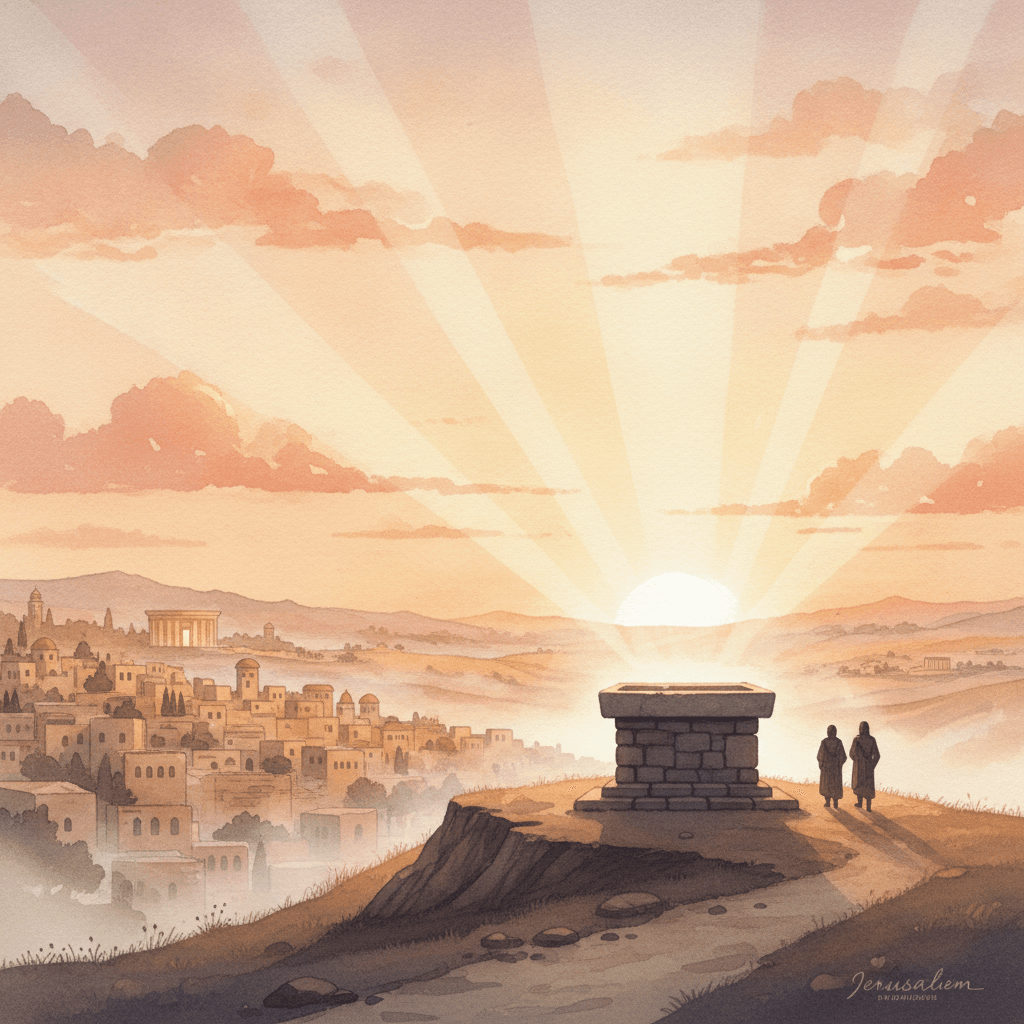
The Significance of Mount Zion: A Different Perspective on Jerusalem
Mount Zion is frequently mentioned in the Bible, but it can be confusing to pinpoint exactly where it refers to. At times, it appears to denote a specific terrain feature, and elsewhere it seems to represent all of Jerusalem. Understanding this background helps clarify why Psalms praise Zion, why prophets speak of restoration promises tied to it, and why the New Testament proclaims the gospel with Zion in mind.
Initially, Zion was not a broad religious symbol. 2 Samuel 5:7 states, “David took the stronghold of Zion, that is, the city of David.” Generally, Zion originally referred to the fortress on the southeastern ridge of Jerusalem, where the Jebusite fortress, the City of David, stood. Archaeology and topography studies support this, showing that the early Jerusalem’s core was a narrow strip between the Gibeon and Tirophieon valleys, on the southeastern ridge.
However, within the Bible, the meaning of Zion gradually expands. When David brings the Ark of the Covenant to Jerusalem, and Solomon builds the temple on the northern high ground, Zion becomes a name that signifies the intersection of kingship and worship. Over time, Zion comes to refer not just to David’s city but to Jerusalem with the temple, and ultimately to the holy city where God dwells with His people. Psalm 132:13 states, “For the Lord has chosen Zion, he has desired it for his dwelling.”
This point is crucial. Today, when we speak of ‘Mount Zion,’ we often think of the eastern hill where the temple once stood. But biblical usage is not fixed to that one specific location. Depending on the era and context, it can evoke David’s city, Jerusalem itself, the temple, or even the entire holy metropolis. Thus, when reading about Zion, instead of asking, “What exact coordinates does this refer to?”, we should consider “Where is God's reign and presence focused?” This approach brings the biblical text to life.
Psalms exemplify this well. Psalm 128:5, “May the Lord bless you from Zion,” does not merely refer to a hill, but to the place of divine worship and the center of God’s covenant people. Likewise, when Psalm 48:2 describes Zion as “joy of all the earth,” it celebrates not just a geographical feature but the glory of the city ruled by the King of heaven.
Reading prophetic writings benefits greatly from understanding Zion’s imagery. Isaiah and Micah proclaim that, in the last days, nations will gather to the mountain of the Lord. That scene signifies more than tourism—it's God's promise to gather His scattered people and rule through His word. Post-exile, Zion embodied hope for Jerusalem’s walls to be rebuilt, for restored worship, and for spiritual renewal. When you come across references to Zion in Psalms or Isaiah during your Bible reading, noting these verses makes clear how the same word deepens in meaning depending on the context.
In the New Testament, Zion’s significance expands even further. Hebrews 12:22 describes “Mount Zion and the city of the living God, the heavenly Jerusalem.” Zion is no longer just a physical place but a reflection of God's kingdom fulfilled in Christ. Jesus, a descendant of David, revealed true kingship through the cross and resurrection. Therefore, Zion no longer is confined to geographic knowledge; in the New Testament, it becomes a lens through which the gospel’s fulfillment is seen.
Understanding this background causes familiar verses to resonate differently. “Daughter of Zion” is not merely poetic imagery, but a call to the covenant community. The plea to “return to Zion” is more than a physical homecoming—it's an invitation to return to God in repentance. When Zion falls, worship and relationship suffer; when Zion is restored, so is joyful communion. This overarching theme becomes even clearer when seen in the broader context of why Bible reading as a whole is important.
Historical background does not replace interpretation, but it helps prevent overlooking the natural flow of the biblical text. Knowing Zion prompts us to ask how Scripture challenges our hearts. Are we seeking a comfortable place, or longing for God's reign? Checking today’s 오늘의 맥체인 읽기표 to review the passage and using the checklist can help us engage with the text more meaningfully. The biblical perspective on Zion ultimately calls us to examine where our hearts and lives are directed.
Related articles
 Bible Habit
Turn this article into today’s reading habit
Keep your McCheyne plan, sequential reading, notes, and progress together so the next passage is always clear.
- Today’s passages
- Reading checklist
- Notes and highlights