

Abel Illuminated by Hebrews: The Brief Life and the Essence of Worship
Following Hebrews 11 and 12, we reflect on Abel’s sacrifice and faith, contemplating the true nature of worship accepted by God and the gospel revealed through the better blood of Jesus Christ.
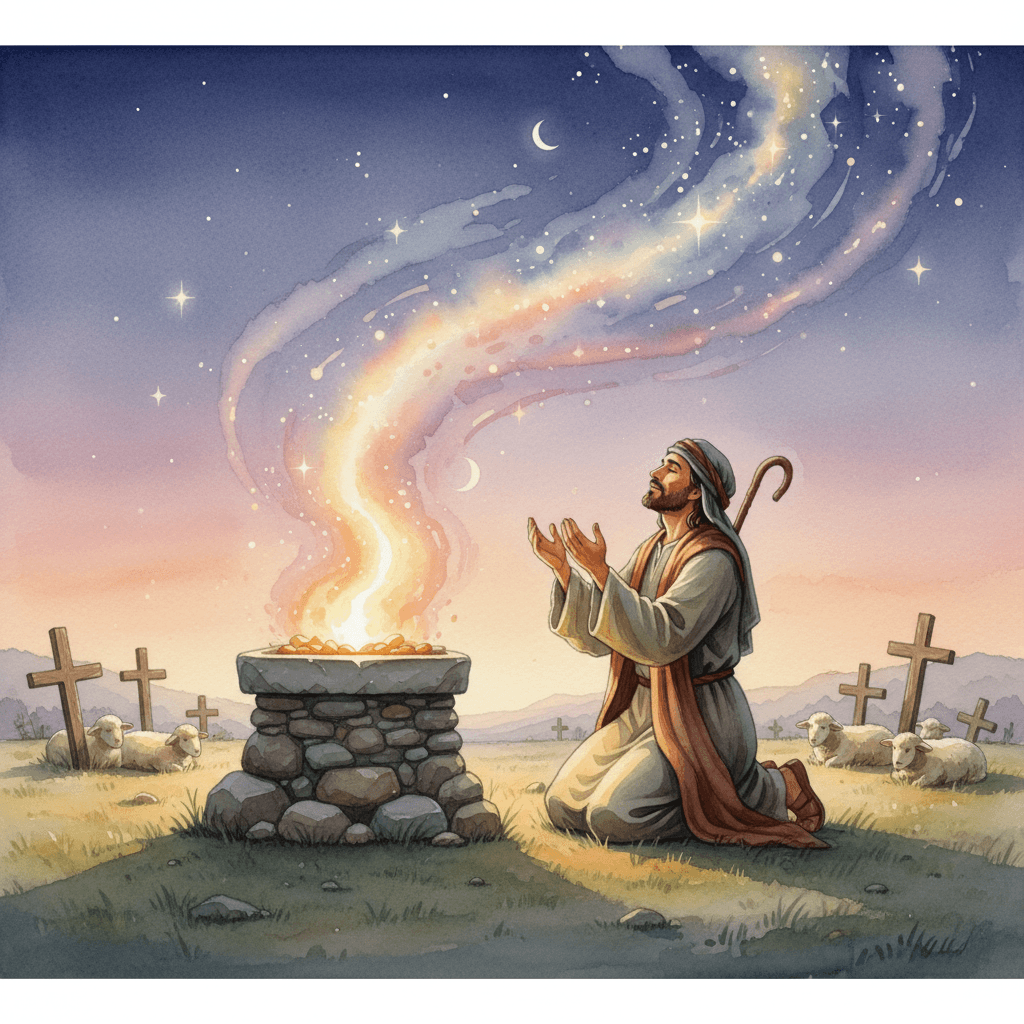
Abel as Revealed in Hebrews: The Essence of Worship Left by a Short Life
Though few characters appear prominently in the Bible, some leave lasting impressions deeply engraved in our hearts. Abel is one such figure. His life is briefly recorded in Genesis, yet the New Testament shines a light on his short existence, vividly illustrating the core of faith. Therefore, when we think of Abel, it’s not only the tragic end that comes to mind but also how God interprets his life.
Hebrews 11:4 states: “By faith Abel offered to God a more acceptable sacrifice than Cain, through which he was commended as righteous, God bearing witness by accepting his gifts. And through his faith, though he died, he still speaks.” Even this single verse makes the focus unmistakable. The essence of Abel’s life is not success, longevity, or achievement, but faith. When he approached God, he did not emphasize his own way or his merits. Instead, he exalted God as God and stood before Him with a worthy attitude. This reveals that true worship, which God receives, begins with trust and reverence rooted in faith rather than outward zeal.
In the Old Testament, sacrifices were not merely religious rituals. They were acts acknowledging one’s identity before God and proclaiming His nature. The offerings were not just objects held in hand but also conveyed the worshiper’s heart, attitude, and approach toward God. Hebrews calls Abel’s sacrifice “better” because it was offered in faith—not merely because it was more impressive. God looks at the heart, not outward appearances. This principle aligns with 1 Samuel 16:7: “The Lord sees not as man sees: man looks on the outward appearance, but the Lord looks on the heart.” When contemplating the nature of worship, this truth applies equally.
The Bible does not dwell on lengthy speculations about why Abel’s offering was superior to Cain’s. Hebrews clarifies that the difference lies in faith. Thus, we should not reduce worship solely to its outward form. Formality is not unimportant, but it can never replace the heart’s true condition. Proper worship begins with approaching God with the right heart. Religious acts devoid of faith cannot please God. Hebrews 11:6 affirms, “Without faith, it is impossible to please him,” and Abel’s life testifies to this truth.
Abel’s story also demonstrates that worship and life are inseparable. An unclean heart before God will reveal itself in one’s life. Conversely, a reverent person’s true nature is reflected in daily attitudes. It’s not just about one hour of Sunday worship but also honesty in words, choices during the weekdays, sincerity in relationships, and integrity in unseen moments—all integrating to form a life oriented toward God. Abel’s faith does not end at a brief moment at the altar but prompts us to consider our entire life posture before God.
At this point, we naturally reflect on ourselves: Am I offering what remains to God? Or am I approaching Him with utmost reverence? It’s more than just material offerings; it encompasses one’s attitude toward time, focus during Scripture reading, sincerity in prayer, humility in repentance, and the consistency of honoring God daily. Even if externally it looks like the same worship, the heart’s condition before God can differ greatly. While people may judge by results and impressions, God evaluates the heart.
What makes Abel’s story more compelling today is Hebrews 12:24, which links him directly to Jesus Christ. It declares that we have come to “the sprinkled blood that speaks a better word than Abel’s,” connecting Abel’s blood to Jesus’. In Genesis 4:10, God says to Cain, “The voice of your brother’s blood is crying to me from the ground.” Abel’s blood testified to the injustice of his murder and pointed to the seriousness of sin and divine justice. However, the blood of Jesus proclaims something far better. It not only indicts sin but also accomplishes atonement and reconciliation for sinners. If Abel’s blood cried out for justice, Christ’s blood satisfies divine justice and opens the way of grace for sinners. This highlights the glory of the gospel.
Therefore, when contemplating Abel, the ultimate conclusion must direct us to Christ. It is not enough to strive to be a better person like Abel. Our worship and obedience are meaningful because the way to approach God has already been opened through Jesus Christ. As Hebrews consistently testifies, Jesus is the superior High Priest and the Mediator of a better covenant. The doctrine of justification by faith rightly prevents us from relying on our deeds for acceptance. We are not accepted based on our merit but through faith in Christ. True worship, then, stems from gratitude for salvation, not from striving for self-righteousness. It’s a response to grace, not a burdensome duty.
In daily life, we may find ourselves in situations that test our sincerity. Some may feel disappointed if their quiet efforts go unrecognized. Others might seem to attract more praise and attention. Such moments tempt us to compare and shift our focus away from God. But Abel’s lesson is clear: the life of faith isn’t measured by applause but by whether it is accepted by God. Honest work in unseen places, choosing truth over falsehood even at personal cost, and maintaining devotion to the Word during tiring days—these seemingly small acts are never insignificant before God. Faithfulness in service to God never vanishes.
It’s also important to remember that Abel, although silent in words, continues to speak through his faith today. We live in an era overflowing with words. It’s easy to express our thoughts, but testifying through genuine life remains difficult. Yet, the Bible affirms that lasting impact is not from flashy self-expression but from a life truthful before God. Someone’s faith is more deeply revealed not by speeches but through consistent honesty, gentle words, a repentant heart, and humble worship.
Through Abel, we are prompted to ask ourselves: What is the posture of my heart before God? Do I have the outward forms without the true focus? Have I lost sight of God’s face due to comparisons? And, most importantly, am I worshiping on the grace-filled path opened by Jesus’ blood? Standing quietly before this question, Abel’s brief life remains more than a small story. It vividly shows us what true worship is, and how deep and enduring faith can be.
Even a short life can be deeply meaningful before God. Even if there are few visible achievements, a life of faith is never in vain. Ultimately, what matters isn’t how impressive one appears but whom they have lived for. When we remember Abel, we learn what it means to keep our hearts fixed on God. And at the end of that learning, we look away from ourselves to Christ, because Abel’s ultimate hope is not human example but Jesus Christ who justifies sinners and grants us bold access to God.
As the Bible’s story unfolds, Abel’s place becomes clearer. His story, beginning in Genesis, is interpreted in Hebrews and finally illuminated in the gospel of Christ. To read this progression, using resources like Bible Reading or 365-Day Reading Plan can be helpful. When meditating on a single message like Hebrews, exploring the meanings of Meditation and Quiet Time (QT) can enrich your reflection. The most important thing is not merely acquiring knowledge but allowing your heart to be renewed before the Word.
Abel’s brief life challenges us today: Is God truly the center of my worship? Am I living with gratitude as one justified by grace? When we hold onto these questions, our ordinary days can transform into moments of worship. Such a life of faith, even if it looks quiet, will never truly fade away. The life God recognizes is always meaningful, and that faith continues to speak across time.
Related articles
Meeting Enoch in Jude: A Short Record of Sacred Steps
Reflecting on Enoch's prophecy in Jude 14-15, we meditate on God's holiness, judgment, and the grace of the Gospel. We apply the direction of a life walking with God, captured briefly in the record, to our daily routines today.
Faith Revealed in Romans 4: Living a Life Dependable on Promises, Even When Invisible
Following Romans 4, we explore Abraham's faith and the gospel of justification by faith. Reflecting on the truth that righteousness comes through faith, not works, we meditate on living a life that holds on to God's promises amid life's uncertainties.
The Theology of Time in Genesis 5: Promises Continued Amid Repetition of Death
Genesis 5 shows that God's promises remain unbroken despite the recurring declarations of death. Reflecting on the records of Enoch and Noah, we meditate on God's faithfulness working quietly within ordinary time.
 Bible Habit
Turn this article into today’s reading habit
Keep your McCheyne plan, sequential reading, notes, and progress together so the next passage is always clear.
- Today’s passages
- Reading checklist
- Notes and highlights